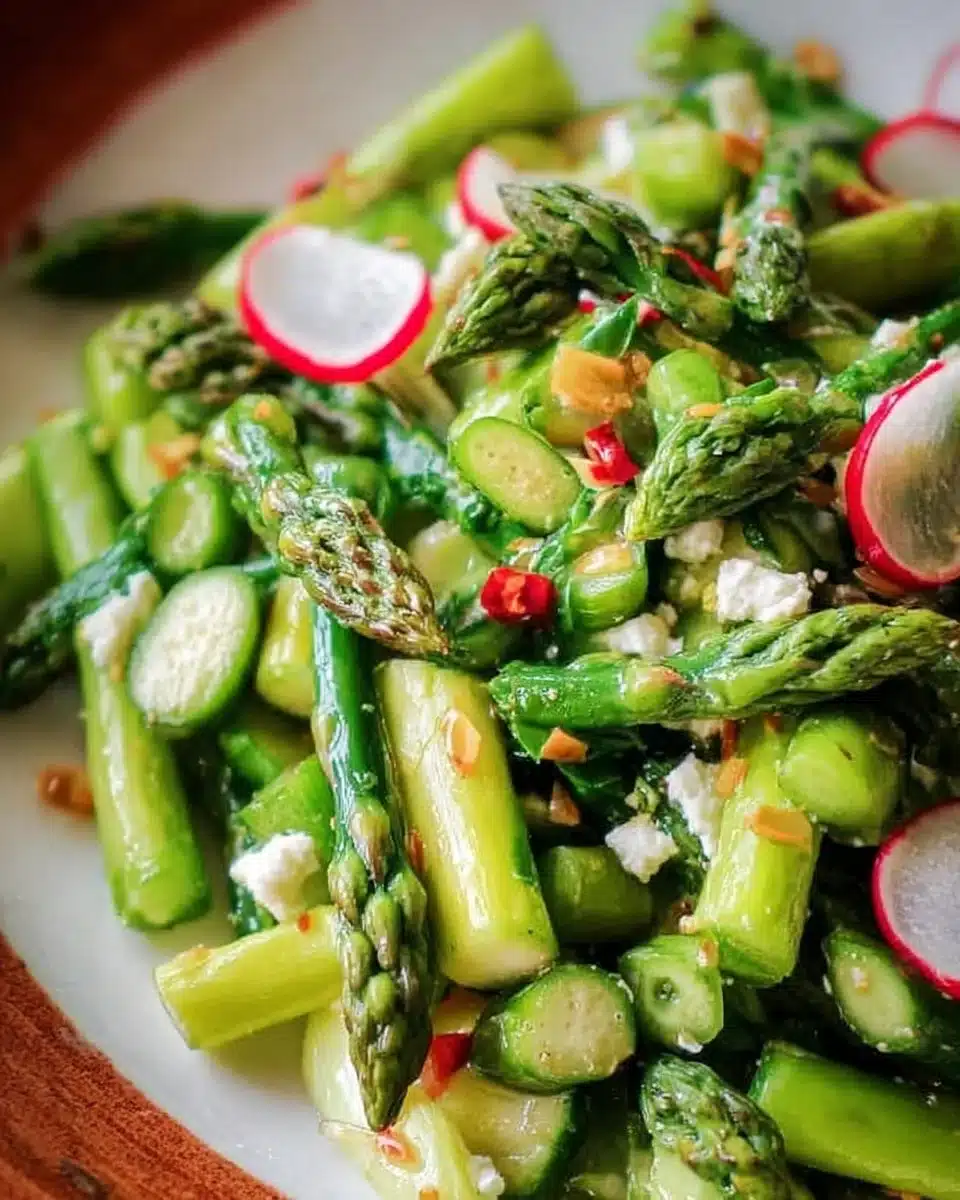
Asparagus Salad with Lemon Vinaigrette
Bright, snap-crisp asparagus kissed with lemon and olive oil makes a perfect Asparagus Salad for spring and light meals. The first bite is green, fresh, and slightly tangy from the vinaigrette. After testing this recipe 8 times and serving it at a weekend pop-up, I kept tweaking the cook time and dressing ratio until the texture and balance felt just right. I developed the lemon vinaigrette during a stage at a farm-to-table kitchen, and this is the version I cook at home when asparagus is at its peak. It works as an easy weeknight side, a picnic salad, or a light starter. If you want a heartier plate, try pairing it with a warm chicken Caesar salad to make a complete meal. Read on for exact measures, pro tips, and quick tricks to keep the asparagus bright and tender.
Why This Recipe Works
- Quick blanching preserves the bright green color and keeps the stalks crisp-tender rather than mushy.
- A hot-shock (ice bath) stops cooking instantly, locking texture and color.
- Lemon and a touch of mustard in the vinaigrette stabilize the emulsion so it clings to the spears.
- Toasted almonds add crunch and mild nuttiness that contrast the acidic dressing.
- Finely shaved Parmesan (or a dairy-free alternative) adds savory depth without overpowering the vegetables.
Ingredients Breakdown
- Asparagus (450 g / 1 lb): Choose firm, straight stalks with closed tips. Thicker stalks benefit from trimming the woody ends; very thin stalks cook faster. If using very thick asparagus, peel the lower 2–3 cm to ensure tenderness.
- Kosher salt (8 g / 1½ tsp Diamond Crystal or ¾ tsp Morton’s): Salt seasons both the blanching water and the dressing. Use Diamond Crystal as measured; if you use Morton’s, halve the quantity because it’s denser.
- Lemon (zest + 30 ml / 2 tbsp juice): Zest adds bright oil notes; juice gives acidity. Fresh lemon is essential — bottled juice tastes flat.
- Extra-virgin olive oil (60 ml / ¼ cup): Provides body and fruitiness. Use a good-quality oil you like on salads.
- Dijon mustard (5 g / 1 tsp): Emulsifier that gives the vinaigrette stability and a slight bite.
- Honey or maple syrup (10 g / 2 tsp): Balances the acid. Omit for a stricter vegan dressing and increase olive oil by 5–10 ml.
- Garlic (1 small clove, minced): Adds aromatic warmth; use roasted garlic for a milder, sweeter dressing.
- Toasted sliced almonds (30 g / 1 oz / ½ cup): Adds crunch. Substitute toasted pistachios for a richer flavor but note the color change.
- Shaved Parmesan (optional) (20 g / ¾ oz): Adds umami and salt. For dairy-free, use a sprinkle of nutritional yeast — the tang will be different but pleasant.
- Black pepper (freshly ground) to taste.
Substitutions with impact warnings:
- Swap almonds for walnuts: they toast faster and can turn bitter if over-toasted.
- Use apple cider vinegar instead of lemon juice: vinegar will change the bright citrus character and make the dressing darker.
- For a vegan parmesan swap, use 1 tbsp nutritional yeast; note the umami intensity will be lower.
Essential Equipment
- Large pot for blanching: big enough to let asparagus lie flat in a single layer.
- Bowl with ice water for a shock bath: stops cooking quickly and preserves color.
- Microplane or fine grater for lemon zest: zesting directly into the vinaigrette is best.
- Chef’s knife and cutting board: a sharp knife makes clean cuts and avoids bruising the stalks.
- Small whisk or jar with lid for the vinaigrette: a jar makes emulsifying easy and cleanup simple.
- Optional: vegetable peeler to shave asparagus into ribbons for a raw variation. If you don’t have a peeler, use a mandoline (use the guard) or a sharp knife to thinly slice.
Step-by-Step Instructions
Prep Time: 15 minutes | Cook Time: 5 minutes | Inactive Time: None | Total Time: 20 minutes | Servings: 4 (serving size: about 1 cup)
Step 1: Trim and prepare the asparagus
Trim woody ends from 450 g (1 lb) asparagus by bending each stalk until it snaps where the tender part meets the tough end, or trim the last 2–3 cm with a knife. If stalks are thick, peel the lower 2–3 cm with a vegetable peeler. This takes about 5–7 minutes.
Step 2: Bring salted water to a boil
Fill a large pot with 2 liters (8 cups) water and add 8 g (1½ tsp Diamond Crystal / ¾ tsp Morton’s) kosher salt. Bring to a rolling boil over high heat, about 5–8 minutes. The water should taste slightly salty like the sea.
Step 3: Blanch the asparagus, then shock
Add asparagus to the boiling water and cook until tender-crisp: 1–3 minutes depending on thickness. Thin stalks take about 1 minute; medium 2 minutes; very thick 3 minutes. Immediately transfer asparagus to a bowl of ice water for 2 minutes to stop cooking and set color. Drain and pat dry.
Step 4: Make the lemon vinaigrette
In a small bowl or jar, whisk together 30 ml (2 tbsp) fresh lemon juice, 5 g (1 tsp) Dijon mustard, 10 g (2 tsp) honey or maple syrup, 1 small minced garlic clove, and 30 ml (2 tbsp) water. Slowly stream in 60 ml (¼ cup) extra-virgin olive oil while whisking until emulsified. Season with ¼ tsp (1 g) kosher salt and freshly ground black pepper. This takes about 3–4 minutes total. Taste and adjust — the vinaigrette should be bright, slightly tangy, and balanced.
Step 5: Assemble the salad
Place asparagus on a platter and dress with half the vinaigrette. Toss gently to coat, then add toasted sliced almonds (30 g / ½ cup) and shaved Parmesan (20 g / ¾ oz) if using. Add remaining vinaigrette sparingly if needed. Serve at room temperature. Assembly takes 3–4 minutes.
Step 6: Finish and serve
Garnish with lemon zest and an extra drizzle of olive oil. Serve immediately or cover and chill for up to 2 hours — chilling mellows the flavors. If making ahead, hold almonds separately and add them just before serving to keep them crunchy.
Expert Tips & Pro Techniques
- Salted blanching water seasons from the inside out. Taste the water; it should be slightly salty.
- Common mistake: Overcooking asparagus. Use short blanch times and the ice bath to stop cooking instantly.
- Professional technique adapted for home: Blanch on a sheet pan in a single layer, then shock. This prevents steaming and keeps texture even.
- To toast almonds evenly, place on a baking sheet and bake at 175°C (350°F) for 6–8 minutes, shaking the pan once. Watch closely — nuts go from toasty to burnt fast.
- Make-ahead: Keep vinaigrette in a jar in the fridge for up to 3 days. Bring to room temperature and whisk before using.
- If packing for lunch, keep dressing separate and toss just before eating to avoid sogginess.
Storage & Reheating
- Refrigerator: Store the dressed salad in an airtight container for up to 2 days. Keep almonds separate if you want to maintain crunch; they stay fresh in a small zip-top bag for 3 days.
- Freezer: This salad does not freeze well. The asparagus becomes mushy and the vinaigrette separates.
- Reheating: Serve cold or at room temperature. If you prefer warm, briefly reheat asparagus in a 150°C (300°F) oven for 4–6 minutes, uncovered. Avoid microwaving — it makes the asparagus limp.
Variations & Substitutions
- Asparagus Ribbon Salad (raw): Use a vegetable peeler to shave raw asparagus into ribbons. Toss with the same vinaigrette and allow to sit for 5 minutes. This keeps the bright crunch but reduces cooking time to none.
- Add protein: Toss in 200 g (7 oz) grilled shrimp or sliced chicken breast to make it a light main. Keep the vinaigrette unchanged; add an extra 1 tbsp (15 ml) olive oil if needed.
- Vegan version: Omit Parmesan and replace honey with maple syrup. Use 1 tbsp (15 g) toasted sunflower seeds instead of almonds for nut-free crunch.
- Charred version: Grill asparagus over high heat 2–3 minutes per side for smoky flavor. Blanching is skipped; reduce lemon juice to 1 tbsp (15 ml) to soften acidity.
- Spring-herb boost: Fold in 10 g (¼ cup) chopped tarragon or chives at the end for a fresh herbal note. Herbs can change the salad’s aroma; add just before serving.
Serving Suggestions & Pairings
- Serve alongside roasted salmon and boiled new potatoes for a bright spring dinner.
- Add to a composed plate with cured meats and crusty bread for a picnic tray.
- Pair with a crisp, dry white wine like Sauvignon Blanc or a citrusy IPA for contrast.
- For Mediterranean flair, serve with our Italian seafood salad and olives.
Also try these complementary salads for variety:
- Edamame with cilantro-lime dressing for a protein-rich side: edamame salad with cilantro-lime dressing.
- A tangy Asian slaw pairs well for a picnic menu: Japanese cucumber and seaweed salad.
- For a warm grain element, serve with an herbed Chinese-style chicken salad: Chinese chicken salad.
Nutrition Information
Per serving (1 cup). Makes 4 servings.
- Calories: 160 kcal
- Total Fat: 13 g
- Saturated Fat: 2 g
- Cholesterol: 6 mg (with Parmesan) / 0 mg (no cheese)
- Sodium: 210 mg
- Total Carbohydrates: 7 g
- Dietary Fiber: 3 g
- Sugars: 3 g
- Protein: 4 g
Nutrition values are estimates. Actual values may vary based on specific ingredients and preparation methods.
Frequently Asked Questions
Q: Why did my asparagus turn out mushy?
A: You likely overcooked it. Blanch for only 1–3 minutes depending on thickness, then plunge into ice water for 2 minutes to stop cooking.
Q: Can I make this salad without garlic?
A: Yes. Omit the garlic and add ½ tsp (2 g) shallot for a milder onion note.
Q: Can I double this recipe for a party?
A: Yes. Double all ingredients and blanch asparagus in batches so the water returns to a boil each time. Use a larger bowl for the ice bath.
Q: Can I prepare this the night before?
A: You can, but keep the almonds and cheese separate and add them just before serving to keep crunch. Dress up to 2 hours ahead for best texture.
Q: How long does this keep in the fridge?
A: Stored in an airtight container, dressed salad keeps 1–2 days. For best texture, eat within 24 hours.
Q: Can I use frozen asparagus?
A: Frozen asparagus tends to be softer and can be watery after cooking. Use fresh for the best texture and color.
Q: Is there a low-sodium version?
A: Reduce the salt in the blanching water by half and use a low-sodium Parmesan or omit the cheese. Taste the dressing and adjust with a touch more lemon if needed.
Conclusion
This asparagus salad showcases spring produce with a bright lemon vinaigrette and crunchy toasted almonds. For inspiration on other ways to present asparagus and similar salads, see the Asparagus Salad Recipe at Love and Lemons and a different take on ribbons in the Asparagus Ribbon Salad at My New Roots. Try the variations and tips here to make it your own.
Print
Asparagus Salad with Lemon Vinaigrette
- Total Time: 20 minutes
- Yield: 4 servings 1x
- Diet: Vegetarian
Description
A crisp and fresh asparagus salad dressed with a tangy lemon vinaigrette, perfect for spring and light meals.
Ingredients
- 450 g (1 lb) asparagus
- 8 g (1½ tsp) kosher salt
- Zest of 1 lemon + 30 ml (2 tbsp) lemon juice
- 60 ml (¼ cup) extra-virgin olive oil
- 5 g (1 tsp) Dijon mustard
- 10 g (2 tsp) honey or maple syrup
- 1 small clove garlic, minced
- 30 g (1 oz) toasted sliced almonds
- 20 g (¾ oz) shaved Parmesan (optional)
- Freshly ground black pepper to taste
Instructions
- Trim woody ends from the asparagus.
- Bring a large pot of water with salt to a rolling boil.
- Blanch the asparagus in the boiling water until tender-crisp.
- Transfer asparagus to a bowl of ice water to shock and stop the cooking.
- Make the lemon vinaigrette by whisking all ingredients together.
- Assemble the salad on a platter, dressing it with the vinaigrette and topping with almonds and Parmesan.
- Garnish with lemon zest and olive oil, and serve immediately.
Notes
For a vegan option, omit the Parmesan and substitute honey with maple syrup.
- Prep Time: 15 minutes
- Cook Time: 5 minutes
- Category: Side Dish
- Method: Blanching
- Cuisine: American
Nutrition
- Serving Size: 1 cup
- Calories: 160 kcal
- Sugar: 3g
- Sodium: 210mg
- Fat: 13g
- Saturated Fat: 2g
- Unsaturated Fat: 11g
- Trans Fat: 0g
- Carbohydrates: 7g
- Fiber: 3g
- Protein: 4g
- Cholesterol: 6mg