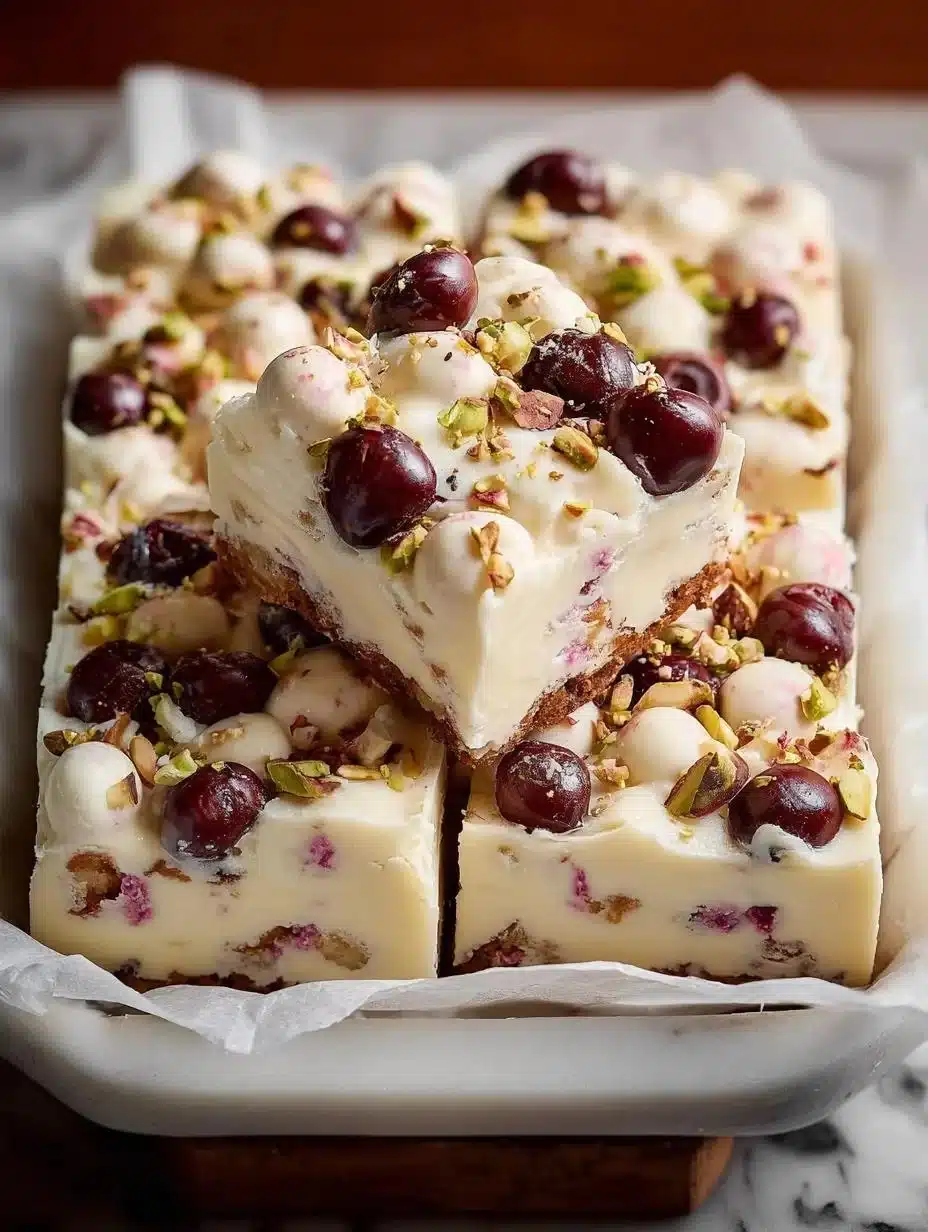
Traditional White Chocolate Rocky Road Guide
Begin with a bite: imagine the cool, creamy snap of white chocolate giving way to chewable marshmallows, crunchy nuts, and tangy dried fruit. That contrast — sweet, soft, crunchy — is the simple genius of Rocky Road. This Traditional White Chocolate Rocky Road guide is a hands-on, mentor-style companion that takes you from the first thoughtful melt to confident creative variations.
What you will gain: a clear understanding of the Classic White Chocolate Rocky Road history and Authentic White Chocolate Rocky Road origin, the chemistry behind textures and set, step-by-step recipes for beginner to advanced cooks, troubleshooting for common issues, and practical ideas for scaling, gifting, and reusing this confection.
Background & Context
Rocky Road is a family of no-bake chocolate confections built on contrast: chocolate base plus mix-ins. The Classic White Chocolate Rocky Road history traces back to early 20th-century confectionery trends that paired chocolate with marshmallows and nuts to create inexpensive, filling treats.
Culturally, Rocky Road became especially popular during wartime and post-war periods when rationing and limited ingredients encouraged creative, calorie-dense sweets. In the UK, Australia, and the U.S., different local mix-ins and naming conventions emerged, producing distinct regional variations.
Personal note: I first learned Rocky Road from a neighbor who called it “slice” — a casual, make-and-forget tray of joy. Watching how friends and family customize it made me see Rocky Road less as a recipe and more as a template for reliable texture play.
Why This Approach Works
This guide organizes Rocky Road into fundamentals first, then options and advanced techniques. That mirrors how home cooks learn: master a stable base, then modify with confidence.
Benefits:
- Predictable results: mastering tempering alternatives and melt control ensures set and shine without expensive tools.
- Flexible ingredient swaps: the approach shows you why an ingredient works, so substitutions make sense.
- Scalable and gift-friendly: instructions include small-batch to party-size scaling, with storage and transport tips.
Common doubts addressed:
- “Will white chocolate set well?” — yes, if you manage fat separation and avoid overheating.
- “Do I need tempering?” — not for Rocky Road; this guide explains practical alternatives to full tempering.
- “Is it healthy?” — it’s a treat; the guide covers portioning, ingredient choices, and lighter adaptations.
Core Concepts Explained
Break the recipe into logical components. Know each part and how it contributes to the final product.
Chocolate base
- Role: glue, flavor, structure.
- White chocolate specifics: primarily cocoa butter, sugar, and milk solids — no cocoa solids — so melting behavior differs from dark chocolate.
- Key: avoid overheating; control fat separation.
Mix-ins
- Marshmallows: provide chew and lightness. Mini marshmallows distribute more evenly; larger marshmallows create pockets.
- Nuts: texture and fat balance. Roasted nuts offer depth.
- Dried fruit, biscuits, pretzels, seeds: provide contrast (sweet/sour, crunchy/salty).
- Consider water activity: dried fruits can soften the chocolate over time if stored improperly.
Binding & set
- Cocoa butter solidifies to create the structure; sugar and milk solids influence set temperature.
- Cooling method affects texture: rapid cooling can produce bloom; slow room-cool then refrigeration yields consistent set.
Presentation layers
- Single-layer slab vs. molded pieces: molds give polished shape; slabs are rustic and easier for large batches.
Alternatives & substitutions:
- White chocolate chips can be used, but they often contain stabilizers that change melt behavior. Best results use couverture-style white chocolate or high-quality baking blocks.
- Vegan substitutions: use dairy-free white chocolate and gelatin-free marshmallows (aqueous gels like agar-based marshmallows exist).
Tools, Resources, or Foundations
Essentials:
- Heatproof bowl (glass or stainless steel)
- Saucepan for double boiler (or a microwave if careful)
- Spatula (silicone recommended)
- Baking pan (loaf tin or square pan) lined with parchment
- Sharp knife or clean scissors for trimming mix-ins
Optional enhancements:
- Digital scale (precision for larger batches)
- Thermometer (helps manage white chocolate temperature)
- Silicone molds for fancy shapes
- Roasting tray and oven for toasting nuts
Budget-friendly alternatives:
- Skip the thermometer: use short microwaves in 15-second bursts and stir between.
- Use readily available chocolate blocks rather than couverture; the technique compensates for lower cocoa butter content.
Usefulness commentary:
Invest in a good heatproof bowl and spatula first. They’ll serve in dozens of recipes beyond Rocky Road.
Step-by-Step Process
This section walks you through a baseline Traditional White Chocolate Rocky Road recipe, then variations and scaling. Each step has time estimates and common pitfalls.
Ingredients (Baseline small batch, ~12–16 pieces):
- 400 g (14 oz) white chocolate (good-quality block)
- 100 g mini marshmallows
- 100 g roasted nuts (almonds, pistachios, or walnuts), roughly chopped
- 75 g dried cranberries or cherries
- 50 g biscuit/crunch (digestive or shortbread), roughly broken
- Pinch of flaky sea salt
Total time: 30–45 minutes active, plus 1–2 hours cooling.
Step 1 — Prepare pan and mix-ins (10 minutes)
Line a 20×20 cm (8×8 in) pan with parchment, leaving overhang to lift the slab later.
Toast nuts if desired: 7–10 minutes at 170°C/340°F until fragrant. Cool completely.
Cut larger marshmallows and chop nuts, biscuits.
Common mistakes: adding warm nuts or wet dried fruit to melted chocolate can cause seizing. Ensure everything is room temp.
Step 2 — Melt the white chocolate (5–10 minutes)
Double boiler method: simmer a small saucepan with an inch of water; place the bowl of white chocolate over, stirring constantly. Target temperature: 40–45°C (104–113°F) — be conservative.
Microwave method: 20-second bursts at 50% power, stirring between each burst. Stop when mostly melted and stir to finish.
Pro tip: White chocolate can look smooth while still having tiny unmelted pieces; stirring them gently will finish melting without overheating.
Common mistakes: overheating (chocolate becomes grainy and separates) and getting water into the chocolate (causes seizing).
Step 3 — Incorporate mix-ins (5 minutes)
Remove bowl from heat and allow temperature to drop slightly (about 35–37°C / 95–99°F) before folding in marshmallows, nuts, dried fruit, and biscuit.
Stir gently but thoroughly to coat everything evenly.
Why cool slightly? White chocolate is sensitive; adding chunks to very hot chocolate can melt marshmallows and harm texture.
Step 4 — Spread and top (5 minutes)
Pour mix into prepared pan and press lightly to compact. Use a spatula or the back of a spoon.
Optional: sprinkle extra nuts, crushed biscuits, or a dusting of cocoa powder on top for contrast.
Time estimate: smoothing takes 2–3 minutes; don’t over-press, or the texture becomes too dense.
Step 5 — Cooling and setting (1–2 hours)
Allow to cool at room temperature for 15–30 minutes, then refrigerate for 45–90 minutes until firm.
Remove from pan using parchment overhang. Slice with a warm knife for cleaner cuts.
Common mistakes: chilling too fast or too long under fluctuating temperatures can produce sugar bloom or fat bloom. Cool steadily.
Expert Techniques & Insights
Advanced strategies to elevate texture, flavor, and presentation.
- Seeding method for controlled crystallization: reserve a small amount of set white chocolate, finely chopped. Stir into melted chocolate to encourage stable crystal formation without full tempering.
- Salt contrast: a layered technique adds flaked salt after pouring but before setting to awaken the sweetness.
- Infuse flavors: gently warm cream with vanilla bean, steep, then strain and mix into melted white chocolate for a ganache-style Rocky Road — richer and truffle-like.
- Use tempered dark chocolate drizzle for visual contrast and better shelf stability.
- Mold use: for uniform gift-ready pieces, press mix into chocolate molds and top with a thin tempered white chocolate layer for a glossy back.
Efficiency improvements:
- Assemble mix-ins in a large bowl and melt chocolate in batches for events.
- Freeze dried fruit briefly to maintain chewiness; thaw before use.
Lessons learned:
- High-quality white chocolate makes an outsized difference; cheaper chips can become greasy and soft.
- Texture balance is the core: too many soft ingredients yields a fudgy mess; too many hard bits makes it hard to bite.
Variations & Adaptations
Rocky Road adapts to seasons, dietary needs, and taste preferences.
Contexts and use cases:
- Holiday White Chocolate Rocky Road: add candied citrus peel and pistachios for a festive look.
- Gluten-free adaptation: substitute gluten-free cookies/biscuits and verify marshmallows are GF.
- Vegan version: use vegan white chocolate and plant-based marshmallows; use roasted seeds instead of nuts.
Skill-level adaptations:
- Beginner: keep the baseline recipe and use a slab pan.
- Intermediate: play with layered flavors (fruit compote layer, toasted coconut).
- Advanced: incorporate tempered chocolate shells and ganache inserts.
Cultural flexibility:
- Australian Rocky Road often includes glacé cherries and condensed milk; incorporate these for an Authentic White Chocolate Rocky Road origin twist.
- In the U.K., “rocky” slices commonly include digestive biscuits and glacé cherries.
Analysis & Benefits Breakdown
A concise, comparative look at the strengths and tradeoffs of different approaches.
| Approach | Texture Outcome | Ease | Shelf Life | Best Use |
|—|—:|—:|—:|—|
| Basic slab (no tempering) | Soft-chewy, rustic | Very easy | 1–2 weeks refrigerated | Home treats, quick gifts |
| Tempered-finished slab | Firmer snap, glossy | Moderate | 2–3 weeks cooler | Gift boxes, display |
| Ganache-style Rocky Road | Creamy, rich | Moderate | 1 week refrigerated | Premium gifts, plated desserts |
| Vegan adaptation | Slightly different melt, chewy | Moderate | 1 week refrigerated | Dietary-specific gifting |
Strengths:
- Fast to prepare and forgiving in technique.
- Highly customizable; easy to match flavor themes.
- Minimal equipment required.
Limitations:
- White chocolate sensitivity: risk of separation or graininess.
- Shelf-life shorter than dark-chocolate equivalents due to milk solids.
- Texture can degrade with prolonged storage or temperature fluctuations.
Practical consideration: label and date Rocky Road when gifting. Include refrigeration notes if using perishable inclusions like fresh fruit.
Preparation, Retention & Long-Term Use
How to prepare effectively:
- Mise en place every ingredient. Pre-chop and measure to avoid leaving melted chocolate unattended.
- Keep mix-ins dry and cool.
Retention and reuse strategies:
- Freeze slabs for longer storage: wrap tightly in wax paper and foil. Thaw in the refrigerator before unwrapping.
- Leftovers: break into chunks and use as ice cream mix-ins or melted as a sauce over pancakes.
Longevity of skills:
- Once you understand chocolate behavior (heat sensitivity, fat bloom), you can apply it to baking, candy-making, and confectionery more broadly.
- The mix-and-match mindset transfers to other no-bake treats and bars.
Troubleshooting & Common Problems
Problem → Cause → Solution
Chocolate seized and became grainy
- Cause: a drop of water entered chocolate or overheated.
- Solution: If water is minimal, stir in a teaspoon of warm vegetable oil to smooth. Otherwise, start over with dry utensils.
Chocolate separated (oily sheen)
- Cause: overheating or poor-quality chocolate with too much stabilizer.
- Solution: Slowly cool and whisk; use the seeding method to encourage crystallization. If greasy, re-melt gently with a small amount of fresh chocolate.
Marshmallows melted into the chocolate
- Cause: chocolate was too hot when mix-ins were added.
- Solution: Allow melted chocolate to cool further next time. For current batch, press into pan quickly and chill to set before marshmallow breakdown completes.
Slate-like, dull appearance (bloom)
- Cause: fat migration or temperature swings during storage.
- Solution: Store at stable cool temperature. If appearance is affected but taste is fine, cut into pieces and rewrap well for gifting; avoid for professional presentation.
Rocky Road too soft after storage
- Cause: inclusion of moist ingredients or insufficient chocolate binder.
- Solution: Increase chocolate proportion slightly or use a higher cocoa butter content chocolate. Add dried, lower-moisture mix-ins.
Pieces stick together
- Cause: humidity during storage.
- Solution: Keep airtight with desiccant packet (food-safe) or chill briefly. Dust pieces with a light dusting of melted and set cocoa butter (tempered) if humidity is an ongoing issue.
FAQ Section
Q1: Can I use white chocolate chips?
A: Yes, but quality matters. Chips often contain stabilizers and less cocoa butter, which can affect melt and set. If using chips, avoid overheating and consider adding a small amount of vegetable oil for smoother texture.
Q2: How long does white chocolate Rocky Road keep?
A: Stored in an airtight container in the refrigerator, 1–2 weeks is typical. Shelf life shortens with moist or perishable mix-ins.
Q3: Do I have to temper chocolate?
A: No. For Rocky Road, tempering is optional. Use the seeding method or gentle cooling to get a stable set without full tempering.
Q4: Can I make Rocky Road ahead for a party?
A: Yes. Make 2–3 days ahead and store refrigerated in airtight containers. For longer storage, freeze and thaw in the fridge before serving.
Q5: How do I get clean slices?
A: Chill until fully set, then use a sharp knife warmed with hot water and wiped dry between cuts. Plastic-cutting blades often tear; use metal.
Q6: Are marshmallows interchangeable?
A: Mini marshmallows are easiest, but chopped large marshmallows work. For vegan or gelatin-free needs, ensure marshmallow labels are suitable.
Q7: Can Rocky Road be mailed as a gift?
A: Short distances and cool climates are fine. For longer shipping, use insulated packaging and cold packs; choose shelf-stable variations and avoid refrigeration-sensitive toppings.
Q8: What’s the best nut to use?
A: Taste preference rules: almonds and pistachios for elegance, walnuts for earthiness, peanuts for classic crunch. Toast for depth.
Related Topics & Next Steps
If this guide clicked, build on these skills:
- Basic chocolate tempering and crystallization science.
- No-bake dessert bars (e.g., brownies, nougat).
- Candy-making (truffles, brittle).
- Decorative finishing: drizzles, edible gold, and molded chocolates.
Complementary guides:
- How to roast and store nuts for confections.
- Step-by-step marshmallow making.
- Gift packaging and labeling for homemade sweets.
Quick Reference Summary
- Core: quality white chocolate + balanced mix-ins + controlled melt = reliable Rocky Road.
- Time: 30–45 minutes active; 1–2 hours to set.
- Key technique: avoid overheating chocolate; fold mix-ins when chocolate is warm but not hot.
- Storage: airtight in fridge for 1–2 weeks; freeze for longer.
- Troubleshoot: water = seize; overheating = separation; slow, steady cooling prevents bloom.
Bookmark this section for quick reminders when you’re in the kitchen.
Conclusion
You’ve learned the essentials and nuances of the Traditional White Chocolate Rocky Road guide, along with the Authentic White Chocolate Rocky Road origin and Classic White Chocolate Rocky Road history to give context. Use the step-by-step recipe to build confidence, then iterate with the variations and expert techniques to make Rocky Road your own.
For recipe inspiration and visual step-throughs that pair well with the methods in this guide, see these helpful references: White Christmas Rocky Road – RecipeTin Eats and White Chocolate Rocky Road – Katy’s Food Finds.
If you’d like, I can convert this guide into a printable checklist, a template for scaling to 50+ portions, or a system prompt you can reuse for other confections. Which would help most next?
Print
Traditional White Chocolate Rocky Road
- Total Time: 90 minutes
- Yield: 12-16 pieces 1x
- Diet: Vegetarian
Description
A classic no-bake confection featuring white chocolate, mini marshmallows, nuts, and dried fruits, perfect for a sweet treat or gift.
Ingredients
- 400 g (14 oz) white chocolate (good-quality block)
- 100 g mini marshmallows
- 100 g roasted nuts (almonds, pistachios, or walnuts), roughly chopped
- 75 g dried cranberries or cherries
- 50 g biscuit/crunch (digestive or shortbread), roughly broken
- Pinch of flaky sea salt
Instructions
- Line a 20×20 cm (8×8 in) pan with parchment, leaving overhang. Toast nuts at 170°C/340°F for 7–10 minutes until fragrant; cool.
- Double boiler: Simmer water and place white chocolate bowl above; stir constantly to melt until temp reaches 40–45°C (104–113°F). Alternatively, microwave in 20-second bursts at 50% power until mostly melted.
- Allow melted chocolate to cool slightly, then fold in marshmallows, nuts, dried fruit, and biscuit until evenly coated.
- Pour mix into the prepared pan and press lightly to compact. Optional: sprinkle extra toppings.
- Let cool at room temp for 15–30 minutes, then refrigerate for 45–90 minutes until firm. Slice using a warm knife.
Notes
Store in an airtight container in the refrigerator for 1–2 weeks; can be frozen for longer storage.
- Prep Time: 20 minutes
- Cook Time: 10 minutes
- Category: Dessert
- Method: No-Bake
- Cuisine: American
Nutrition
- Serving Size: 1 piece
- Calories: 220
- Sugar: 25g
- Sodium: 50mg
- Fat: 12g
- Saturated Fat: 7g
- Unsaturated Fat: 5g
- Trans Fat: 0g
- Carbohydrates: 25g
- Fiber: 1g
- Protein: 2g
- Cholesterol: 5mg