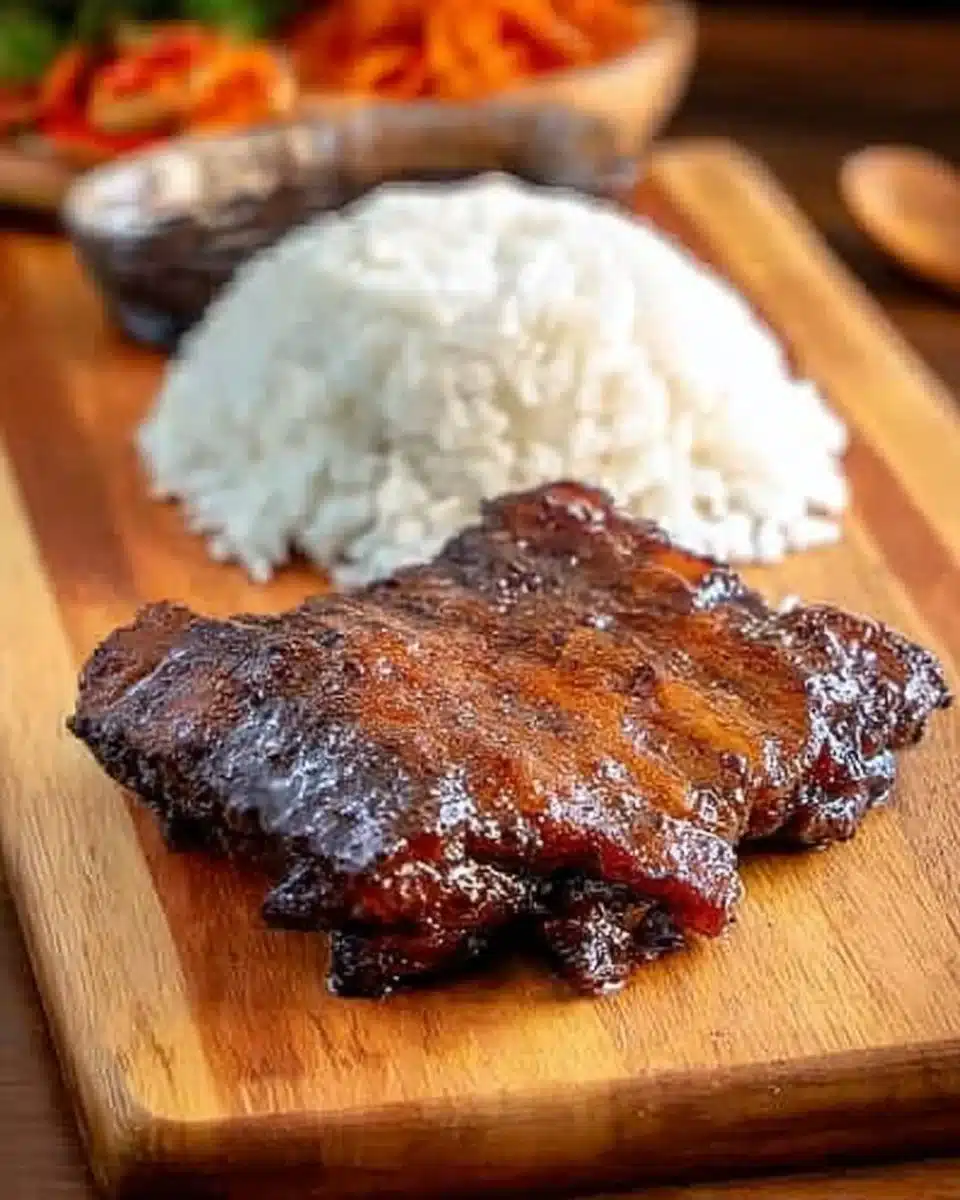
Teriyaki Chicken with Homemade Sauce
The first bite is glossy, sticky, and deeply savory-sweet — the perfect balance of salty soy, warm ginger, and caramelized sugar. Teriyaki Chicken is a weeknight hero when the sauce is made from scratch and reduced to a mirror-like glaze. I perfected this version after testing it a dozen times in a busy kitchen and at home until the sauce clung to every bite. This recipe uses simple pantry ingredients, shows you how to get the sauce thick without graininess, and offers an air-fryer option for a faster finish. If you like a crisp exterior, try the air-fryer teriyaki method for a quicker, hands-off finish. Read on for exact measurements, clear timing, and the common traps to avoid.
Why This Recipe Works
- Balanced acid and sweet: mirin or rice wine balances the soy for a rounded flavor without harsh saltiness.
- Cornstarch slurry gives a glossy, clingy sauce without grainy sugar crystals.
- High-heat sear locks juices in dark meat (thighs) while creating caramelization.
- Resting the chicken off heat lets the sauce set and thickens naturally.
- Tested repeatedly across stovetop and oven methods to ensure consistent timing and doneness.
Ingredients Breakdown
- Chicken thighs, boneless, skin-on — 800 g (1.75 lb), about 4 large thighs. Thighs stay juicier than breasts. If using breasts, expect slightly drier meat.
- Soy sauce — 120 ml (½ cup). Use naturally brewed soy sauce. If using low-sodium, taste before adding extra salt.
- Mirin — 60 ml (¼ cup). Adds sweetness and acidity; replace with 2 tbsp sugar + 2 tbsp water if unavailable.
- Sake (or dry sherry) — 60 ml (¼ cup). Adds depth. Omit and add 1 tbsp rice vinegar if you prefer alcohol-free.
- Granulated sugar — 60 g (¼ cup). Provides caramelization. Brown sugar will deepen flavor but may darken the sauce faster.
- Fresh ginger, minced — 15 g (1 tbsp). Brightens the sauce; powdered ginger is weaker—use ½ tsp if substituting.
- Garlic, minced — 2 cloves (6 g). Provides savory backbone.
- Water — 60 ml (¼ cup) to loosen the sauce while cooking.
- Cornstarch slurry — 15 g (1 tbsp cornstarch) mixed with 30 ml (2 tbsp) cold water. This thickens the sauce without graininess. Do not substitute flour.
- Neutral oil — 15 ml (1 tbsp) for searing.
- Optional garnish: sesame seeds and sliced green onions.
Substitution notes: You can substitute honey for sugar (1:1 by weight), but the sauce will be sweeter and less caramel-forward. If using Morton kosher salt instead of Diamond Crystal, halve the amount in any seasoning adjustments because Morton’s is denser.
Essential Equipment
- Heavy skillet or nonstick frying pan, 25–28 cm (10–11 inch). A heavy pan gives even heat for a consistent sear.
- Instant-read thermometer for checking doneness: look for 74°C (165°F) internal.
- Small saucepan for making and reducing the sauce if you prefer to control thickness separately.
- Tongs and a silicone spatula. Tongs turn the chicken without piercing; a silicone spatula helps scrape the pan glaze.
- If you don’t have a skillet, use a baking sheet and finish under a broiler — watch closely to avoid burning.
- For an air-fryer finish, you can use the air-fryer chicken fillets method as a guide: air-fryer chicken fillets.
Step-by-Step Instructions
Prep Time: 15 minutes | Cook Time: 20 minutes | Inactive Time: 15 minutes (optional marinate) | Total Time: 50 minutes | Servings: 4
Step 1: Trim and score the chicken
Pat 800 g (1.75 lb) boneless, skin-on chicken thighs dry with paper towels. Lightly score the skin with a few shallow cuts so fat renders evenly, then salt lightly. Rest for 10–15 minutes while you make the sauce; this helps the skin crisp.
Step 2: Make the teriyaki sauce
In a bowl combine 120 ml (½ cup) soy sauce, 60 ml (¼ cup) mirin, 60 ml (¼ cup) sake, 60 g (¼ cup) granulated sugar, 15 g (1 tbsp) minced ginger, 6 g (2 cloves) minced garlic, and 60 ml (¼ cup) water. Whisk until the sugar dissolves, about 30 seconds. This is your base sauce.
Step 3: Sear the chicken
Heat 15 ml (1 tbsp) neutral oil in a heavy skillet over medium-high heat until shimmering, about 2 minutes. Place thighs skin-side down and sear for 5–7 minutes, pressing gently with a spatula until skin is deeply golden and fat has rendered. Flip and sear the other side 2–3 minutes.
Step 4: Reduce with the chicken
Pour the sauce mixture over the seared chicken. Bring to a simmer, reduce heat to medium-low, and cook uncovered for 6–8 minutes, spooning the sauce over the chicken every 1–2 minutes. Cook until an instant-read thermometer hits 74°C (165°F) in the thickest part and the sauce has reduced by about a third.
Step 5: Thicken the sauce
Mix 15 g (1 tbsp) cornstarch with 30 ml (2 tbsp) cold water to make a slurry. Stir the slurry into the pan and simmer for 1–2 minutes until glossy and slightly thickened. Do not add cold slurry directly into a vigorously boiling pan — temper it with a few tablespoons of hot sauce first.
Step 6: Glaze and rest
Spoon the thickened sauce over the thighs and remove from heat. Let rest 3–5 minutes so juices redistribute and the glaze sets. Slice and serve with extra sauce spooned over.
Expert Tips & Pro Techniques
- Common mistake: adding cornstarch while the sauce is too hot causes lumps. Always mix slurry with cold water and temper with a spoonful of hot liquid first.
- For extra gloss, finish with 1 tsp toasted sesame oil off heat just before serving.
- Make-ahead: Prepare the sauce base and refrigerate for up to 3 days. Sear chicken and finish with pre-made sauce in 10 minutes.
- Professional shortcut: reduce the sauce separately in a saucepan to really concentrate flavor, then add to seared chicken for a quick glaze.
- Crisp-skin option: After searing and reducing, transfer thighs to a 200°C (400°F) oven for 4–6 minutes to finish and crisp the skin.
- Avoid overcooking: thighs should reach 74°C (165°F). If you have a thick thigh, lower heat and cook longer rather than increasing temperature.
Storage & Reheating
- Refrigerator: Store cooled chicken and sauce in an airtight container for up to 3 days. Keep sauce separate if you want to reheat more gently.
- Freezer: Freeze cooked chicken with sauce in a freezer-safe container for up to 2 months. Thaw in the fridge overnight before reheating.
- Reheating: Reheat in a 175°C (350°F) oven for 8–12 minutes until warmed through. Reheat gently on the stovetop in a skillet over low heat, spooning sauce over the chicken. Avoid microwaving for long periods; it can make the meat tough and the skin soggy.
Variations & Substitutions
- Gluten-Free Version: Use tamari instead of soy sauce (120 ml / ½ cup). Everything else stays the same. Check your mirin for gluten content.
- Lighter Version (chicken breast): Use 800 g (1.75 lb) boneless chicken breasts, pounded to an even 2 cm (¾ inch) thickness. Sear 2–3 minutes per side and finish with sauce for 3–4 minutes. Expect slightly less juiciness.
- Honey-Ginger Teriyaki: Replace granulated sugar with 60 g (¼ cup) honey. Reduce cooking speed slightly to avoid burning; honey browns faster.
- Pineapple Teriyaki (sweet-savory): Add 120 ml (½ cup) crushed pineapple and reduce other water by 60 ml (2 tbsp). Keep an eye on sugar content and reduce added sugar by 15 g (1 tbsp). For wing inspiration, try this twist: pineapple teriyaki chicken wings.
- Air-Fryer Finish: After searing, transfer thighs to an air fryer at 200°C (400°F) for 4–6 minutes to crisp. Follow a tested air-fryer approach here: air-fryer parmesan-crusted chicken (use timing as a guide).
Serving Suggestions & Pairings
- Steamed rice and quick-pickled cucumbers for bright contrast.
- Stir-fried bok choy or sautéed snow peas tossed with a splash of the sauce.
- Garnish with sesame seeds and sliced green onions; squeeze of lime for acidity.
- For a casual bowl, serve with garlic roasted potatoes for a heartier plate; pairings like this work well with the chicken’s glaze and texture: pair with our roasted sides.
Nutrition Information
Per serving (Serving size: 1 chicken thigh with sauce; recipe makes 4 servings)
- Calories: 420 kcal
- Total Fat: 22 g
- Saturated Fat: 6 g
- Cholesterol: 120 mg
- Sodium: 980 mg
- Total Carbohydrates: 20 g
- Dietary Fiber: 0.5 g
- Sugars: 18 g
- Protein: 35 g
Nutrition values are estimates. Actual values may vary based on specific ingredients and preparation methods.
Frequently Asked Questions
Q: Why did my teriyaki chicken turn out dry?
A: Most often it was overcooked. Use an instant-read thermometer and remove the chicken at 74°C (165°F). If you seared too long at high heat, lower the heat and finish gently.
Q: Can I make this without mirin or sake?
A: Yes. Replace mirin with 2 tbsp sugar plus 2 tbsp water and replace sake with 1 tbsp rice vinegar. The flavor will be slightly different but still tasty.
Q: Can I double this recipe for a crowd?
A: Yes. Double all ingredients and use two pans or work in batches. Do not overcrowd the skillet; crowding lowers the pan temperature and prevents proper sear.
Q: Can I prepare this the night before?
A: Absolutely. You can make the sauce and marinate the chicken overnight (up to 12 hours). Sear and finish just before serving for the best texture.
Q: How long does this keep in the fridge?
A: Stored in an airtight container, cooked Teriyaki Chicken keeps 3 days in the refrigerator.
Q: Can I use chicken breasts instead of thighs?
A: Yes. Use 800 g (1.75 lb) breasts, pounded to even thickness, and reduce sear time to 2–3 minutes per side. Expect slightly less juiciness.
Q: My sauce became grainy after refrigeration — why?
A: Graininess often comes from sugar crystallizing. To prevent this, cool the sauce slowly at room temperature before refrigerating and avoid stirring vigorously as it cools. Reheat gently to re-dissolve any crystals.
Conclusion
This Teriyaki Chicken with Homemade Sauce is glossy, simple, and built for weeknight success. For a lighter, straightforward variation you can compare my approach with an alternative method at Easy Teriyaki Chicken at Cakescottage. For another trusted take and step-by-step photos, see this tested version at Teriyaki Chicken at RecipeTin Eats.
Print
Teriyaki Chicken with Homemade Sauce
- Total Time: 50 minutes
- Yield: 4 servings 1x
- Diet: Gluten-Free (if using tamari instead of soy sauce)
Description
This Teriyaki Chicken features a homemade sauce that is glossy, sticky, and savory-sweet, offering a perfect balance of salty soy, warm ginger, and caramelized sugar.
Ingredients
- 800 g (1.75 lb) chicken thighs, boneless, skin-on
- 120 ml (½ cup) soy sauce
- 60 ml (¼ cup) mirin
- 60 ml (¼ cup) sake or dry sherry
- 60 g (¼ cup) granulated sugar
- 15 g (1 tbsp) fresh ginger, minced
- 2 cloves (6 g) garlic, minced
- 60 ml (¼ cup) water
- 15 g (1 tbsp) cornstarch slurry (1 tbsp cornstarch mixed with 30 ml (2 tbsp) cold water)
- 15 ml (1 tbsp) neutral oil
- Optional garnish: sesame seeds and sliced green onions
Instructions
- Trim and score the chicken. Pat chicken thighs dry and lightly score the skin. Salt lightly and rest for 10–15 minutes.
- Make the teriyaki sauce. Combine soy sauce, mirin, sake, sugar, ginger, garlic, and water in a bowl and whisk until sugar dissolves.
- Sear the chicken. Heat oil in a heavy skillet and sear thighs skin-side down for 5–7 minutes until golden. Flip and sear the other side for 2–3 minutes.
- Reduce with the chicken. Pour sauce over the chicken, bring to a simmer, and cook uncovered for 6–8 minutes, spooning sauce over chicken.
- Thicken the sauce. Stir cornstarch slurry into the pan and simmer for 1–2 minutes until glossy and thickened.
- Glaze and rest. Spoon thickened sauce over the thighs and let rest for 3–5 minutes before serving.
Notes
For extra gloss, finish with 1 tsp toasted sesame oil before serving. Can be made ahead and stored in the fridge for up to 3 days.
- Prep Time: 15 minutes
- Cook Time: 20 minutes
- Category: Main Course
- Method: Stovetop
- Cuisine: Japanese
Nutrition
- Serving Size: 1 serving
- Calories: 420
- Sugar: 18g
- Sodium: 980mg
- Fat: 22g
- Saturated Fat: 6g
- Unsaturated Fat: 14g
- Trans Fat: 0g
- Carbohydrates: 20g
- Fiber: 0.5g
- Protein: 35g
- Cholesterol: 120mg