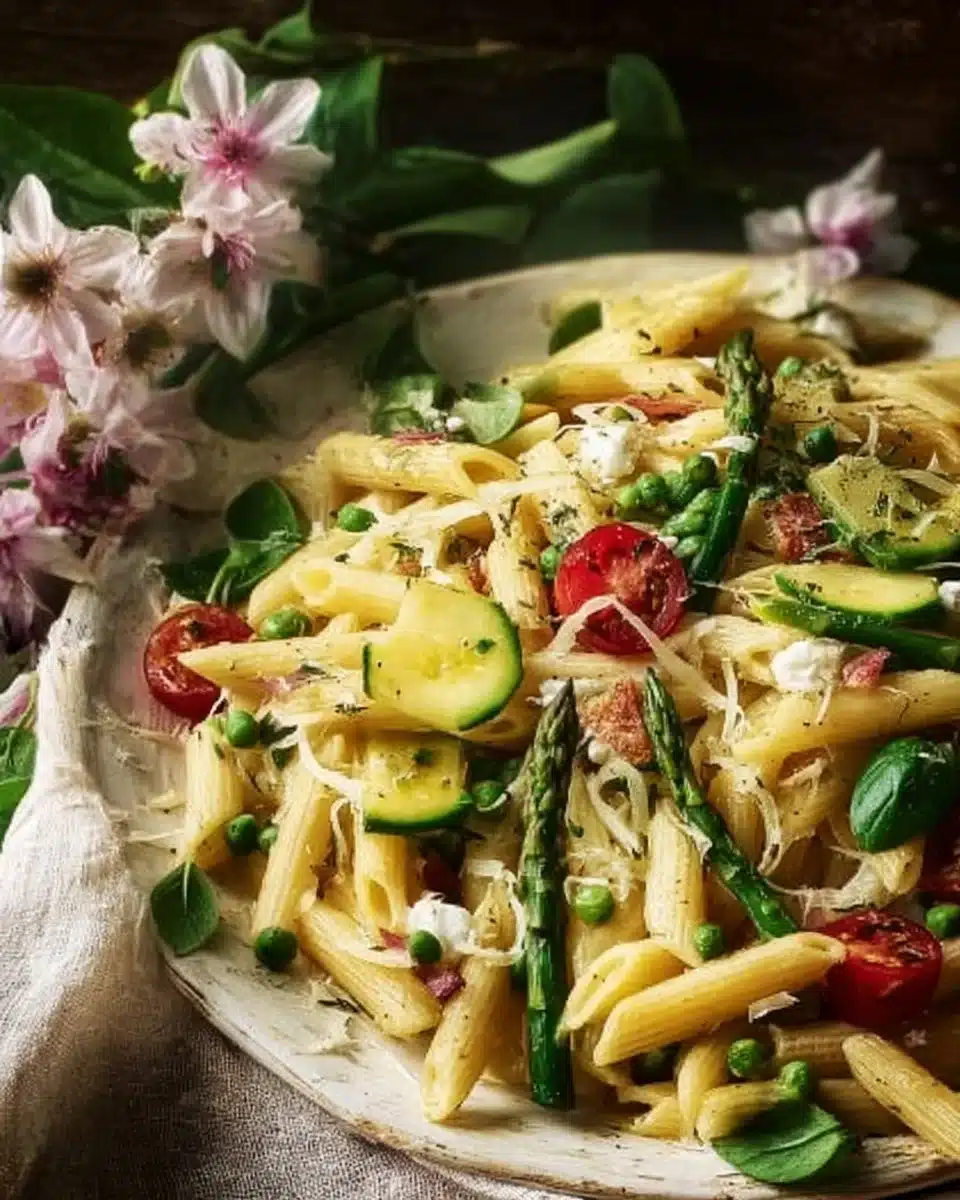
Asparagus & Lemon Pasta for Spring
The first forkful is bright: warm pasta coated in olive oil, zesty lemon, tender asparagus, and pops of sweet peas—a dish that tastes like sunshine. Spring Pasta sits at the crossroads of fast weeknight cooking and celebratory seasonal produce, so it’s the recipe I reach for when the market is full of green. After testing this version eight times with different pastas and olive oils, I settled on a balance that keeps the sauce silky without weighing down the vegetables. This is the version I developed in a busy kitchen and adapted for home cooks who want big flavor with minimal fuss. Read on for clear steps, exact measurements in metric and imperial, and tips that keep the pasta perfectly al dente.
Why This Recipe Works
- Quick blanching and finishing in the pan preserve asparagus crunch and vibrant color.
- Reserving starchy pasta water emulsifies the sauce so olive oil and lemon cling to noodles.
- Finely grated Parmesan melts into the warm pasta for a creamy finish without cream.
- A short rest after tossing lets flavors meld, so the dish tastes more balanced after 5–10 minutes.
- Salt timing: salting the cooking water and adjusting at the end prevents an over-salty finish.
Try seasonal pasta ideas that use the same tossing technique with different produce.
Ingredients Breakdown
- 340 g (12 oz) dried spaghetti or linguine — Holds sauce well; use bronze-cut if available for better texture.
- 300 g (10–12 spears) asparagus, trimmed and cut into 3–4 cm (1–1.5 in) pieces — Provides snap and green flavor; thicker stalks can be halved lengthwise.
- 120 g (1 cup) frozen peas, thawed — Adds sweetness and bright color.
- 60 ml (1/4 cup) extra-virgin olive oil — The backbone of the sauce; choose a fruity, peppery oil.
- Zest and juice of 1 large lemon (about 2 tbsp / 30 ml) — Zest gives aroma; juice brightens.
- 60 g (1/2 cup) finely grated Parmesan or Pecorino Romano — Stirred in off heat to melt into the sauce.
- 2 small garlic cloves, minced (about 8 g) — Adds savory depth; cook briefly to avoid bitterness.
- 1/4 tsp red pepper flakes (optional) — For a little warmth.
- 10 g (2 tbsp) unsalted butter (optional) — For extra silkiness; omit for dairy-free.
- Salt: 18 g (1 tbsp) kosher salt for pasta water (if using Morton table salt, use 1/2 tbsp) — Properly seasons pasta from the inside.
- Freshly ground black pepper to taste.
Substitution notes:
- Use 340 g (12 oz) gluten-free pasta for a GF version; choose a rice/bean blend for best texture. Cooking time may vary.
- You can substitute 60 g (1/2 cup) ricotta for some Parmesan for a softer, milder finish; sauce will be creamier.
- If you prefer a vegan version: replace Parmesan with a 2 tbsp nutritional yeast + 1 tbsp ground almonds; skip butter.
Learn more about pasta and veggie pairings for ideas on swapping vegetables.
Essential Equipment
- Large pot (5–6 liters) for boiling pasta — Enough water prevents sticking and cool-down.
- Large sauté pan or skillet (28–30 cm / 11–12 in) with lid — Big enough to toss the pasta and vegetables together.
- Slotted spoon or tongs — For transferring pasta directly to the pan.
- Microplane or fine grater for lemon zest and cheese.
- Measuring scale for precise dry weights — Recommended for consistent results.
- If you don’t have a large sauté pan, a wide mixing bowl works as a finish vessel; toss quickly to combine.
See tool tips for finishing pasta like a pro and how bowl finishing compares to pan finishing.
Preparation makes the finish faster and cleaner.
Step 1: Prepare the water and vegetables
Makes 4 servings. Prep time 15 minutes; Cook time 10 minutes; Inactive time None; Total time 25 minutes.
Bring 4.5 liters (18 cups) of water to a rolling boil and add 18 g (1 tbsp) kosher salt. Trim 300 g (10–12) asparagus and cut into 3–4 cm (1–1.5 in) pieces. Have 120 g (1 cup) thawed peas ready.
Step 2: Cook the pasta
Cook 340 g (12 oz) spaghetti in the boiling water until just shy of al dente — about 8–9 minutes for most brands (check package for guidance). Stir every 1–2 minutes to prevent clumping. Reserve 240–360 ml (1–1.5 cups) of starchy pasta water before draining.
Step 3: Blanch the asparagus and peas
While the pasta cooks, add asparagus to the boiling water for the final 2 minutes of the pasta’s cook time; add peas for the final 30–45 seconds. They should be bright and tender-crisp. Immediately drain or transfer to an ice bath for 30 seconds if you want extra color retention.
Step 4: Build the sauce
In a large skillet over medium heat, warm 60 ml (1/4 cup) extra-virgin olive oil. Add 2 minced garlic cloves and 1/4 tsp red pepper flakes; sauté for 30–45 seconds until fragrant but not browned. Add lemon zest and 30 ml (2 tbsp) lemon juice, then remove from heat.
Step 5: Finish and toss
Add drained pasta, asparagus, and peas to the skillet. Pour in 120–180 ml (1/2–3/4 cup) reserved pasta water and toss for 1–2 minutes, allowing starch to emulsify the oil. Off heat, stir in 60 g (1/2 cup) grated Parmesan and 10 g (2 tbsp) butter if using, until the sauce turns silky. Do not overmix — stop as soon as the cheese has melted and the sauce clings to the noodles.
Step 6: Season and rest
Taste and adjust with salt and freshly ground black pepper. Let the pasta rest for 5 minutes to let flavors meld, then serve with extra cheese and a drizzle of olive oil. Serve immediately while warm and glossy.
Expert Tips & Pro Techniques
- Under-cook pasta by 1–2 minutes: It will finish cooking in the pan and stay al dente. This is the classic restaurant trick.
- Use reserved pasta water to adjust sauce thickness: Add a little at a time until the sauce clings—too much makes it watery.
- Common mistake: overcooking asparagus. Blanch for only 2 minutes and finish in the pan; overcooked asparagus will be mushy and lose color.
- Make-ahead: Cook pasta and toss with oil and cheese; cool, cover, and refrigerate up to 24 hours. Reheat gently in a skillet with 2–3 tbsp pasta water for 3–4 minutes.
- Professional technique for home cooks: Finish pasta in the skillet, not a bowl. The hot pan carries residual heat and helps the starch bind with oil and cheese for a creamier sauce.
- If sauce splits (oily instead of emulsified): Remove from heat and whisk in 1 tbsp cold water or a little more cheese to re-emulsify.
Storage & Reheating
- Refrigerator: Store cooled pasta in an airtight container for up to 3 days. Keep extra grated cheese separate to preserve texture.
- Freezer: Not recommended — vegetables become watery after freezing. If you must freeze, pack without peas and asparagus; freeze for up to 1 month and expect a change in texture.
- Reheating: Reheat in a skillet over medium-low with 1–2 tbsp water or olive oil for 4–6 minutes, tossing until warmed through. Avoid microwaving if you want to preserve texture.
Variations & Substitutions
- Lemon-Butter Shrimp: Keep all quantities the same; add 340 g (12 oz) shrimp, peeled and deveined. Sear shrimp 2 minutes per side in 15 g (1 tbsp) butter before adding garlic, then proceed. Shrimp cooks in 4–5 minutes.
- Gluten-Free Version: Use 340 g (12 oz) GF pasta (rice/legume blend). Add ½ tsp xanthan gum if your blend lacks binding; cook according to package and expect a slightly shorter cook time.
- Creamy Spring Pasta: Add 120 ml (1/2 cup) heavy cream when building the sauce, simmer 1–2 minutes before adding pasta. Keep cheese at 60 g (1/2 cup).
- Add roasted cherry tomatoes: Roast 225 g (1 cup) halved cherry tomatoes at 200°C (400°F) for 12–15 minutes, then fold in at the end for sweet acidity.
- Herb-forward: Stir in 15 g (1/3 cup) chopped basil or chives at the end. Do not cook herbs; add them off heat.
Serving Suggestions & Pairings
- Light green salad with a lemon vinaigrette to echo the pasta’s citrus notes. Pair with our creamy pasta bake for a comfort-course contrast.
- Crusty bread or garlic knots to mop up any remaining sauce; a peppery ciabatta works well.
- Beverage: A dry Sauvignon Blanc or a crisp sparkling water with lemon pairs perfectly.
- For heartier appetites, serve alongside a roasted sausage and pasta dish for protein-forward guests.
Nutrition Information
Per serving (Serving size: about 1 plate; recipe makes 4 servings):
Calories: 480 kcal; Total Fat: 14 g; Saturated Fat: 4 g; Cholesterol: 20 mg; Sodium: 420 mg; Total Carbohydrates: 68 g; Dietary Fiber: 5 g; Sugars: 4 g; Protein: 16 g.
Nutrition values are estimates. Actual values may vary based on specific ingredients and preparation methods.
Frequently Asked Questions
Q: Why did my pasta sauce turn watery?
A: You probably added too much pasta water or didn’t emulsify it with cheese/butter. Add less water and toss off heat with cheese to thicken.
Q: Can I make this without eggs?
A: Yes — dried spaghetti contains no eggs. For egg-free versions, confirm your pasta is labeled egg-free or use a gluten-free noodle without egg.
Q: Can I double this recipe?
A: Yes. Use a larger pot and pan and cook pasta in batches if needed. Reserve more pasta water (up to 480–720 ml / 2–3 cups) to help emulsify larger volume.
Q: Can I prepare this the night before?
A: You can. Toss the cooled pasta with a little olive oil, store in an airtight container, and reheat in a skillet with 2–3 tbsp water for 3–4 minutes.
Q: How long does this keep in the fridge?
A: Store in an airtight container for up to 3 days. Vegetables soften over time; freshness is best on day one.
Q: My asparagus is tough. How do I fix it?
A: Trim the woody ends and slice thicker stalks in half lengthwise so they cook evenly. Blanching and a short pan finish keep them tender-crisp.
Q: What pasta shape works best?
A: Long shapes like spaghetti or linguine pair nicely because they pick up the olive oil and cheese. Shorter shapes like penne work too but change the texture.
Conclusion
This lemony asparagus pasta is fast, fresh, and easy to scale for guests. If you want other vegetable-forward inspirations, try a bright take on Pasta Primavera with seasonal vegetables or a family-friendly version from Cooking Classy’s pasta primavera.
Print
Asparagus & Lemon Pasta for Spring
- Total Time: 25 minutes
- Yield: 4 servings 1x
- Diet: Vegetarian
Description
A bright and zesty pasta dish featuring asparagus, peas, and a creamy Parmesan sauce, perfect for celebrating spring produce.
Ingredients
- 340 g (12 oz) dried spaghetti or linguine
- 300 g (10–12 spears) asparagus, trimmed and cut into 3–4 cm pieces
- 120 g (1 cup) frozen peas, thawed
- 60 ml (1/4 cup) extra-virgin olive oil
- Zest and juice of 1 large lemon (about 2 tbsp / 30 ml)
- 60 g (1/2 cup) finely grated Parmesan or Pecorino Romano
- 2 small garlic cloves, minced (about 8 g)
- 1/4 tsp red pepper flakes (optional)
- 10 g (2 tbsp) unsalted butter (optional)
- 18 g (1 tbsp) kosher salt for pasta water
- Freshly ground black pepper to taste
Instructions
- Prepare the water and vegetables: Bring 4.5 liters of water to a boil and add 18 g of kosher salt. Trim and cut asparagus into 3–4 cm pieces. Have thawed peas ready.
- Cook the pasta: Cook 340 g spaghetti in boiling water for 8–9 minutes until just shy of al dente. Reserve 240–360 ml of starchy pasta water before draining.
- Blanch the asparagus and peas: Add asparagus to boiling water for the last 2 minutes of pasta cooking, then add peas for 30–45 seconds. Drain immediately or transfer to ice bath.
- Build the sauce: In a large skillet over medium heat, warm 60 ml olive oil. Add minced garlic and red pepper flakes; sauté for 30–45 seconds until fragrant.
- Finish and toss: Add drained pasta, asparagus, and peas to the skillet. Pour in 120–180 ml reserved pasta water and toss for 1–2 minutes. Off heat, stir in Parmesan and butter if using.
- Season and rest: Taste and adjust with salt and pepper. Let the pasta rest for 5 minutes before serving with extra cheese and a drizzle of olive oil.
Notes
Under-cook pasta by 1–2 minutes to keep it al dente. Use reserved pasta water to adjust sauce thickness. Not recommended to freeze due to potential texture changes.
- Prep Time: 15 minutes
- Cook Time: 10 minutes
- Category: Main Course
- Method: Boiling and Sautéing
- Cuisine: Italian
Nutrition
- Serving Size: 1 serving
- Calories: 480
- Sugar: 4g
- Sodium: 420mg
- Fat: 14g
- Saturated Fat: 4g
- Unsaturated Fat: 8g
- Trans Fat: 0g
- Carbohydrates: 68g
- Fiber: 5g
- Protein: 16g
- Cholesterol: 20mg