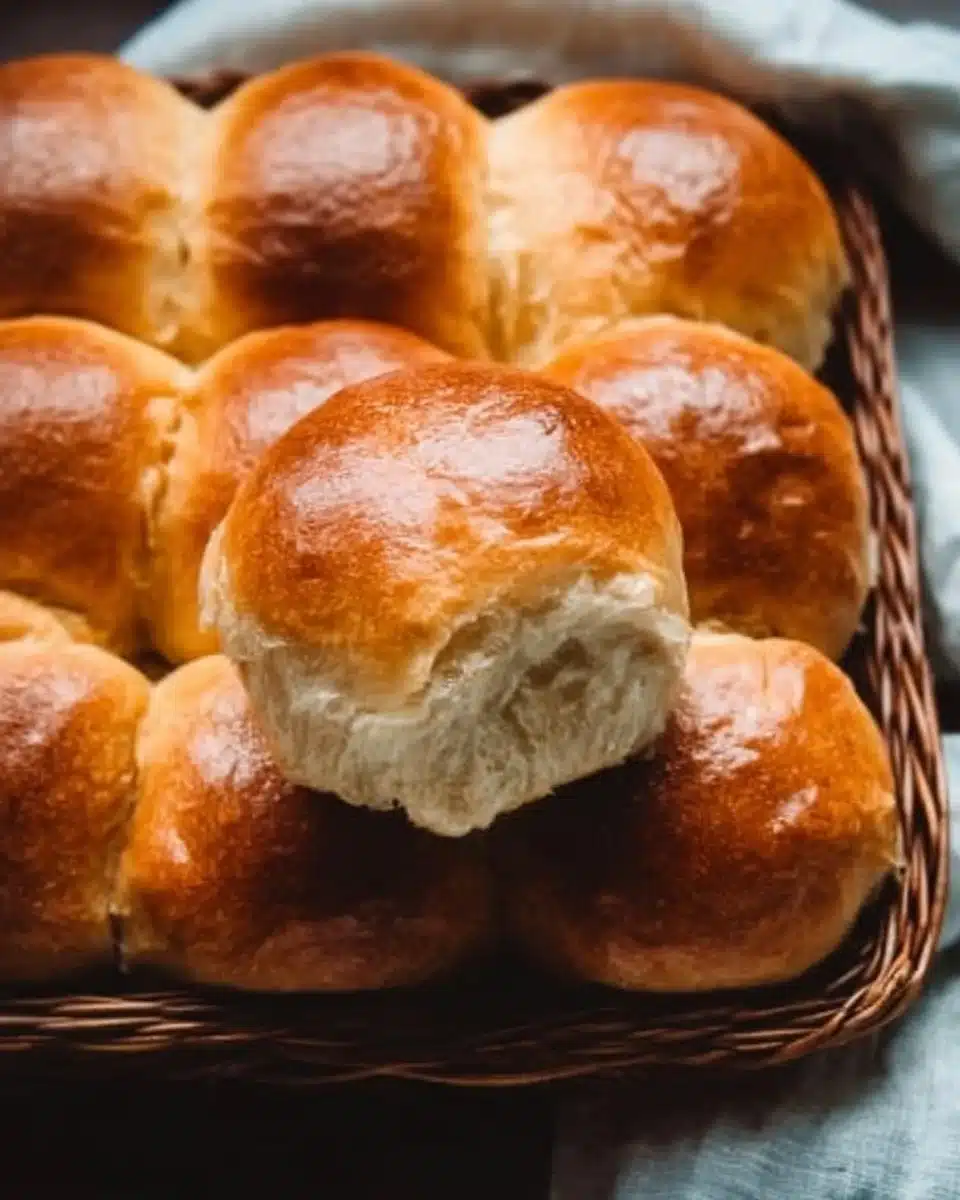
Soft Dinner Rolls: Tender, Fluffy & Easy Recipe
Warm, pillowy rolls that steam slightly when torn open are one of home baking’s small joys. This soft dinner rolls recipe gives you a thin, tender crust and a cloud-like interior every time — the primary technique is a short, gentle rise that keeps the crumb fine and moist. After testing this version eight times with different flours and resting times, I settled on a balance of milk and butter that makes the rolls rich without being heavy. I developed and refined this method while running a neighborhood bakery line, so the timing and sensory cues here reflect real-world kitchen experience. Read on for a clear ingredient breakdown, exact weights, and step-by-step directions so you can bake a dozen flawless rolls tonight. Try pairing these with an easy sheet-pan dinner for a full, stress-free meal.
Why This Recipe Works
- Short kneading plus a warm first rise gives structure without overworking the dough, producing a soft crumb.
- Milk and butter enrich the dough; milk adds tenderness, while butter gives a glossy, flavorful crust.
- Moderate yeast (not too much) prevents large holes and yields an even, fine crumb.
- A quick second proof in the shaped pan produces uniform tops and a consistent size.
- Brushing with butter after baking keeps crust soft and adds a fresh, buttery aroma.
Ingredients Breakdown
- 500 g (4 cups) all-purpose flour — The main structure. Measure by weight for consistent results. If you use a higher-protein bread flour, expect a slightly chewier roll.
- 240 ml (1 cup) whole milk, warmed to 40–43°C (105–110°F) — Activates the yeast and tenderizes the crumb. If milk is too hot, it will kill the yeast.
- 60 g (4 tbsp) unsalted butter, melted and cooled slightly — Adds richness and softens the crust. For a dairy-free option, replace with 60 g (4 tbsp) neutral oil (see substitutions).
- 50 g (1/4 cup) granulated sugar — Feeds the yeast and helps with browning.
- 8 g (2 tsp) fine sea salt (such as Diamond Crystal equivalent) — Balances flavor. If using Morton’s kosher salt, use about 1 tsp because it’s denser.
- 7 g (1 packet / 2 1/4 tsp) active dry yeast — Standard single packet quantity. Instant yeast may be used; mix directly with the flour and omit the brief proof step.
- 1 large egg (optional for egg wash) — Brush before baking for a glossy top. You can omit if you want a softer, matte finish.
- Extra melted butter for brushing after baking — Keeps tops tender and flavorful.
Substitutions and impact warnings:
- Whole milk → 240 ml (1 cup) evaporated milk + 120 ml (1/2 cup) water will add richness but may darken crust.
- Butter → vegan spread or neutral oil keeps tenderness but reduces buttery flavor.
- All-purpose flour → 500 g (4 cups) 1:1 gluten-free blend: add 1 tsp xanthan gum; texture will be denser and baking time may increase by 3–5 minutes.
Essential Equipment
- Stand mixer with dough hook (recommended) or a large mixing bowl and a sturdy wooden spoon for hand-kneading.
- Digital scale for accurate flour measurement.
- 9 x 13-inch baking pan (for 12 standard rolls) — a smaller pan will crowd them and change baking time.
- Instant-read thermometer to check milk temperature and baked internal temp.
- Parchment paper or a nonstick baking mat.
- Pastry brush for egg wash and butter finish.
If you don’t have a stand mixer, knead by hand on a lightly floured surface for 8–10 minutes until dough is smooth and slightly tacky.
Step-by-Step Instructions
Prep time: 20 minutes | Cook time: 15 minutes | Inactive time: 1 hour (rises) | Total time: 1 hour 35 minutes | Yields: 12 rolls, serving size: 1 roll
Step 1: Bloom the yeast
Warm 240 ml (1 cup) whole milk to 40–43°C (105–110°F). Stir in 1 tsp of the sugar and 7 g (2 1/4 tsp) active dry yeast. Let sit until foamy, about 5–7 minutes; if it doesn’t foam, start over — the yeast may be inactive.
Step 2: Combine wet ingredients
Whisk 1 large egg (optional) with 60 g (4 tbsp) melted butter and the remaining sugar. Add the foamy yeast-milk mixture and stir to combine, about 20 seconds.
Step 3: Add dry ingredients and form a dough
In the mixer bowl combine 500 g (4 cups) all-purpose flour and 8 g (2 tsp) fine sea salt. With the mixer on low, add the wet ingredients and mix until a shaggy dough forms, about 1–2 minutes. Do not add all the flour at once — add gradually so the dough reaches the right hydration.
Step 4: Knead until smooth
Knead with the dough hook on medium-low for 6–8 minutes, or knead by hand for 8–10 minutes, until the dough is smooth, elastic, and slightly tacky but not sticky. The dough should pass the windowpane test (stretch a small piece — it should thin without tearing).
Step 5: First rise
Lightly oil a bowl, place the dough inside, and cover with plastic wrap or a damp towel. Let rise in a warm spot until doubled, about 45–60 minutes depending on room temperature. A gently warm oven (turned off) is ideal.
Step 6: Shape the rolls
Punch down the dough gently to release large gas pockets. Divide into 12 equal pieces (about 60–65 g / 2.1–2.3 oz each). Shape each into a tight ball by tucking edges underneath and rolling on the counter until smooth, about 20–30 seconds per roll.
Step 7: Second rise in pan
Arrange rolls seam-side down in a 9 x 13-inch pan, leaving small gaps. Cover loosely and let rise until nearly doubled and the rolls touch, about 30–40 minutes. They should feel puffy and soft to the touch.
Step 8: Bake
Preheat oven to 190°C (375°F). If using an egg wash, beat 1 egg with 1 tbsp water and brush tops. Bake for 12–15 minutes, rotating the pan halfway through, until tops are deep golden and an instant-read thermometer inserted into the center of a roll reads 88–93°C (190–200°F).
Step 9: Finish and cool
Remove from oven and brush immediately with 15–30 g (1–2 tbsp) melted butter for a soft, glossy top. Let cool 10 minutes before serving so crumbs set; serve warm.
Expert Tips & Pro Techniques
- Always weigh flour. Cup measures vary widely; 500 g ensures consistent dough every time.
- Common mistake: overproofing. If rolls collapse in the oven, your second rise went too long. Shape them tighter and check after 25 minutes instead of waiting the full time.
- Make-ahead: Shape rolls, place in the pan, cover tightly, and refrigerate overnight. In the morning, let sit at room temperature 30–45 minutes and bake as directed.
- Professional tweak for even crumb: after shaping, place the rolls in the pan and press a small indentation in the center of each with your knuckle — this helps achieve uniform domes.
- Home adaptation of laminated richness: for slightly flakier layers, fold a cold 15 g (1 tbsp) cube of butter into the dough during shaping, but keep rolling gentle.
- If you must use instant yeast, reduce yeast to 6 g (2 tsp) and mix directly with the flour; skip the initial bloom step.
Storage & Reheating
- Refrigerator: Store cooled rolls in an airtight container or zip-top bag for up to 3 days. The fridge will dry them faster than room temperature, so plan to reheat before serving.
- Freezer: Wrap cooled rolls individually in plastic wrap, then place in a freezer bag. Freeze up to 3 months. To thaw, move to the fridge overnight or leave at room temperature for 1–2 hours.
- Reheating: Reheat from thawed or refrigerated in a 175°C (350°F) oven for 8–12 minutes, wrapped in foil to preserve softness. Avoid microwaving for long periods — it makes the crumb gummy and the crust soggy.
Variations & Substitutions
- Garlic-Herb Rolls: Add 1–2 tbsp finely chopped fresh herbs (rosemary, thyme) and 1 tsp garlic powder to the dough. Brush with garlic butter after baking. No other timing changes.
- Gluten-Free Version: Replace 500 g (4 cups) all-purpose flour with a 1:1 gluten-free blend and add 1 tsp xanthan gum. Dough will be stickier; increase baking time by 3–5 minutes and expect a denser crumb.
- Whole Wheat Hybrid: Replace 125 g (1 cup) of the all-purpose flour with 125 g (1 cup) whole wheat flour. Increase hydration by 15–30 ml (1–2 tbsp) if dough seems stiff. Flavor is nuttier; texture remains soft.
- Vegan/Dairy-Free: Substitute 60 g (4 tbsp) melted vegan butter or neutral oil and use a plant-based milk. Omit egg wash or use plant milk with a pinch of sugar. No rise time changes.
- Sweet Milk Rolls: Increase sugar to 75 g (1/3 cup) and brush with honey-butter after baking for a brioche-adjacent treat. Baking time unchanged.
Serving Suggestions & Pairings
- Classic: Serve warm with salted butter and honey for a simple, irresistible side.
- Dinner pairing: These rolls pair perfectly with roasted chicken and gravy — try alongside our sweet potato dinner rolls fusion for a seasonal twist.
- Brunch: Split and fill with scrambled eggs, cheddar, and smoked salmon for sliders.
- Holiday spread: Add to a festive table with whipped herb butter and cranberry chutney; they also go well with a chilled sparkling wine or a robust, medium-bodied beer. For a playful dessert, turn into mini bread puddings and see our dessert gelatin ideas to round out the menu.
- For weeknight convenience, serve alongside a fast sheet-pan meal like this air-fryer family meal that can be ready while the rolls rise.
Nutrition Information
Per serving: 1 roll (12 rolls total)
- Calories: 190 kcal
- Total Fat: 6.8 g
- Saturated Fat: 3.8 g
- Cholesterol: 25 mg
- Sodium: 230 mg
- Total Carbohydrates: 28 g
- Dietary Fiber: 1.2 g
- Sugars: 4.5 g
- Protein: 5.0 g
Nutrition values are estimates. Actual values may vary based on specific ingredients and preparation methods.
Frequently Asked Questions
Q: Why did my rolls turn out dense instead of soft?
A: Dense rolls usually mean under-kneading or insufficient rise time. Knead until the dough is smooth and elastic and allow the first rise to double in size. Also check yeast freshness.
Q: Can I make this without eggs?
A: Yes. Omit the egg for a softer, matte finish. Use plant milk for a vegan version and brush with melted dairy-free butter after baking.
Q: Can I double this recipe for a larger batch?
A: Yes. You can double all ingredients and bake in two pans. Keep the same proofing times, but watch the oven crowding — rotate pans for even browning.
Q: Can I prepare the rolls the night before?
A: Yes. Shape the rolls in the pan, cover tightly, and refrigerate overnight. In the morning, let sit 30–45 minutes at room temperature before baking.
Q: How long do these rolls keep in the fridge?
A: Stored in an airtight container, rolls will keep for up to 3 days in the refrigerator. For longer storage, freeze for up to 3 months.
Q: My rolls have large holes. What went wrong?
A: Large holes come from overproofing or shaping too roughly. Degas gently after the first rise and shape evenly-sized balls with smooth tops.
Q: Can I use instant yeast instead of active dry yeast?
A: Yes. Use 6 g (2 tsp) instant yeast and mix directly into the flour. You can skip the initial yeast bloom step. Expect similar rise times.
Conclusion
These rolls are reliable and forgiving — ideal for weeknights, holidays, and everything in between. For a similar soft-roll approach with slight technique differences, you may like the classic version at Soft Dinner Rolls Recipe – Sally’s Baking Addiction, and for another home-baker-tested take, see the crowd-pleasing method at The BEST Dinner Rolls – Mom On Timeout. Happy baking — enjoy the warm, buttery results.
Print
Soft Dinner Rolls
- Total Time: 95 minutes
- Yield: 12 rolls 1x
- Diet: Vegetarian
Description
Warm, pillowy rolls with a thin, tender crust and cloud-like interior, perfect for any meal.
Ingredients
- 500 g (4 cups) all-purpose flour
- 240 ml (1 cup) whole milk, warmed to 40–43°C (105–110°F)
- 60 g (4 tbsp) unsalted butter, melted and cooled slightly
- 50 g (1/4 cup) granulated sugar
- 8 g (2 tsp) fine sea salt
- 7 g (1 packet / 2 1/4 tsp) active dry yeast
- 1 large egg (optional for egg wash)
- Extra melted butter for brushing after baking
Instructions
- Warm the milk and stir in 1 tsp of sugar and the active dry yeast. Let sit until foamy, about 5–7 minutes.
- Whisk together the egg (optional), melted butter, and remaining sugar. Add the foamy yeast-milk mixture and stir to combine.
- Combine the flour and salt in a mixer bowl. With the mixer on low, add the wet ingredients and mix to form a shaggy dough.
- Knead with a dough hook on medium-low for 6–8 minutes until smooth and elastic.
- Lightly oil a bowl, place the dough inside, and cover to rise in a warm spot until doubled, about 45–60 minutes.
- Punch down the dough, divide it into 12 equal pieces, and shape into balls.
- Arrange rolls in a greased 9 x 13-inch pan, cover, and let rise until nearly doubled, about 30–40 minutes.
- Preheat oven to 190°C (375°F). Brush tops with egg wash (if using) and bake for 12–15 minutes until golden brown.
- Remove from the oven, brush with melted butter, and let cool for 10 minutes before serving.
Notes
Always weigh flour for consistency. For dairy-free, substitute butter with neutral oil and milk with plant-based options.
- Prep Time: 20 minutes
- Cook Time: 15 minutes
- Category: Breads
- Method: Baking
- Cuisine: American
Nutrition
- Serving Size: 1 roll
- Calories: 190
- Sugar: 4.5g
- Sodium: 230mg
- Fat: 6.8g
- Saturated Fat: 3.8g
- Unsaturated Fat: 3g
- Trans Fat: 0g
- Carbohydrates: 28g
- Fiber: 1.2g
- Protein: 5g
- Cholesterol: 25mg