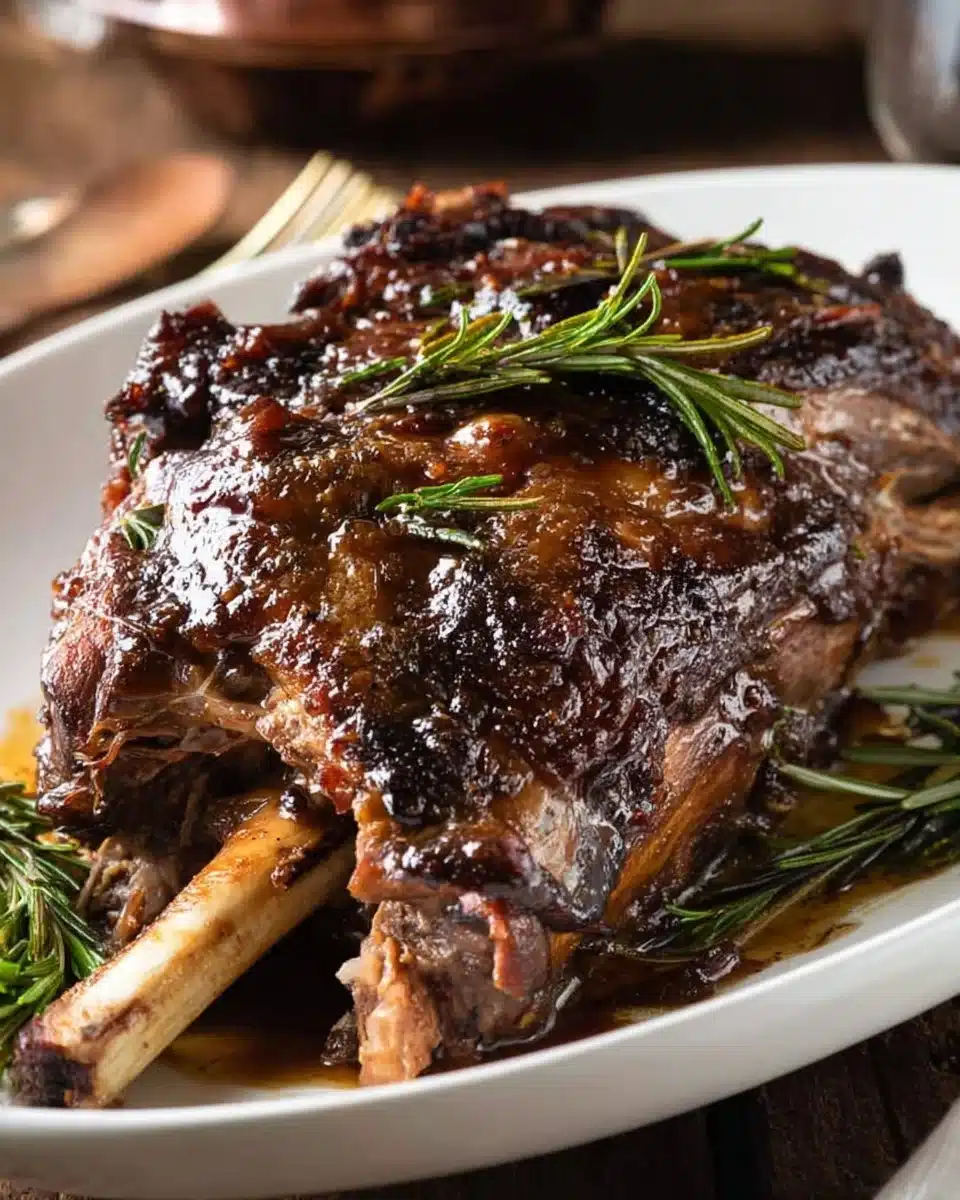
Slow-Roasted Leg of Lamb for a Tender, Crispy Finish
Aromas of garlic, rosemary and hot olive oil fill the kitchen as this slow roast leg of lamb turns soft enough to slice with a fork and crisp at the edges. Slow roast leg of lamb is the technique that lets a large cut develop deep flavor while staying silky and juicy inside. I developed and tested this method over many seasons as a line cook and later as a culinary instructor; I refined timing, salt levels and the final high-heat blast to get a reliably crisp crust without drying the meat. After testing this version across 8 kitchen runs with both bone-in and boneless legs, it has proved the easiest to reproduce at home. Read on for the breakdown of ingredients, precise temperatures, and step-by-step notes so your roast comes out perfect every time — plus suggested sides and make-ahead options for stress-free entertaining. For a relaxed digestif after the meal, I sometimes pair this with a simple cup of tea to settle the palate.
Why This Recipe Works
- Low-and-slow cooking at 120°C (250°F) breaks down collagen slowly, turning connective tissue into gelatin that gives a silky mouthfeel.
- A short high-heat finish (220°C / 425°F) crisps the fat and creates the Maillard crust without overcooking the interior.
- Dry-salting the surface ahead of time seasons deeply and helps the exterior dry slightly so the crust browns better.
- Resting the roast for 20 minutes lets juices redistribute so slices stay moist and stable.
- Using a probe thermometer removes guesswork and prevents overcooking.
Ingredients Breakdown
- Leg of lamb, bone-in or boneless, 2.5–3.0 kg (5½–6½ lb) — Bone-in adds flavor and shields meat; boneless roasts faster by 15–30 minutes.
- Kosher salt, 18–20 g (3½–4 tsp) Diamond Crystal or 1½–2 tsp Morton’s — use Diamond Crystal as written; if using Morton, reduce by about 30–40% because it is denser. This is the single most important variable for seasoning.
- Freshly ground black pepper, 2 tsp (to taste) — adds heat without masking herbs.
- Garlic, 6 cloves (18 g) minced — garlic flavors the surface and infuses pan juices.
- Fresh rosemary, 3 tbsp (15 g) finely chopped — rosemary’s pine notes pair classically with lamb.
- Olive oil, 45 ml (3 tbsp) — helps the herb rub adhere and browns the crust.
- Lemon zest from 1 lemon — brightens the richness at the end.
- Optional: 120 ml (½ cup) dry white wine or stock for the roasting pan — deglazes pan for jus. Substitution impact: omitting the wine reduces pan sauce depth but does not change main technique.
Notes on substitutions: You can swap rosemary for thyme (equal amount), but thyme offers a subtler finish. If you prefer no wine, add 120 ml (½ cup) extra stock and a teaspoon of Dijon for depth.
Essential Equipment
- Roasting pan with rack — the rack lifts the leg so air circulates and the underside browns. If you don’t have a rack, use a bed of halved onions and carrots.
- Instant-read or probe thermometer — essential for doneness. A probe that stays in during cooking is ideal.
- Meat fork or kitchen twine (if using boneless) to truss — trussing keeps an even shape for uniform cooking.
- Sharp carving knife and board — slice cleanly against the grain.
- Skillet for searing (cast iron preferred) — if you don’t have cast iron, use any heavy-bottom skillet and sear in batches. For a home oven-only method, increase final high heat time by 5–8 minutes.
For related dessert ideas or to plan a full menu, try a pairing like apple coffee cake to finish the meal.
Step-by-Step Instructions
This roast serves 6. Prep time: 20 minutes. Cook time: 7–8 hours low roast plus 15 minutes high heat. Inactive time: 20 minutes resting. Total time: about 8 hours 20 minutes.
Step 1: Trim and dry-brine the leg
Pat a 2.5–3.0 kg (5½–6½ lb) leg of lamb dry with paper towels and trim any excessively thick fat flaps. Rub 18–20 g (3½–4 tsp) kosher salt, 2 tsp black pepper, 6 minced garlic cloves (18 g) and 3 tbsp (15 g) chopped rosemary into the surface; drizzle 45 ml (3 tbsp) olive oil to bind. If possible, refrigerate uncovered for 4–12 hours to dry the surface and deepen flavor.
Step 2: Bring to room temperature
Remove the roast from the fridge 45–60 minutes before cooking so the internal temperature evens out. This helps the meat cook more evenly and shortens oven time by a few minutes.
Step 3: Sear the roast
Preheat a heavy skillet over high heat until shimmering. Sear the roast fat-side down for 3–4 minutes until deeply browned, then roll and brown the other sides, about 2–3 minutes per side. Searing builds crust and locks juices; if your roast is large, work in batches or use the oven’s broiler briefly.
Step 4: Slow roast at low temperature
Place the roast on a rack in a roasting pan and insert a probe thermometer into the thickest part without touching bone. Roast at 120°C (250°F) for 6–7 hours, or until the internal temperature reaches 54–57°C (130–135°F) for medium-rare or 60–63°C (140–145°F) for medium. Expect about 1.5–2 hours per 500 g (1 lb) at this temperature — check the probe after 4 hours and then hourly.
Step 5: Blast at high heat for a crust
Increase the oven to 220°C (425°F) and roast for 12–20 minutes to crisp the exterior and develop color. Watch closely; the goal is a dark golden-brown, not burnt. This step produces the Maillard crust while keeping the interior tender.
Step 6: Rest the roast
Remove from oven and tent loosely with foil. Rest for 20 minutes; internal temperature will rise 3–6°C (5–10°F). Resting keeps juices in the meat so slices are moist.
Step 7: Carve and serve
Cut against the grain into even slices and serve with pan jus or mint sauce. If you used wine or stock, deglaze the roasting pan with 120 ml (½ cup) liquid on the stovetop, reduce by half and whisk in 15 g (1 tbsp) cold butter for a glossy jus.
Expert Tips & Pro Techniques
- Use a probe thermometer set to your target temperature to remove guesswork; do not rely solely on time.
- Common mistake: skipping the sear. If you skip searing, the final crust will be pale and less flavorful. Always sear or use the high-heat blast.
- Make-ahead: Dry-brine and rub the leg up to 12 hours ahead, uncovered in the fridge. Bring to room temp before roasting. This halves day-of work.
- Professional technique adapted for home: reverse-sear — cook gently to target temp and finish hot for crust. This mimics restaurant results with home ovens.
- If the fat cap browns too quickly during the high-heat blast, cover the top loosely with foil while the underside catches up.
- For even slices, chill the rested roast 10 minutes in the fridge (not fully cold) to firm the meat slightly before carving.
Storage & Reheating
- Refrigerator: Store slices in an airtight container for 3–4 days. For best texture, keep jus separate.
- Freezer: Leftovers freeze well for up to 2 months. Wrap tightly in plastic and foil or vacuum-seal. Thaw overnight in the fridge before reheating.
- Reheating: Reheat gently in a 160°C (325°F) oven for 10–15 minutes covered with foil until warmed through. For sliced portions, reheat in a skillet with a splash of stock over medium-low heat for 4–6 minutes to preserve juiciness. Avoid microwaving, which can make the meat tough.
Variations & Substitutions
- Lemon-Rosemary Version: Add 2 tbsp (30 ml) lemon juice to the rub and increase zest to 2 lemons. Keep salt and roast times the same. The finish will be brighter.
- Greek Style: Replace rosemary with 2 tbsp (10 g) oregano and add 1 tbsp (15 g) Dijon to the rub. Serve with tzatziki. Roast time unchanged.
- Faster Roast (Higher Temp): Roast at 150°C (300°F) for 4–5 hours, then high-heat blast. Expect slightly less even doneness; only use if short on time.
- Boneless vs Bone-in: Boneless (but trussed) cooks about 15–30 minutes faster. Always use a thermometer.
- Low-Sodium: Reduce salt by 25% and increase aromatics (garlic, herbs) to compensate. The crust may brown differently.
Serving Suggestions & Pairings
- Classic sides: garlic-roasted potatoes and sautéed green beans with almonds. For a full menu, finish with Biscoff truffles as an easy, elegant dessert.
- Fresh mint sauce and a bright chimichurri both cut through lamb’s richness; serve one on the side.
- Beverage pairings: A robust red like Syrah/Shiraz or a medium-bodied Rioja works well. For something lighter, an herbal iced tea balances the meal.
- For a rustic family-style plate, add roasted root vegetables in the same pan during the final 60 minutes of the slow cook.
Nutrition Information
Per serving (serving size: 1 slice; recipe makes 6 servings). Values are estimates.
- Calories: 670 kcal
- Total Fat: 48 g
- Saturated Fat: 18 g
- Cholesterol: 190 mg
- Sodium: 570 mg
- Total Carbohydrates: 2 g
- Dietary Fiber: 0 g
- Sugars: 0 g
- Protein: 48 g
Nutrition values are estimates. Actual values may vary based on specific ingredients and preparation methods.
Frequently Asked Questions
Q: Why did my leg of lamb turn out dry?
A: Most drier results come from overcooking. Use a probe thermometer and remove at 54–57°C (130–135°F) for medium-rare; carryover heat will raise it a few degrees during rest.
Q: Can I make this without eggs?
A: Yes — the recipe contains no eggs. No substitution is needed.
Q: Can I double this recipe for a larger crowd?
A: You can roast multiple legs, but space them so air circulates and use separate probes for large roasts. Oven capacity may affect time; monitor temperature rather than clock times.
Q: Can I prepare this the night before?
A: Yes. Do the dry-brine and rub up to 12 hours ahead. You can also cook the roast fully, chill, and reheat for service, but reheat gently to avoid drying.
Q: How long does this keep in the fridge?
A: Cooked slices keep 3–4 days refrigerated in an airtight container.
Q: Should I cook bone-in or boneless?
A: Bone-in gives more flavor and a stable shape; boneless is easier to carve and slightly faster. Adjust cooking time—boneless done a bit sooner.
Q: What internal temperature is best for lamb?
A: For tender, slightly pink slices aim for 54–57°C (130–135°F) before resting for medium-rare; 60–63°C (140–145°F) for medium.
Conclusion
For extra technique notes and recipe variations, see the detailed cook method at Slow Roast Leg of Lamb – RecipeTin Eats, and compare finishing temperatures and timings with this alternate approach at Slow Roasted Leg of Lamb – Andy Cooks.
Print
Slow-Roasted Leg of Lamb for a Tender, Crispy Finish
- Total Time: 460 minutes
- Yield: 6 servings
- Diet: None
Description
Experience the deep flavor and juicy tenderness of a slow-roasted leg of lamb with a crispy finish, enhanced by garlic and rosemary.
Ingredients
- Leg of lamb, bone-in or boneless, 2.5–3.0 kg (5½–6½ lb)
- Kosher salt, 18–20 g (3½–4 tsp)
- Freshly ground black pepper, 2 tsp (to taste)
- Garlic, 6 cloves (18 g) minced
- Fresh rosemary, 3 tbsp (15 g) finely chopped
- Olive oil, 45 ml (3 tbsp)
- Lemon zest from 1 lemon
- Optional: 120 ml (½ cup) dry white wine or stock for the roasting pan
Instructions
- Trim and dry-brine the leg: Pat a 2.5–3.0 kg leg of lamb dry with paper towels, trim fat, and rub with salt, pepper, garlic, and rosemary; drizzle olive oil.
- Bring to room temperature: Remove the roast from the fridge 45–60 minutes before cooking.
- Sear the roast: Preheat a heavy skillet over high heat and sear the roast until browned on all sides.
- Slow roast at low temperature: Roast at 120°C (250°F) for 6–7 hours until reaching the desired internal temperature for doneness.
- Blast at high heat for a crust: Increase the oven to 220°C (425°F) for 12–20 minutes to crisp the exterior.
- Rest the roast: Remove from the oven, tent with foil, and let rest for 20 minutes.
- Carve and serve: Slice against the grain and serve with pan jus or mint sauce.
Notes
For added depth, you may substitute rosemary with thyme or use Dijon mustard if omitting wine. Ideal for special occasions.
- Prep Time: 20 minutes
- Cook Time: 440 minutes
- Category: Main Course
- Method: Roasting
- Cuisine: Mediterranean
Nutrition
- Serving Size: 1 slice
- Calories: 670
- Sugar: 0g
- Sodium: 570mg
- Fat: 48g
- Saturated Fat: 18g
- Unsaturated Fat: 20g
- Trans Fat: 0g
- Carbohydrates: 2g
- Fiber: 0g
- Protein: 48g
- Cholesterol: 190mg