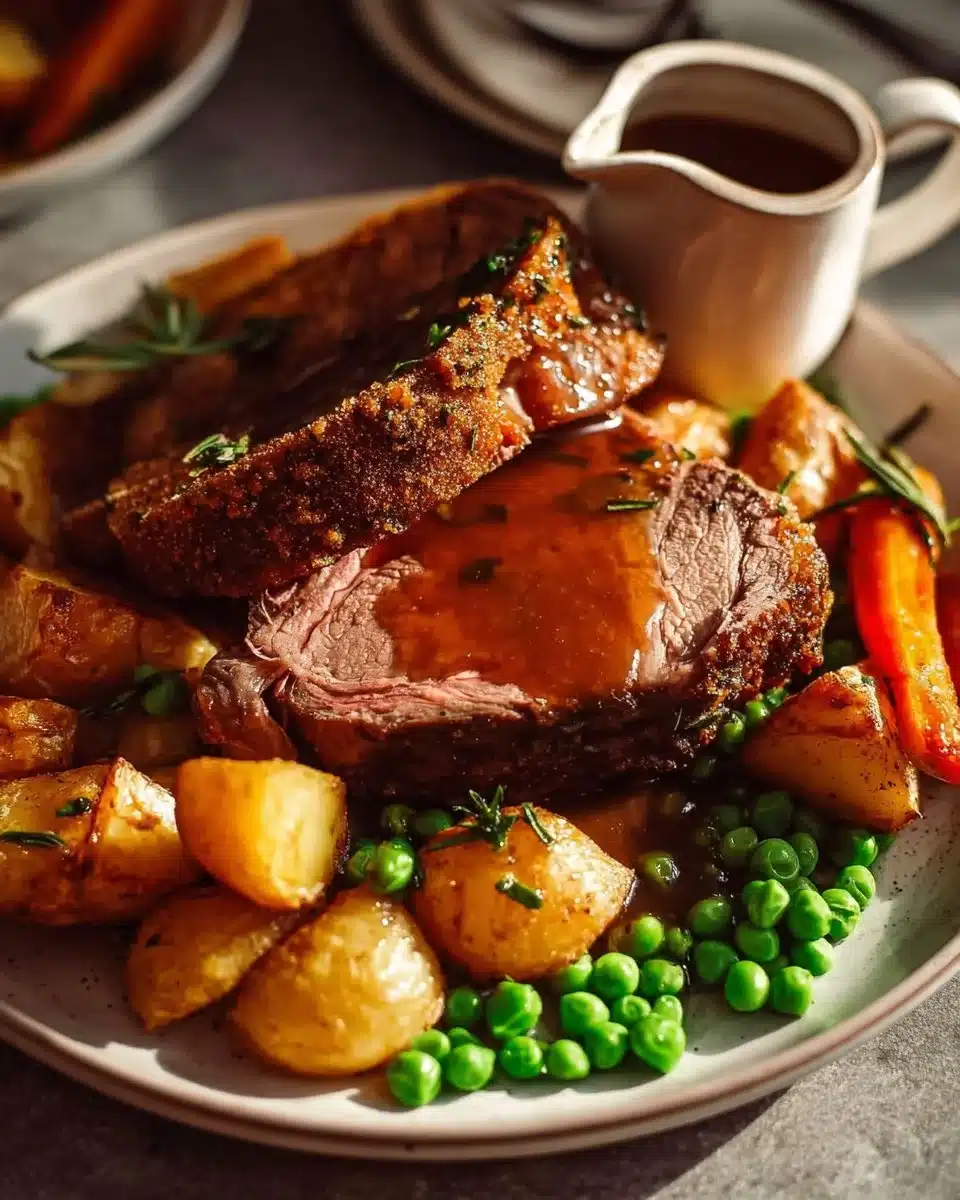
Roast Leg of Lamb with Rich Pan Gravy
The smell of rosemary, garlic, and hot pan juices signals a roast worth waiting for — and this Roast lamb leg with gravy delivers a tender, savory center with a caramelized crust. I developed this precise method during years cooking for busy weekend service and testing it at home until the timing was reliable across ovens. After testing this recipe 8 times on bone-in and boneless legs, I settled on the sear-plus-roast approach here to lock in juices and build a deep pan fond for gravy. Read on for exact temperatures, timing, and gravy tips so you get consistent results every time.
If you want a rich dessert to follow, try a showstopping Pumpkin Cheesecake that pairs well with the savory meat.
Why This Recipe Works
- A quick high-heat sear locks the crust and creates caramelized bits (fond) that flavor the gravy.
- Roasting at a moderate temperature finishes the meat evenly without drying the exterior.
- Resting the joint lets juices redistribute; slicing too soon dumps moisture onto the cutting board.
- Deglazing the roasting pan with wine and stock captures all the fond for a deeply flavored gravy.
- Simple aromatics (garlic, rosemary, lemon) enhance lamb without masking its natural flavor.
Ingredients Breakdown
- Leg of lamb (bone-in) 2.0 kg (4 lb 8 oz), trimmed of excess fat — the bone adds flavor and gives a natural roasting shape. You can use a 1.5 kg (3 lb) boneless leg but reduce cook time.
- Kosher salt 2 tsp (10 g) — use Diamond Crystal for this amount; if you use Morton’s, halve to 1 tsp (5 g) because it’s denser.
- Freshly ground black pepper 1 tsp (2 g) — seasons the crust.
- Garlic 6 cloves, minced (about 18 g) — infuses the surface; roasted garlic develops sweetness.
- Fresh rosemary 3 tbsp (9 g) chopped — pairs classically with lamb; dried rosemary works but is less bright (use 1 tbsp / 3 g).
- Olive oil 2 tbsp (30 ml) — for the rub and to help the crust form.
- Lemon zest from 1 lemon — brightens the fat-rich meat.
- Dry white wine 120 ml (1/2 cup) — deglazes the pan and adds acid to the gravy. You may substitute wine with extra stock if preferred.
- Beef or lamb stock 480 ml (2 cups) — forms the base of the gravy; low-sodium stock gives you better control of final salt.
- Unsalted butter 30 g (2 tbsp) — enriches and rounds the gravy.
- Cornstarch or arrowroot 1 tsp (4 g) mixed with 15 ml (1 tbsp) cold water — optional for thicker gravy.
Substitution note: You can substitute Greek yogurt for olive oil in the rub for a tangier crust, but it will brown differently and may not develop the same crust depth.
Essential Equipment
- Roasting pan with rack — a low-sided pan captures drips for gravy while allowing air circulation.
- Instant-read thermometer — essential for accurately hitting the right internal temperature.
- Heavy skillet (cast iron preferred) — for searing the leg before roasting; if you don’t have one, use a high-sided ovenproof pan.
- Fine-mesh sieve — for smooth gravy.
- Carving knife and board with grooves — a grooved board catches juices while you slice.
If you lack a rack, place the lamb on a thick layer of halved onions and carrot sticks to lift it off the pan bottom.
Step-by-Step Instructions
Prep Time 20 minutes, Cook Time 1 hour 40 minutes, Inactive Time 15 minutes resting, Total Time about 2 hours 15 minutes; Serves 8 (about 1/8 of a 2.0 kg leg)
Step 1: Bring the meat to room temperature
Take the 2.0 kg (4 lb 8 oz) leg of lamb from the fridge 30–45 minutes before cooking so it cooks evenly; pat dry with paper towels. This reduces the time the center spends warming in the oven.
Step 2: Make the garlic-rosemary rub and season
Stir together 6 minced garlic cloves (18 g), 3 tbsp (9 g) chopped rosemary, lemon zest, 2 tbsp (30 ml) olive oil, 2 tsp (10 g) kosher salt, and 1 tsp (2 g) pepper. Rub evenly over the lamb and let rest 10 minutes while you preheat. Do not underseason — the surface seasoning creates the crust.
Step 3: Sear the lamb
Heat a heavy skillet over medium-high until smoking lightly, about 2–3 minutes. Sear the lamb on all sides until deeply browned, about 3 minutes per side, using tongs to hold the bone ends; this develops fond for the gravy.
Step 4: Roast at two temperatures
Preheat oven to 230°C (450°F). Place the seared leg on a rack in the roasting pan and roast at 230°C (450°F) for 15 minutes to jump-start browning. Reduce oven to 160°C (325°F) and continue roasting for 55–65 minutes for medium-rare (internal temperature 57°C (135°F)). For medium, roast to 63°C (145°F), about 65–75 minutes. Check with an instant-read thermometer inserted into the thickest part, not touching bone.
Step 5: Rest the lamb
Remove the leg and transfer to a cutting board; tent loosely with foil and rest for 15 minutes. During this time the internal temperature will rise about 3–5°C (5–9°F) and juices will redistribute. Do not skip resting — slicing too soon releases juices.
Step 6: Make the pan gravy
Place the roasting pan over medium heat on the stove (or transfer pan juices and bits to the skillet). Pour in 120 ml (1/2 cup) dry white wine and scrape up browned bits, about 1–2 minutes. Add 480 ml (2 cups) stock and simmer until reduced by about one-third, 8–10 minutes, until flavorful and slightly thickened. Whisk in 30 g (2 tbsp) unsalted butter off the heat. If thicker gravy is desired, whisk in the cornstarch slurry and simmer 1 minute. Strain through a fine-mesh sieve and season to taste.
Expert Tips & Pro Techniques
- Resting and carryover: Use the thermometer to remove the lamb 3–5°C (5–9°F) below target — the internal heat will finish the cook while resting.
- Avoid over-roasting: If unsure, pull the lamb at the lower temperature and let carryover bring it to doneness; you can always return to oven briefly if needed.
- Make-ahead gravy: Roast the lamb, cool the pan juices, and refrigerate them in a sealed container up to 48 hours; skim fat before reheating and finishing the gravy.
- Common mistake: Slicing too soon. If sliced immediately, the meat loses its juices and feels dry. Wait the full rest time and slice against the grain for tenderness.
- Professional trick adapted for home: After searing, lift the oven rack to the upper third of the oven for the first high-heat phase to encourage browning, then move it down when lowering temp.
- Season in layers: Salt before searing and again in the gravy if needed; seasoning early helps the salt penetrate.
Storage & Reheating
- Refrigerator: Store sliced or whole cooled lamb in an airtight container for 3–4 days. Keep the gravy in a separate jar for 3–4 days.
- Freezer: Freeze sliced lamb wrapped tightly in plastic and foil for up to 3 months. Freeze gravy in an airtight container for up to 3 months; leave a little headspace as liquids expand.
- Thawing: Thaw overnight in the fridge. Reheat gravy in a saucepan over low heat, stirring.
- Reheating meat: Reheat slices in a 160°C (325°F) oven on a tray covered with foil for 10–15 minutes, or briefly in a skillet with a splash of stock to keep slices moist. Avoid the microwave to prevent uneven heating and rubbery texture.
Variations & Substitutions
- Herb-Crusted Lemon Lamb: Replace rosemary with 2 tbsp (6 g) chopped thyme and 2 tbsp (6 g) chopped parsley; add 1 tbsp (15 ml) Dijon mustard to the rub. Roast times stay the same.
- Spiced Middle Eastern Style: Use a rub of 2 tsp (6 g) ground cumin, 1 tsp (2 g) ground coriander, 1 tsp (2 g) smoked paprika, and 1 tbsp (15 ml) olive oil. Finish the gravy with 1 tbsp (15 ml) pomegranate molasses for brightness.
- Gluten-Free Gravy: Skip the cornstarch slurry if you use arrowroot (same quantity) or reduce by simmering. No other changes needed.
- Smaller joint (1.5 kg / 3 lb): Reduce total roasting time by 20–25 minutes; start checking internal temperature after 40 minutes in the lower-temp phase.
- Low-sodium version: Use low-sodium stock and reduce added salt by half; taste the gravy before final seasoning.
Serving Suggestions & Pairings
- Sides: Serve with garlic roasted potatoes and thyme — the potatoes soak up the gravy perfectly. Internal link to a complementary dessert: Biscoff Banana Pudding is a sweet follow-up.
- Vegetable pairing: Honey-roasted carrots and parsnips glazed with a little sherry balance the lamb’s richness. For a lighter main alternative, try Basil Chicken with Coconut for weeknight dinners.
- Garnish: Scatter chopped parsley and a squeeze of lemon over slices to brighten the dish.
- Beverage: Pair with a medium-bodied red like Rioja or a full-bodied white like oaked Chardonnay.
- Alternate dessert link for menus: finish the meal with Biscoff Truffles with White Chocolate or Black Forest Trifle for a decadent end.
Nutrition Information
Per serving (serving size: ~200 g cooked lamb per person; recipe yields 8 servings)
- Calories: 520 kcal
- Total Fat: 36 g
- Saturated Fat: 13 g
- Cholesterol: 150 mg
- Sodium: 480 mg
- Total Carbohydrates: 4 g
- Dietary Fiber: 0 g
- Sugars: 1 g
- Protein: 44 g
Nutrition values are estimates. Actual values may vary based on specific ingredients and preparation methods.
Frequently Asked Questions
Q: Why did my roast leg of lamb turn out dry?
A: Most often it was overcooked or sliced before resting. Use an instant-read thermometer and remove the lamb 3–5°C (5–9°F) below your target, then rest 15 minutes.
Q: Can I make this without eggs?
A: Yes — this recipe contains no eggs, so there’s nothing to replace. Eggs are not needed to achieve a good crust or gravy.
Q: Can I double this recipe for a larger gathering?
A: Yes. Roast two legs on separate racks or use separate pans so heat circulates. If both fit in one oven, rotate pans halfway through cooking for even browning.
Q: Can I prepare elements the night before?
A: You can mix the rub and refrigerate it, and you can make the gravy base from roasted bones or pan juices and refrigerate. Sear and roast on the day you serve for best crust and fond.
Q: How long does leftover roasted lamb keep in the fridge?
A: Stored in an airtight container, cooked lamb keeps 3–4 days in the refrigerator.
Q: What is the best internal temperature for roast lamb?
A: For medium-rare aim for 57°C (135°F) final (remove at ~54°C/130°F), for medium aim for 63°C (145°F) final.
Q: Can I use a boneless leg instead of bone-in?
A: Yes. A boneless 1.5–2.0 kg (3–4 lb) leg works; expect slightly shorter cooking time and a bit less pronounced flavor from the absence of the bone.
Conclusion
This method gives you a reliably tender roast leg with a deeply flavored pan gravy. For alternate techniques and another home-cook version, compare this approach with RecipeTin Eats’ roast lamb leg with gravy, and for a different gravy-forward take see The Dinner Bite’s roast leg of lamb with gravy recipe. Enjoy the roast — and save the pan juices.
Print
Roast Leg of Lamb with Rich Pan Gravy
- Total Time: 135 minutes
- Yield: 8 servings 1x
- Diet: N/A
Description
A succulent roast leg of lamb with a rich gravy, enhanced by garlic and rosemary, perfect for any occasion.
Ingredients
- 2.0 kg (4 lb 8 oz) bone-in leg of lamb, trimmed of excess fat
- 2 tsp (10 g) kosher salt
- 1 tsp (2 g) freshly ground black pepper
- 6 cloves garlic, minced (about 18 g)
- 3 tbsp (9 g) fresh rosemary, chopped
- 2 tbsp (30 ml) olive oil
- Zest from 1 lemon
- 120 ml (1/2 cup) dry white wine
- 480 ml (2 cups) beef or lamb stock
- 30 g (2 tbsp) unsalted butter
- 1 tsp (4 g) cornstarch or arrowroot mixed with 15 ml (1 tbsp) cold water (optional)
Instructions
- Bring the meat to room temperature by taking it out of the fridge 30–45 minutes before cooking and patting it dry.
- Stir together garlic, rosemary, lemon zest, olive oil, salt, and pepper. Rub evenly over lamb and let rest for 10 minutes.
- Heat a heavy skillet over medium-high heat and sear the lamb on all sides until browned.
- Preheat the oven to 230°C (450°F). Place the seared leg in a roasting pan and roast for 15 minutes, then reduce oven to 160°C (325°F) and roast for 55–65 minutes for medium-rare.
- Remove the leg from the oven and let it rest for 15 minutes tented with foil.
- Place the roasting pan over medium heat, deglaze with wine, add stock, and simmer until reduced. Whisk in butter and cornstarch slurry if desired.
Notes
For best results, allow the lamb to rest to redistribute juices. Store leftovers properly in the fridge for 3-4 days.
- Prep Time: 20 minutes
- Cook Time: 100 minutes
- Category: Main Course
- Method: Roasting
- Cuisine: Mediterranean
Nutrition
- Serving Size: 200 g cooked lamb per person
- Calories: 520
- Sugar: 1g
- Sodium: 480mg
- Fat: 36g
- Saturated Fat: 13g
- Unsaturated Fat: N/A
- Trans Fat: 0g
- Carbohydrates: 4g
- Fiber: 0g
- Protein: 44g
- Cholesterol: 150mg