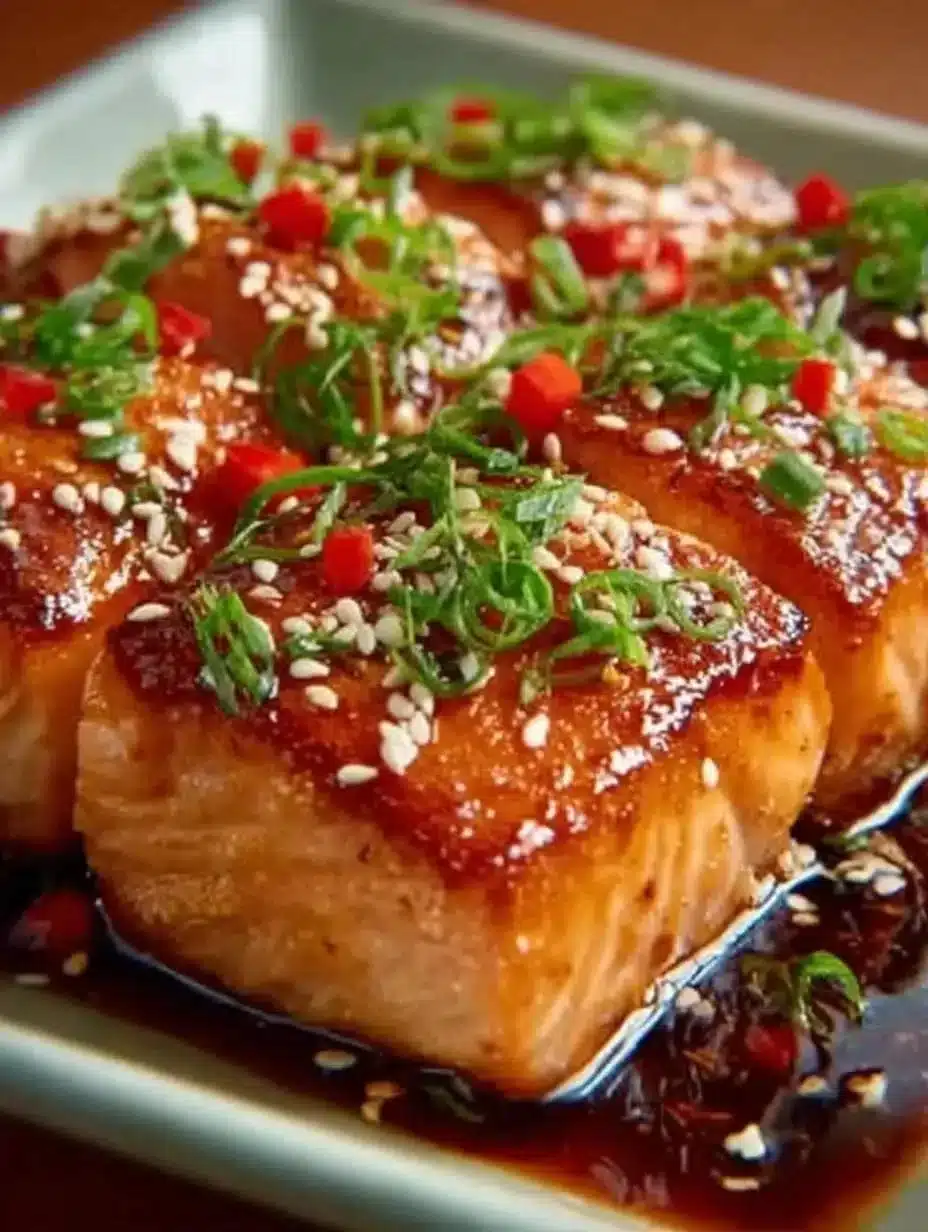
Orange Teriyaki Salmon — Bright & Sticky
The first bite hits with a glossy, citrus-sweet glaze and warm soy notes. Orange Teriyaki Salmon sings of sticky, caramelized edges and tender, flaky flesh. After testing this glaze 10 times and cooking it both in a skillet and the oven, I landed on a balance that brightens salmon without overpowering it. This version uses fresh orange juice, reduced mirin or rice vinegar, and a short marinade so the fish stays moist and juicy. If you prefer air frying, see a reliable air-fryer salmon method that adapts the glaze beautifully. Read on for ingredient hacks, exact timings, and fail-safe steps to make restaurant-quality orange teriyaki salmon at home.
Why This Recipe Works
- Fresh orange juice plus a touch of zest brightens the glaze without tasting sugary.
- A short reduction concentrates flavor and thins the sauce so it clings and caramelizes.
- Brushing the glaze in two stages creates sticky layers without burning the sugars.
- High heat at the end gives crisp edges while a gentle finish keeps the center moist.
- A brief marinade adds flavor below the surface without "cooking" the fish like citrus-heavy long marinades can.
Ingredients Breakdown
- Salmon fillets (4 × 170–200 g / 6–7 oz each): Use center-cut, skin-on fillets for even cooking and crisp skin. Skin helps protect the flesh from overcooking.
- Fresh orange juice (120 ml / ½ cup) and orange zest (1 tsp): Juice provides bright sweetness; zest adds concentrated orange aroma. Bottled juice can be used but will taste flatter.
- Low-sodium soy sauce (60 ml / ¼ cup): Provides umami and salt. Use low-sodium to control final saltiness.
- Mirin or dry sherry (30 ml / 2 tbsp): A sweet rice wine helps gloss the glaze. If unavailable, use 1 tbsp honey + 1 tbsp water.
- Brown sugar (50 g / ¼ cup packed): Helps caramelize; use light or dark depending on flavor depth desired. Reduce by 1 tbsp if you prefer less sweetness.
- Rice vinegar (15 ml / 1 tbsp): Balances sweetness. Do not skip.
- Fresh ginger (10 g / 1 tbsp grated) and garlic (2 cloves, minced): Aromatics for depth. Cook briefly to avoid bitterness.
- Sesame oil (5 ml / 1 tsp): Finishing oil — adds toasted sesame aroma; do not use as cooking oil at high heat.
- Cornstarch slurry: 5 g (1 tsp) cornstarch + 15 ml (1 tbsp) cold water to thicken. Use tapioca starch for gluten-free.
- Toasted sesame seeds and sliced scallions for garnish.
Substitution note: You can swap maple syrup or honey for brown sugar, but the glaze will be thinner. Use Diamond Crystal kosher salt measurements if following other recipes; adjust if using Morton’s.
Essential Equipment
- Heavy skillet or nonstick frying pan (about 25–28 cm / 10–11 inches) — wide enough to hold fillets without crowding.
- Small saucepan for reducing glaze, or use the same skillet after removing the fish.
- Whisk and heatproof brush for glazing.
- Instant-read thermometer for precise doneness (recommended). If you don’t have one, a fork test works but is less precise.
- Baking sheet and wire rack if finishing in the oven instead of pan-searing.
If you lack a heavy skillet, use a cast-iron pan or a roasting pan with high heat in the oven as an alternative. For air-fryer cooks, adapt by brushing and finishing with a toss in the air fryer at 200°C (400°F) for 3–4 minutes.
Step-by-Step Instructions
15 minutes prep · 12 minutes cook · 15 minutes inactive (short marinade) · 42 minutes total · Serves 4
Step 1: Make the Orange Teriyaki Glaze
Combine 120 ml (½ cup) fresh orange juice, 60 ml (¼ cup) low-sodium soy sauce, 30 ml (2 tbsp) mirin, 50 g (¼ cup) packed brown sugar, 10 g (1 tbsp) grated ginger, and 2 minced garlic cloves in a small saucepan. Bring to a simmer over medium heat, then reduce to medium-low and simmer for 6–8 minutes until syrupy and reduced by about one-third. Whisk in cornstarch slurry (5 g / 1 tsp cornstarch + 15 ml / 1 tbsp water) and simmer 30–60 seconds until glossy; remove from heat and stir in 5 ml (1 tsp) sesame oil. Let cool slightly.
Step 2: Marinate the Salmon (Short)
Pat 680–800 g (24–28 oz) salmon fillets dry. Spoon 3 tbsp (45 ml) of the cooled glaze over the fillets and rub gently. Let sit 10–15 minutes at room temperature. Do not marinate longer than 30 minutes — acid and salt will firm the flesh and can dry the fish.
Step 3: Preheat the Pan and Prepare Fish
Heat a 25–28 cm (10–11 in) skillet over medium-high until shimmering, about 2–3 minutes. Pat the salmon skin dry again and season lightly with pepper. Add 1 tbsp neutral oil and place fillets skin-side down. Press gently to ensure full contact. Cook undisturbed for 3–4 minutes until the skin is crisp and the lower third of the fillet has turned opaque.
Step 4: Flip and Glaze
Flip the fillets and reduce heat to medium. Spoon 1–2 tbsp (15–30 ml) glaze over each fillet and cook for another 2–3 minutes, spooning glaze occasionally. The fish should reach an internal temperature of 52–54°C (125–130°F) for medium-rare or 60–63°C (140–145°F) for medium; carryover will add a few degrees. Do not overcook — salmon continues to cook after you remove it.
Step 5: Finish and Caramelize
If you want a deeper caramelized top, spoon a little extra glaze and transfer the skillet to a preheated oven at 200°C (400°F) for 1–2 minutes, watching closely. Alternatively, use a culinary torch to gently caramelize the glaze. Remove fish when glossy and still slightly translucent in the center. Rest 2 minutes before serving. Garnish with toasted sesame seeds and scallions.
Expert Tips & Pro Techniques
- Use fresh orange juice for the clearest citrus flavor; concentrate it by simmering to intensify without extra sugar.
- Common mistake: cooking on too-high heat the entire time. Start high to crisp skin, then lower heat to finish so the center stays tender.
- If glaze thickens too much, thin with 1–2 tsp water or extra orange juice before brushing.
- Make-ahead: make the glaze up to 3 days ahead and refrigerate in a sealed container. Warm gently before using.
- Professional trick adapted for home: double-reduce the glaze for 1–2 tbsp and reserve a small portion to brush on after cooking for a glossy finish.
- To avoid sticking, always dry the skin thoroughly and use a hot, oiled pan. Let the skin naturally release before flipping.
Storage & Reheating
- Refrigerator: Store leftover salmon in an airtight container for up to 3 days. Keep glaze separate if possible to avoid soggy skin.
- Freezer: You can freeze cooked salmon for up to 2 months; wrap tightly in plastic wrap and foil or use a vacuum sealer. Thaw overnight in the fridge. Note: texture will be slightly softer after freezing.
- Reheating: Reheat gently in a 150°C (300°F) oven for 8–10 minutes, or re-crisp skin under a broiler for 1–2 minutes on low. Avoid microwaving — it makes the fish rubbery and the glaze lose its sheen.
Variations & Substitutions
- Gluten-Free Version: Use tamari or coconut aminos instead of soy sauce (60 ml / ¼ cup). Replace cornstarch with tapioca starch. No other changes; cook times unchanged.
- Honey-Mirin Swap: Replace brown sugar with 40 ml (2½ tbsp) honey and skip additional mirin. Reduce glaze 1–2 minutes less to avoid burning the honey.
- Citrus Swap: Use tangerine or blood orange juice (same volume) for seasonal variation. Flavor will be slightly sweeter or more floral.
- Paleo Version: Use coconut aminos in place of soy and maple syrup in place of brown sugar. See a baked paleo take for inspiration in cranberry orange chicken techniques for glazing meats.
- Oven-Baked Method: Preheat oven to 200°C (400°F). Bake on a rack for 8–10 minutes, then glaze and broil 1–2 minutes. Use the same internal temperature cues.
Serving Suggestions & Pairings
- Serve with steamed jasmine rice and quickly sautéed bok choy for a classic pairing.
- Brighten the plate with a wedge of lime and a scattering of cilantro. For a tomato contrast, a warm bowl of cilantro salmon tomato soup makes a cozy starter.
- For a brunch or buffet, slice and serve with slices of cranberry orange rolls to echo the citrus theme.
- For a heartier meal, pair with roasted sweet potatoes and pan-roasted green beans.
Nutrition Information
Serving size: 1 fillet (about 170–200 g / 6–7 oz) — recipe yields 4 servings.
Per serving (estimate):
- Calories: 430 kcal
- Total Fat: 22 g
- Saturated Fat: 4 g
- Cholesterol: 95 mg
- Sodium: 520 mg
- Total Carbohydrates: 14 g
- Dietary Fiber: 0.5 g
- Sugars: 10 g
- Protein: 40 g
Nutrition values are estimates. Actual values may vary based on specific ingredients and preparation methods.
Frequently Asked Questions
Q: Why did my salmon turn out dry?
A: Most dryness comes from overcooking. Use an instant-read thermometer and remove fish at 52–60°C (125–140°F) depending on your preferred doneness. Let rest; carryover heat will finish cooking.
Q: Can I make this without eggs?
A: Yes — this recipe has no eggs. If you were planning to use eggs as a binder for a different salmon dish, skip them here. For a crust or glaze binding, use a small amount of mustard or mayonnaise as an alternative.
Q: Can I double this recipe?
A: Yes. Double all glaze ingredients and cook fillets in batches so they don’t crowd the pan. Overcrowding lowers pan temperature and prevents crisping.
Q: Can I prepare this the night before?
A: You can make the glaze and pre-measure ingredients the day before. Marinate the salmon for only 10–30 minutes before cooking; long overnight citrus-based marinades will firm and dry the flesh.
Q: How long does this keep in the fridge?
A: Cooked salmon keeps 3 days in the refrigerator in an airtight container. If you plan to keep it longer, freeze within 2 days.
Q: My glaze is too runny. What did I do wrong?
A: Either you didn’t reduce it enough or the cornstarch slurry wasn’t added or cooked long enough. Simmer an extra 1–2 minutes until it thickens and coats the back of a spoon.
Q: Can I use frozen salmon?
A: Yes. Thaw completely in the fridge overnight and pat dry before marinating and cooking. Cooking from frozen leads to uneven doneness.
Conclusion
This Orange Teriyaki Salmon is a quick way to get bright, sticky flavor with minimal fuss. For a quicker pan-seared approach with a similar orange glaze, check out Chef Savvy’s orange glazed salmon for a 20-minute option. If you’re curious about a baked, paleo-friendly take on orange teriyaki-style salmon, try the version at Cooked & Loved’s orange teriyaki baked salmon.
Print
Orange Teriyaki Salmon
- Total Time: 42 minutes
- Yield: 4 servings 1x
- Diet: Paleo
Description
This Orange Teriyaki Salmon features a glossy, citrus-sweet glaze that balances fresh orange juice and soy sauce, creating sticky, caramelized edges with tender and flaky fish.
Ingredients
- 4 salmon fillets (170–200 g / 6–7 oz each)
- 120 ml (½ cup) fresh orange juice
- 1 tsp fresh orange zest
- 60 ml (¼ cup) low-sodium soy sauce
- 30 ml (2 tbsp) mirin or dry sherry
- 50 g (¼ cup packed) brown sugar
- 15 ml (1 tbsp) rice vinegar
- 10 g (1 tbsp) grated fresh ginger
- 2 cloves garlic (minced)
- 5 ml (1 tsp) sesame oil
- 5 g (1 tsp) cornstarch + 15 ml (1 tbsp) cold water (for slurry)
- Toasted sesame seeds (for garnish)
- Sliced scallions (for garnish)
Instructions
- Combine 120 ml (½ cup) fresh orange juice, 60 ml (¼ cup) low-sodium soy sauce, 30 ml (2 tbsp) mirin, 50 g (¼ cup) packed brown sugar, 10 g (1 tbsp) grated ginger, and 2 minced garlic cloves in a small saucepan. Bring to a simmer over medium heat, then reduce to medium-low and simmer for 6–8 minutes until syrupy and reduced by about one-third.
- Whisk in cornstarch slurry (5 g / 1 tsp cornstarch + 15 ml / 1 tbsp water) and simmer 30–60 seconds until glossy; remove from heat and stir in 5 ml (1 tsp) sesame oil. Let cool slightly.
- Pat 680–800 g (24–28 oz) salmon fillets dry. Spoon 3 tbsp (45 ml) of the cooled glaze over the fillets and rub gently. Let sit 10–15 minutes at room temperature.
- Heat a 25–28 cm (10–11 in) skillet over medium-high until shimmering, about 2–3 minutes. Pat the salmon skin dry again and season lightly with pepper. Add 1 tbsp neutral oil and place fillets skin-side down.
- Cook undisturbed for 3–4 minutes until the skin is crisp and the lower third of the fillet has turned opaque.
- Flip the fillets and reduce heat to medium. Spoon 1–2 tbsp (15–30 ml) glaze over each fillet and cook for another 2–3 minutes, spooning glaze occasionally.
- Remove fish when glossy and still slightly translucent in the center. Rest 2 minutes before serving. Garnish with toasted sesame seeds and scallions.
Notes
For best results, use fresh orange juice and do not overcook the salmon. This recipe is adaptable for air-frying as well.
- Prep Time: 15 minutes
- Cook Time: 12 minutes
- Category: Main Course
- Method: Seared
- Cuisine: Asian
Nutrition
- Serving Size: 1 fillet
- Calories: 430
- Sugar: 10g
- Sodium: 520mg
- Fat: 22g
- Saturated Fat: 4g
- Unsaturated Fat: 6g
- Trans Fat: 0g
- Carbohydrates: 14g
- Fiber: 0.5g
- Protein: 40g
- Cholesterol: 95mg