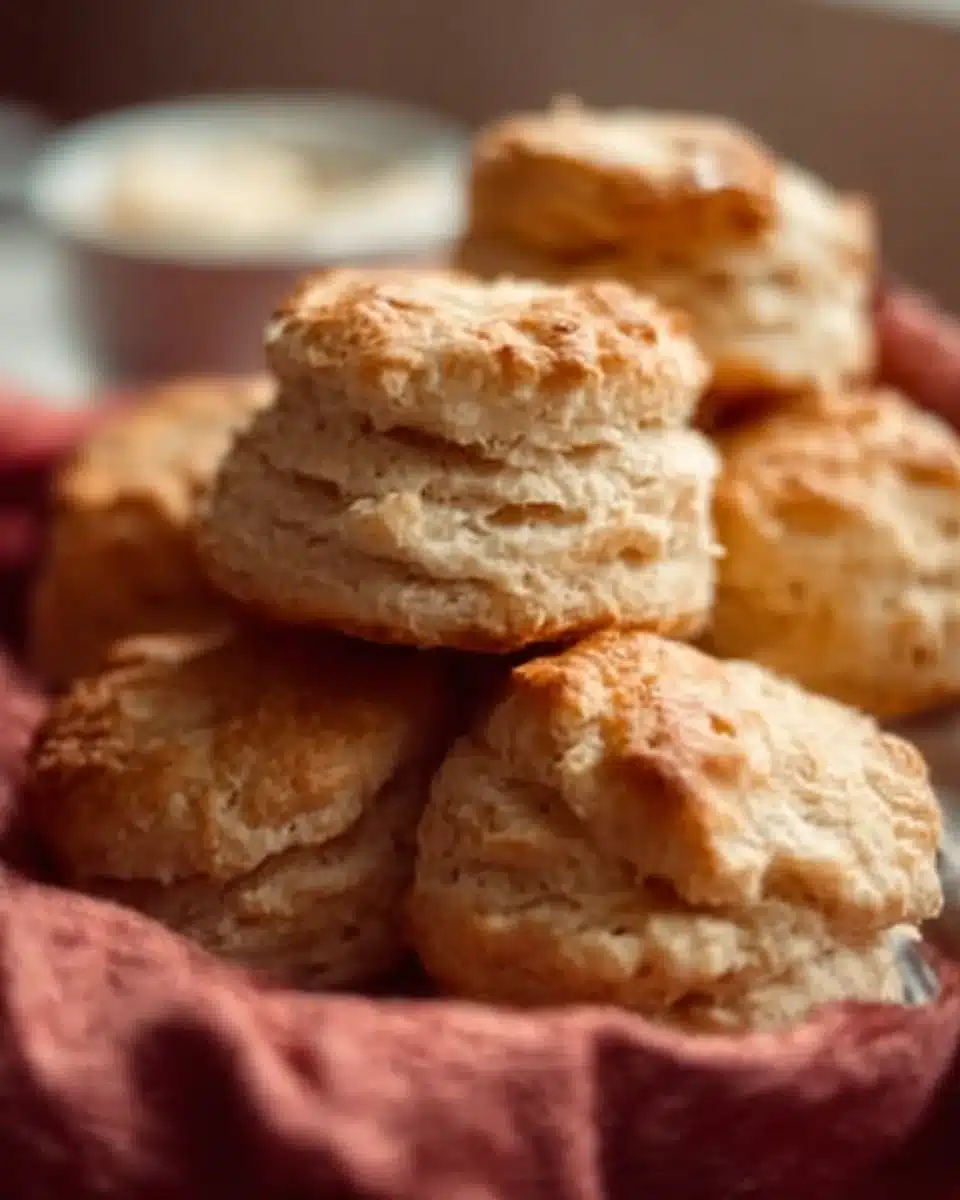
Homemade Biscuits — Flaky, Easy Buttermilk Recipe
Warm, buttery layers that crackle at the edges and melt in your mouth. Homemade biscuits are simple, comforting, and — when done right — impossibly flaky; this version produces tall, tender rounds every time. After testing this recipe 12 times with different flours and buttermilk ratios, I settled on a method that balances speed and technique for consistent rise and clear layers. I developed many of these techniques while staging in a busy American bistro kitchen, where fast, reliable biscuits mattered every morning. This recipe is great for weekday breakfasts, weekend brunches, or as a side for stew — and it’s forgiving for home cooks of all levels. Read on for the why, the how, and expert fixes to ensure success.
Why This Recipe Works
- Cold butter in coarse pieces creates steam pockets as it melts, producing distinct flaky layers.
- A light hand when combining wet and dry prevents overdeveloped gluten, keeping biscuits tender.
- Buttermilk’s acid reacts with baking powder and soda to boost rise and adds gentle tang.
- Folding the dough a few times (short lamination) creates more layers without complicated techniques.
- Minimal rest time avoids dense biscuits while allowing the dough to relax enough for a clean rise.
Ingredients Breakdown
- All-purpose flour 360 g (3 cups): The structure of the biscuit comes from moderate-protein flour. Using bread flour will yield chewier biscuits; cake flour will make them too fragile.
- Baking powder 12 g (2 1/2 tsp) and baking soda 2 g (1/2 tsp): Leavening agents create lift. Use fresh baking powder — if over 6 months old, reduce reliability.
- Salt 8 g (1 1/2 tsp) Diamond Crystal kosher salt (or 1 tsp Morton’s): Salt enhances flavor; note that Diamond Crystal is lighter, so measure by weight when possible.
- Unsalted butter 170 g (12 tbsp / 1 1/2 sticks), very cold: Butter creates flakiness. Cut into 1/2-inch cubes and keep chilled. If you like a richer flavor, use European-style butter, but expect slightly less rise due to higher fat content.
- Buttermilk 240 ml (1 cup), cold: Acidic buttermilk tenderizes and reacts with soda for extra lift. If you don’t have buttermilk, see substitutions below.
- Optional: 15 g (1 tbsp) sugar for a touch of sweetness; 30 g (1/2 cup) grated cheddar or herbs for savory variants.
Substitutions with impact warnings:
- Greek yogurt for buttermilk: Use 180 g (3/4 cup) yogurt plus 60 ml (1/4 cup) milk. The tang increases and crumb may be slightly denser.
- Vegetable shortening for butter: Shortening yields taller biscuits but less butter flavor. I recommend butter for flavor and texture.
- Gluten-free flour blend: Use a reliable 1:1 blend and add 1/2 tsp xanthan gum; baking time may increase by 3–5 minutes.
Essential Equipment
- Large mixing bowl and medium bowl for wet ingredients.
- Box grater or pastry cutter for cutting butter into flour; a grater is faster and keeps butter colder.
- 2-inch biscuit cutter (or a 7–8 cm round cutter) for tall biscuits — pressing straight down (no twisting) gives the best rise. If you don’t have a cutter, use a sharp glass rim.
- Baking sheet lined with parchment and a silicone mat.
- Rolling pin or your hands for patting dough — a rolling pin can overwork dough; I prefer gentle patting.
- Instant-read thermometer to check oven accuracy; set oven to 220°C (425°F) and verify.
- If you love laminated dough techniques, our croissant guide explains butter handling and folding in depth (useful for understanding layer formation).
Step-by-Step Instructions
Prep Time: 15 minutes | Cook Time: 12–15 minutes | Inactive Time: 0–10 minutes (brief chill as needed) | Total Time: about 30 minutes | Servings: 8 biscuits (about 2"–2.5" diameter)
Step 1: Chill and measure everything
Place butter and buttermilk in the fridge so both are icy cold; measure flour and leavening. Cold ingredients equal flakier biscuits. This prep takes 5 minutes and prevents early butter melting.
Step 2: Combine dry ingredients
Whisk 360 g (3 cups) all-purpose flour, 12 g (2 1/2 tsp) baking powder, 2 g (1/2 tsp) baking soda, 8 g (1 1/2 tsp) salt, and 15 g (1 tbsp) sugar in a large bowl for 30 seconds until evenly distributed.
Step 3: Cut the butter into the flour
Add 170 g (12 tbsp) very cold butter cut into 1/2-inch cubes. Use a pastry cutter or box grater and work quickly for 2–3 minutes until the mixture resembles coarse cornmeal with pea-sized pieces of butter visible. Keep the butter cold — that is the key to flaky layers.
Step 4: Add the buttermilk
Pour 240 ml (1 cup) cold buttermilk into the flour-butter mixture and gently fold with a spatula until the dough just comes together, about 10–15 seconds. Do not overmix — stop as soon as no dry flour is visible. The dough will be shaggy and slightly sticky.
Step 5: Pat and fold for layers
Turn the dough onto a lightly floured surface and gently pat into a 20 x 10 cm (8 x 4 inch) rectangle about 2 cm (3/4 inch) thick. Fold the dough like a letter into thirds, rotate 90°, and pat again to 2 cm (3/4 inch) thickness. Repeat this folding once more. This takes 1–2 minutes per fold and creates visible layers without heavy lamination.
Step 6: Cut the biscuits
Pat dough to 4 cm (1 1/2 inch) thickness for taller biscuits. Using a 5 cm (2-inch) cutter, press straight down without twisting. Re-shape scraps gently, pat to thickness, and cut again. Aim for 8 biscuits. Twisting the cutter seals the edges and reduces rise.
Step 7: Bake
Place biscuits close together on a parchment-lined baking sheet (sides touching for taller rise) or spaced apart for crisper sides. Brush tops with a little buttermilk or melted butter if you like. Bake at 220°C (425°F) for 12–15 minutes, rotating once at 8 minutes, until golden brown on top and the internal temperature reaches about 95°C (203°F). Cooling 3–5 minutes on the pan stabilizes the crumb.
Step 8: Serve warm
Split and serve immediately with butter, honey, or jam. For make-ahead plans, cool completely before storing (see Storage & Reheating). Total active hands-on time is about 20 minutes.
Expert Tips & Pro Techniques
- Cold is crucial: Freeze your butter for 10–15 minutes after cubing if your kitchen is warm. This buys time during mixing.
- Common mistake — overworking: If the dough gets sticky and elastic, you’ve developed gluten. Chill the dough for 10 minutes to relax it, then continue.
- Cutter technique: Dip your cutter in flour and press straight down; avoid twisting to keep edges crisp and allow upward rise.
- Make-ahead: Shape and cut the biscuits, place them on a baking sheet, cover tightly, and refrigerate for up to 24 hours. Bake from cold, adding 2–3 minutes to baking time.
- Professional trick adapted for home: Place a small oven-safe dish with 60 ml (1/4 cup) hot water on the bottom rack while preheating. The steam helps a faster initial oven spring for taller biscuits.
- Flavor add-ins: Fold in 50 g (1/2 cup) grated sharp cheddar and 2 tbsp chopped chives at the last fold for savory cheddar biscuits. Mix-ins should be cold and evenly distributed.
Storage & Reheating
- Refrigerator: Store cooled biscuits in an airtight container or resealable bag for up to 3 days. Reheat in the oven at 175°C (350°F) for 8–10 minutes to refresh crust and warmth.
- Freezer: Biscuits freeze well. Flash-freeze on a baking sheet until firm, then transfer to a freezer bag for up to 3 months. Reheat from frozen in a 175°C (350°F) oven for 12–15 minutes.
- Reheating note: Avoid microwaving — it makes the crumb gummy and the crust limp. Use the oven method for best texture.
Variations & Substitutions
- Buttermilk-Free Version: Use 240 ml (1 cup) milk mixed with 1 tbsp white vinegar or lemon juice, let sit 5 minutes. Slightly less tang and slightly different rise.
- Gluten-Free Version: Replace 360 g (3 cups) all-purpose flour with 360 g of a 1:1 gluten-free baking blend (such as Bob’s Red Mill), add 1/2 tsp xanthan gum. Baking time may increase by 3–5 minutes.
- Cheddar & Herb Biscuits: Keep all measurements the same; fold 50 g (1/2 cup) grated cheddar and 2 tbsp chopped chives into the dough before the final pat. Baking time unchanged.
- Sweet Honey Biscuits: Add 30 g (2 tbsp) honey to the buttermilk and 25 g (2 tbsp) extra sugar to the flour. Brush with honey butter after baking.
- Dairy-Free Option: Use 170 g (12 tbsp) cold dairy-free butter and 240 ml (1 cup) unsweetened almond milk plus 1 tbsp apple cider vinegar to mimic buttermilk. Expect slightly different flavor and texture.
Serving Suggestions & Pairings
- Sliders & Savory Mains: Split warm biscuits and top with pulled beef or burgers — pair with our rich homemade sloppy joes for a nostalgic meal.
- Breakfast Spread: Serve with whipped butter and fruit preserves; try our bright homemade blackberry curd for a tart finish.
- Holiday Brunch: Pair with warm spiced drinks — this recipe is excellent next to homemade eggnog during festive mornings.
- Sweet Finish: For an indulgent dessert board, add chocolate bars or candy — try a small square of our homemade Kit Kat bar on the side.
Nutrition Information
Serving size: 1 biscuit | Servings: 8
Estimated per serving:
- Calories: 290 kcal
- Total Fat: 14 g
- Saturated Fat: 8 g
- Cholesterol: 45 mg
- Sodium: 420 mg
- Total Carbohydrates: 34 g
- Dietary Fiber: 1 g
- Sugars: 3 g
- Protein: 5 g
Nutrition values are estimates. Actual values may vary based on specific ingredients and preparation methods.
Frequently Asked Questions
Q: Why did my biscuits turn out dense?
A: Dense biscuits usually mean overmixing or warm butter. Stop mixing when no dry streaks remain and keep the butter cold. Chill the dough 10 minutes if it feels too soft.
Q: Can I make these without eggs?
A: Yes — this recipe contains no eggs by default. If you want an egg wash for color, brush with milk or melted butter instead.
Q: Can I double this recipe?
A: Yes. Double all ingredients and mix in a larger bowl. Work in batches when cutting to avoid warming the butter. Baking time per biscuit does not change.
Q: Can I prepare the dough the night before?
A: You can shape and cut the biscuits, place them on a tray, cover tightly, and refrigerate overnight. Bake cold and add 2–3 minutes to the bake time. This improves convenience without sacrificing texture.
Q: How long do these biscuits keep in the fridge?
A: Stored in an airtight container, biscuits keep 2–3 days in the refrigerator. Reheat in a 175°C (350°F) oven for 8–10 minutes.
Q: Why do my biscuits spread instead of rising?
A: Spread indicates melted butter before baking or too much liquid. Chill the cut biscuits for 10–15 minutes before baking and ensure your oven is fully preheated to 220°C (425°F).
Q: Can I use a food processor to cut in the butter?
A: Yes, pulse briefly — about 6–8 pulses — to leave pea-sized butter bits. Over-pulsing will make the butter too fine and reduce flakiness.
Conclusion
If you want more flaky-biscuit inspiration and alternate techniques, these two tested recipes are excellent references: Sally’s flaky buttermilk biscuits recipe and Sugar Spun Run’s easy homemade biscuits. Both offer useful visual cues and variations that complement this method.
Print
Homemade Biscuits — Flaky, Easy Buttermilk Recipe
- Total Time: 30 minutes
- Yield: 8 biscuits 1x
- Diet: Vegetarian
Description
Enjoy warm, buttery layers of flaky homemade buttermilk biscuits, perfect for any meal.
Ingredients
- 360 g (3 cups) all-purpose flour
- 12 g (2 1/2 tsp) baking powder
- 2 g (1/2 tsp) baking soda
- 8 g (1 1/2 tsp) salt
- 170 g (12 tbsp / 1 1/2 sticks) unsalted butter, very cold
- 240 ml (1 cup) buttermilk, cold
- Optional: 15 g (1 tbsp) sugar
- Optional: 30 g (1/2 cup) grated cheddar or herbs
Instructions
- Chill and measure everything: Place butter and buttermilk in the fridge, measure flour and leavening.
- Combine dry ingredients: Whisk together flour, baking powder, baking soda, salt, and sugar.
- Cut the butter into the flour: Work quickly with cold butter until mixture resembles coarse cornmeal.
- Add the buttermilk: Gently fold in until dough just comes together.
- Pat and fold for layers: Turn dough onto a floured surface, pat into a rectangle and fold.
- Cut the biscuits: Pat dough to thickness and cut using a biscuit cutter.
- Bake: Place on a baking sheet and bake until golden brown.
- Serve warm: Split biscuits and enjoy with butter, honey, or jam.
Notes
Chilling the dough helps maintain flakiness. Avoid overmixing to preserve tenderness.
- Prep Time: 15 minutes
- Cook Time: 15 minutes
- Category: Breakfast
- Method: Baking
- Cuisine: American
Nutrition
- Serving Size: 1 biscuit
- Calories: 290
- Sugar: 3g
- Sodium: 420mg
- Fat: 14g
- Saturated Fat: 8g
- Unsaturated Fat: 6g
- Trans Fat: 0g
- Carbohydrates: 34g
- Fiber: 1g
- Protein: 5g
- Cholesterol: 45mg