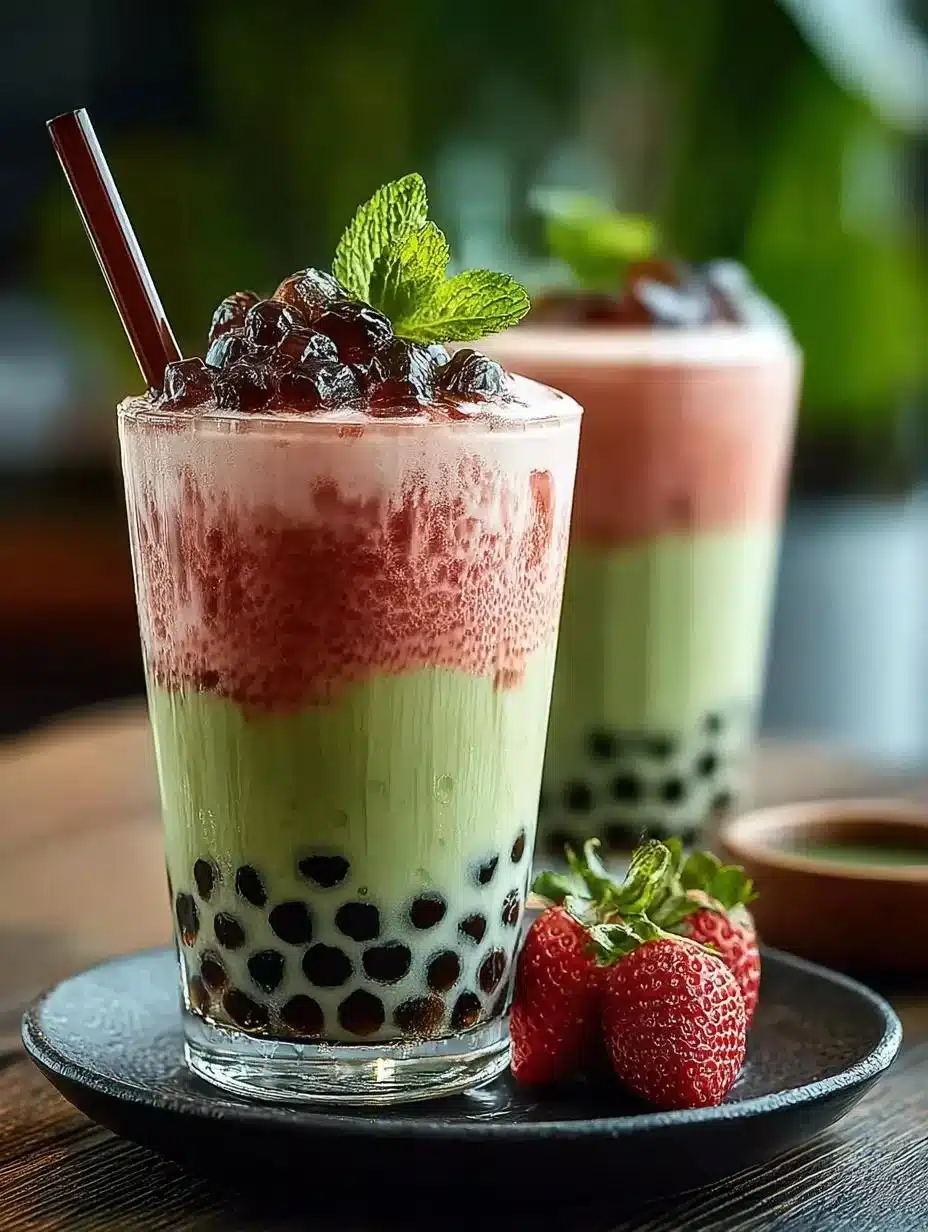
Traditional Healthy Boba Tea guide — from history to home recipes
Opening with a question: what makes a cup of boba tea both delicious and genuinely healthy? If you’ve ever found yourself craving the chewy bliss of tapioca pearls but worried about sugar, processed ingredients, or inconsistent results, this guide is for you.
In the pages that follow you’ll get a Practical, Mentor-Style roadmap: the cultural and technical background of bubble tea, the why behind healthier choices, clear step-by-step recipes (beginner → advanced), troubleshooting, and a compact summary you can bookmark. By the end you’ll be able to craft balanced, flavorful boba drinks confidently and adapt them to your diet, budget, and time.
What you’ll gain
- A clear narrative of Classic Healthy Boba Tea history and Authentic Healthy Boba Tea origin.
- Foundational cooking science so you understand why each step matters.
- Beginner-friendly methods that scale to advanced, time-saving techniques.
- Practical troubleshooting and long-term strategies so your results are consistent.
Background & Context
Bubble tea — also called boba, pearl milk tea, or tapioca tea — began as a simple street or tea-house drink and evolved into a global phenomenon. The story matters because traditional technique shapes flavor and texture, and understanding origin helps you preserve what’s essential while making healthy substitutions.
A brief cultural snapshot
- 1980s Taiwan is widely acknowledged as the birthplace of the drink, where tapioca pearls were added to iced tea and milk tea in local tea shops.
- Over decades it spread across East and Southeast Asia, then worldwide, adapting to local tastes and ingredients.
- "Authentic Healthy Boba Tea origin" emphasizes that authenticity comes from method and respect for balance: well-brewed tea, chewy pearls, and an intelligent sweetening choice.
Why history is practical, not just nostalgic
- Many traditional techniques (e.g., brewing strong tea, pearl texture) aren’t arbitrary — they’re solutions to flavor, mouthfeel, and shelf life.
- When you know the why, you can substitute intentionally (e.g., using oat milk instead of condensed milk) and still get a satisfying drink.
Personal note
I’ve taught hundreds of home cooks and café staff; the most common success shift is moving from guessing to following ratio and timing rules. That reliably recreates the classic charm even when you make it healthier.
Why This Approach Works
This guide centers on three principles: balance, transparency, and adaptability.
Balance
- Traditional boba succeeds when elements (tea intensity, sweetness, fat/cream, pearl chew) harmonize.
- A “healthy” version preserves that harmony while lowering empty calories, adding nutrient-dense swaps, or reducing processed inputs.
Transparency
- I explain how each ingredient affects final taste and mouthfeel so you can decide what to keep or change.
- You’ll learn clear ratios, not vague guesses.
Adaptability
- The methods work across skill levels and budgets.
- You’ll leave with multiple alternatives: vegan, low-sugar, quick, and more elaborate techniques.
Addressing objections
- “Healthier makes it taste worse.” Not necessarily. Lower sugar requires stronger tea, richer base (e.g., nut milk), or flavor enhancers like vanilla or citrus.
- “Tapioca pearls are unhealthy.” Pearls are mostly starch; moderation, portion control, and using freshly made or lower-sugar pearls fixes the problem.
- “It’s complicated.” Break the process into stages: brew, cook pearls, sweeten, assemble. Most parts are hands-off once you learn timings.
Core Concepts Explained
Breakdown of the essential components and their roles
- Tea base
- Purpose: delivers the primary flavor and tannins that balance milk and sweetener.
- Options: black tea (classic), oolong, green tea, or herbal bases.
- Example: Strong brewed Assam provides malty backbone for milk teas.
- Milk / Creamer
- Purpose: fat and proteins round out tannins and add silkiness.
- Options: dairy (whole milk), plant milks (oat, almond, soy), or traditional condensed milk.
- Substitution principle: higher-fat milk needs less sweetener to feel satisfying.
- Sweetener / Syrup
- Purpose: softens bitterness and provides energy for pearls (when poaching in syrup).
- Options: cane sugar, honey, maple syrup, coconut sugar, monk fruit blends.
- Tip: Use simple syrup (1:1) or a lighter honey syrup (2:1 honey:water) for even sweetening.
- Tapioca pearls
- Purpose: texture contrast and a playful chew.
- Types: fresh-cooked tapioca, quick-cook pearls, pre-made refrigerated pearls.
- Health angle: pearls are largely starch; choose portion control, cook fresh, or use alternatives like chia tapioca or konjac pearls.
- Texture and temperature
- Cold vs hot changes flavor perception: cold mutes sweetness, so adjust syrup accordingly.
- Chewiness depends on cooking time and resting; undercooked pearls are chalky, overcooked become mushy.
Alternatives and simplifications
- Fruit teas: skip milk and pearls for a lighter, naturally sweet option.
- Konjac pearls: low-calorie, jelly-like chew.
- Chia "pearls": hydrated chia seeds provide texture and fiber.
Tools, Resources, or Foundations
Essentials
- A reliable kettle and a pot for cooking pearls.
- Fine mesh strainer.
- Measuring spoons and kitchen scale (weight-based ratios are more reliable).
- Large bowl with ice for rapid cooling of brewed tea when making cold drinks.
Optional enhancements
- Thermometer (for controlled brewing).
- Syrup bottles for easy dispensing.
- Vacuum-insulated shaker or cocktail shaker for smooth mixing and cold froth.
Budget-friendly beginner alternatives
- Use strong instant tea concentrate if you don’t want to brew loose-leaf.
- Buy quick-cook pearls instead of raw tapioca to save time.
- Make a small batch of syrup and refrigerate.
Commentary on usefulness
- You don’t need high-end equipment to make genuinely tasty and healthier boba drinks. Precision helps, but taste-testing and ratio awareness are the real skills.
Step-by-Step Process
Here’s a practical, staged workflow. Time estimates assume batch size for two drinks.
- Plan and prep (10–15 minutes)
- Decide base (black, green) and milk (oat, dairy).
- Bring water to appropriate temperature for the chosen tea.
- Brew the tea (5–10 minutes active; plus cooling time)
- Ratio: 8–10 g loose tea per 500 ml water for strong iced milk tea.
- Steep time: black tea 3–5 minutes; oolong 3–4; green 2–3 minutes.
- For iced drinks: brew hot, then cool quickly with an ice bath to preserve flavor.
- Cook tapioca pearls (20–30 minutes)
H3: Standard fresh-cook method
- Boil 1 L water per 100 g pearls.
- Add pearls to boiling water, stir to prevent sticking.
- Cook uncovered; timing depends on pearl type (fresh: 30–40 min simmer + rest; quick-cook: 5–10 min).
- Remove from heat, cover, let rest 10–15 minutes.
- Strain and rinse briefly under warm water.
H3: Quick-cook pearls
- Follow package times; usually boil 5–10 minutes and rest 5 minutes.
- Rinse and coat in light syrup to keep moist.
- Sweeten pearls (5 minutes)
- Make simple syrup 1:1 (sugar:water) and toss pearls in warm syrup to infuse flavor and stop sticking.
- For healthier options use honey syrup 2:1 (honey:water) or reduced sugar syrup.
- Assemble drink (3–5 minutes)
- Add pearls to glass (approx ¼ cup).
- Add ice if iced.
- Add brewed tea (¾ – 1 cup).
- Add milk or creamer (¼ cup) and sweeten to taste.
- Stir or shake to emulsify.
Common mistakes and how to avoid them
- Mistake: under-brewing tea. Fix by increasing leaf ratio rather than steep time for less bitterness.
- Mistake: pearls get hard when refrigerated. Fix: store in syrup at room temp for short-term or reheat before serving.
- Mistake: too sweet. Fix by halving syrup in the recipe; taste and add gradually.
Pro tips
- Make tea concentrate and store in the fridge for 3–5 days.
- Use hot water to bloom matcha before mixing to avoid lumps.
- For clearer iced teas, brew double-strength and dilute with ice melt rather than adding plain water.
Expert Techniques & Insights
Advanced strategies that elevate quality and efficiency
Controlled infusion
- Use a tea ratio and steep time chart. For example, 12 g black tea per 500 ml for a robust milk tea concentrate.
- Cold-brew option: 12–15 g tea per 500 ml cold water, steep 8–12 hours in fridge; smoother and less bitter.
Pearl texture mastery
- For the ideal chew (QQ), a two-stage cook—rapid boil, gentle simmer, rest under lid—locks in structure.
- Add a touch of brown sugar to the cooking water for color and subtle flavor.
Flavor layering
- Add a pinch of salt to milk tea to enhance perceived sweetness and roundness.
- Use toasted grains (e.g., roasted barley tea) as a base for nutty notes.
Scaling for cafés or batch making
- Multiplying recipes works, but adjust cooking vessel size for pearls and increase water proportionally.
- Pre-cook pearls in small batches; hold in warm syrup in an insulated container to preserve texture.
Quality control
- Create a simple checklist: tea temp, steep time, sugar percentage, pearl texture time. Keep notes and tweak.
Variations & Adaptations
Adapt this framework to many contexts.
Dietary variations
- Vegan: switch to oat or soy milk; use agave or maple syrup.
- Low-sugar: use stevia or monk fruit in the tea; use konjac pearls.
- Keto-friendly: use heavy cream or MCT milk and erythritol-based sweetener.
Flavor variations
- Matcha: whisk matcha concentrate then add milk; keep sweetness lower to let grassy notes shine.
- Fruit-infused: steep tea with fruit slices or use fruit purée; pearls add texture but may be optional.
- Brown sugar: brown sugar syrup with caramel notes, unctuous and popular in modern shops.
Skill-level adaptations
- Beginner: use quick-cook pearls, 1:1 simple syrup, and bottled cold-brew concentrate.
- Intermediate: cook raw pearls, make syrup, use loose-leaf tea.
- Advanced: make your own tapioca from cassava starch (labor-intensive), roast tea leaves, or create flavored pearls (herbal infusions, fruit powders).
Cultural flexibility
- Respect tradition: classic black tea + milk + chewy pearls.
- Adapt respectfully: incorporate local sweeteners or milks to fit regional taste profiles.
Analysis & Benefits Breakdown
A compact comparison to help choose a method. (Ratings are qualitative: High / Medium / Low)
| Method | Flavor control | Health profile | Time | Texture fidelity |
|—|—:|—:|—:|—:|
| Quick-cook pearls + bottled tea | Medium | Medium | Low (10–15m) | Medium |
| Fresh-cooked pearls + loose-leaf tea | High | Medium/High | High (40–60m) | High |
| Konjac pearls + cold-brew tea | Medium/High | High | Medium (10–12h brew) | Medium |
| Fruit purée + chia pearls (no tapioca) | High (fruity) | High | Low–Medium | Low–Medium |
Strengths, limitations, considerations
- Fresh-cooked pearls + loose-leaf tea replicates classic texture and flavor but requires time.
- Konjac or chia options lower calories but alter mouthfeel.
- Healthier sweeteners preserve flavor when paired with stronger tea and richer milk.
Quick decision guide
- Time-limited and want flavor? Quick-cook pearls and a strong bottled tea concentrate.
- Aim for authenticity and health? Loose-leaf tea, fresh pearls, lower sugar syrup, and higher-fat plant milk like oat.
Preparation, Retention & Long-Term Use
How to prepare for consistency and preserve ingredients
Preparing effectively
- Plan batches: make a day’s supply of tea concentrate and simple syrup.
- Label jars with dates. Tea concentrate lasts 3–5 days refrigerated; simple syrup 1–2 weeks.
Retention and reheating
- Tapioca pearls are best freshly cooked. If you must store them, keep in warm syrup at room temperature for up to 6 hours.
- Refrigeration hardens pearls; to revive, briefly simmer in boiling water 1–3 minutes then rest.
Longevity of skills
- Repetition: once you measure tea, syrup, and pearls consistently three times, the process becomes muscle memory.
- Keep a “cheat sheet” of ratios taped in your kitchen for quick reference.
Batching tips for convenience
- Freeze portions of sweetened syrup in ice-cube trays for quick dosing.
- Make concentrated milk teas and freeze in small mason jars for single serves.
Troubleshooting & Common Problems
Problem → Likely cause → Solution
- Pearls are hard after cooling
- Cause: undercooked or refrigerated.
- Solution: Reheat briefly in boiling water for 1–3 minutes; do not refrigerate cooked pearls.
- Drink tastes flat despite sweetness
- Cause: tea too weak.
- Solution: Increase tea-to-water ratio; steep longer (or use higher-grade leaves).
- Pearls are mushy
- Cause: overcooked or soaked too long.
- Solution: Reduce cooking or resting time; drain and keep in fresh syrup.
- Milky tea separates or curdles
- Cause: temperature shock or acidic fruit added to dairy.
- Solution: Cool acidic fruit tea before adding dairy, or use plant milk which is more stable.
- Too sweet
- Cause: syrup quantity too high.
- Solution: Reduce syrup by half and taste incrementally.
- Texture not satisfying on low-calorie swaps
- Cause: konjac or chia differ in mouthfeel.
- Solution: Use smaller portion sizes, combine konjac with small amount of real tapioca, or use a thicker plant milk.
- Bubbles appear in final drink or foamy texture
- Cause: excessive agitation or incompatible milk foaming.
- Solution: Shake gently; choose milk with moderate protein for better emulsion.
FAQ
Q: Can I make healthy boba that tastes like the traditional version?
A: Yes. Balance is key: stronger tea, richer milk (or fuller-flavored plant milk), and modest sweetening reproduce classic notes without excess sugar.
Q: How long do tapioca pearls last after cooking?
A: Best eaten within 4–6 hours at room temp in syrup. Refrigeration hardens them and is generally not recommended.
Q: Are there gluten-free options?
A: Tapioca pearls are naturally gluten-free. Check syrups or flavorings if you’re highly sensitive.
Q: What’s the best plant milk for boba?
A: Oat milk often performs best for creaminess and compatibility with tea. Soy is protein-rich and stable; almond is lighter.
Q: How can I reduce calories without losing texture?
A: Reduce portion size of pearls, use konjac pearls, lower syrup concentration, and use a higher-fat plant milk in smaller quantity.
Q: Can I sweeten with stevia or monk fruit?
A: Yes, but these can taste different. Combine low-calorie sweeteners with a small amount of syrup to preserve mouthfeel.
Q: Is it possible to make tapioca pearls from scratch?
A: Yes—cassava starch and water can create pearls, but it is labor-intensive and harder to perfect. Suitable for advanced cooks.
Q: Any tips for making boba for parties?
A: Pre-brew tea concentrate and pre-syrup pearls in small batches. Set up a build station so guests can customize.
Related Topics & Next Steps
Skills and topics that complement this guide
- Tea tasting and grading — learn how leaf origin changes flavor.
- Milk science for beverages — understand emulsion and mouthfeel.
- Simple syrup variations — infusing syrups with spices, herbs, or citrus.
- Homemade tapioca pearls — a deeper, artisanal route.
Suggested next steps
- Practice one classic recipe, then swap one element (e.g., different milk) each session.
- Keep a tasting log: note leaf, sweetener, and pearl type to refine your base recipe.
Quick Reference Summary
Bookmark these essentials
- Tea ratio for strong milk tea: 8–12 g loose black tea per 500 ml.
- Simple syrup: 1:1 sugar to water (or 2:1 honey:water for honey syrup).
- Pearl cooking: follow package; fresh pearls often require 30–40 min cook + 10–15 min rest.
- Serving: ~¼ cup cooked pearls per serving.
- Storage: tea concentrate 3–5 days refrigerated; syrup 1–2 weeks.
Concise technique
- Brew → Cook pearls → Sweeten pearls → Assemble → Taste and adjust.
Conclusion
You now have a mentor-level map from Classic Healthy Boba Tea history to practical kitchen execution. Use the ratios and troubleshooting checklists here to make thoughtful swaps, improve consistency, and enjoy the chewy delight without compromising your health goals.
For step-by-step recipes and additional healthy variations that align with what you’ve learned here, see these practical how-to guides: How to Make Healthy Homemade Bubble Tea and How to Make Bubble Tea | 5 Healthy Boba Tea Recipes.
If you’d like, I can convert this guide into a printable checklist, recipe card set, or a reusable system prompt for content creation. Which would you prefer next?
Print
Traditional Healthy Boba Tea
- Total Time: 45 minutes
- Yield: 2 servings 1x
- Diet: Vegan, Vegetarian
Description
A guide to making healthy boba tea from history to home recipes, combining authentic flavors with healthier choices.
Ingredients
- 8–12 g loose black tea (or other tea options)
- 1 L water (for cooking pearls)
- 100 g tapioca pearls (fresh or quick-cook)
- 1:1 simple syrup (1 part sugar, 1 part water) or 2:1 honey syrup (2 parts honey, 1 part water)
- ¼ cup milk or creamer (dairy or plant-based)
- Ice (for iced boba tea)
Instructions
- Decide on the base tea and milk.
- Bring water to the appropriate temperature for brewing the tea.
- Brew the tea using 8-10 g of tea per 500 ml of water, steeping according to the type (black: 3-5 mins, oolong: 3-4 mins, green: 2-3 mins).
- Cook tapioca pearls by boiling 1 L of water for every 100 g of pearls. Stir pearls in boiling water and cook according to type (fresh: 30-40 mins; quick-cook: 5-10 mins).
- Make the simple syrup and toss cooked pearls in warm syrup for flavor.
- Assemble the drink by adding pearls, brewed tea, milk, and sweetener to taste. Stir or shake to combine.
Notes
Store cooked pearls in warm syrup for up to 6 hours at room temperature. Avoid refrigeration to maintain texture.
- Prep Time: 15 minutes
- Cook Time: 30 minutes
- Category: Beverage
- Method: Brew, Boil
- Cuisine: Taiwanese
Nutrition
- Serving Size: 1 serving
- Calories: 250
- Sugar: 15g
- Sodium: 50mg
- Fat: 8g
- Saturated Fat: 1g
- Unsaturated Fat: 4g
- Trans Fat: 0g
- Carbohydrates: 36g
- Fiber: 1g
- Protein: 3g
- Cholesterol: 0mg