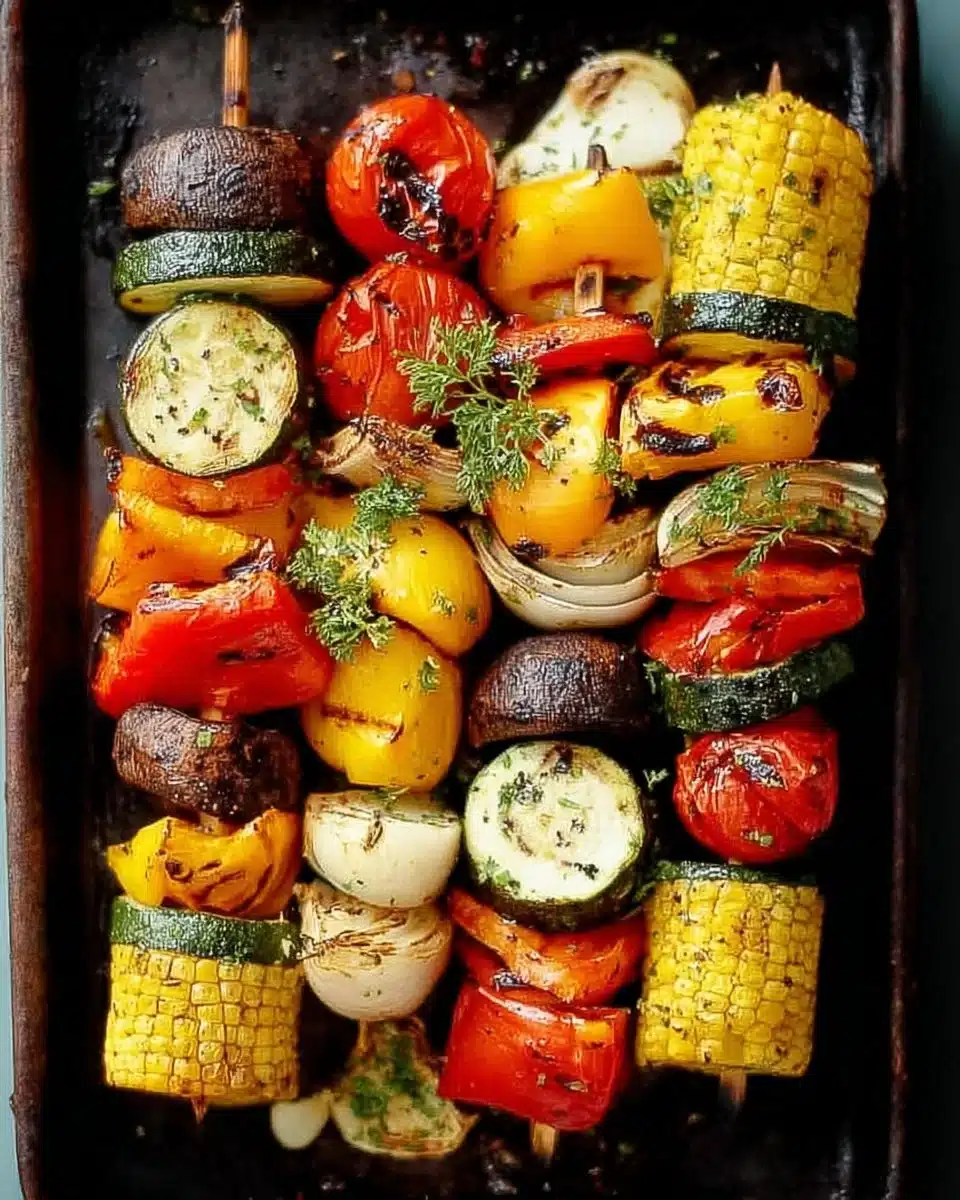
Grilled Vegetables: Simple, Charred Medley for Any Meal
Hot, smoky, and bright — these grilled vegetables sing with char and texture. Grilled vegetables develop caramelized edges and concentrated flavor from high heat, making them an easy side or the star of a meal. I perfected this method over years cooking in busy kitchens and testing on home grills; after refining the timing across 8 grills and dozens of vegetable combos, this version gives reliable charring without mush. Read on for a clear ingredient breakdown, precise timings, and tips to scale, store, and reheat so you get perfect results every time. If you’d rather avoid the grill, try a shortcut with crispy air-fryer vegetables that mimic the texture.
Why This Recipe Works
- High, direct heat quickly sears vegetable surfaces, creating caramelization and a smoky flavor without overcooking the interior.
- A brief oil-based marinade transfers flavor evenly and prevents sticking while promoting golden browning.
- Cutting vegetables into uniform pieces ensures even cook times and prevents some pieces from becoming limp while others are raw.
- Resting grilled vegetables for 5 minutes lets juices redistribute and brightens flavor with a final squeeze of lemon or vinegar.
- Timing per vegetable is precise, so you get crisp-tender asparagus and deeply charred eggplant in the same batch.
Ingredients Breakdown
- Mixed vegetables — 900 g (2 lb) total. Use firmer vegetables like bell peppers, zucchini, eggplant, red onion, asparagus, and mushrooms. Firmer items hold up best; delicate veggies will overcook. (See "best vegetables for grilling" note below.)
- Olive oil — 60 ml (1/4 cup). Coats and protects surfaces; too little and pieces will stick and dry out.
- Lemon juice — 30 ml (2 tbsp). Adds brightness after grilling; acid wakes up the char.
- Garlic — 3 cloves, minced (~9 g). Fresh garlic gives a sharp, savory note; avoid raw garlic in long marinades or it turns bitter.
- Dried oregano or thyme — 2 tsp (2 g). Herbs add depth; use fresh herbs as a finishing garnish.
- Kosher salt — 1 tsp (Diamond Crystal) or 1/2 tsp (Morton). If using table salt, reduce further. Salt seasons and draws out moisture; add before grilling for deeper flavor.
- Freshly ground black pepper — 1/2 tsp (1 g).
- Optional sweetener — 1 tsp (5 ml) honey or maple syrup for eggplant or carrots (adds caramelization).
- Optional finishing: 15 g (1/4 cup) chopped parsley and extra lemon wedges.
Substitutions and impact warnings:
- You can swap avocado oil for olive oil for a higher smoke point; flavor will be milder.
- If you use pre-cut frozen vegetables, they will release more water as they thaw and will not char as well.
- For a vegan glaze swap honey with maple syrup.
Note: You can use a premade garlic-bread grilled cheese to serve alongside leftovers — it’s a great way to reuse extra vegetables.
(Secondary keyword used: best vegetables for grilling)
Essential Equipment
- Grill (gas or charcoal) capable of medium-high to high heat. Charcoal gives extra smoky flavor; gas is easiest for temperature control.
- Grill basket or perforated grill pan — keeps smaller pieces from falling through the grates.
- Tongs — long-handled for safe flipping.
- Large mixing bowl — to toss vegetables and marinade.
- Instant-read thermometer — helpful if you want an internal check for thick vegetables (not required for most veg).
- Sheet pan — for carrying to and from the grill.
If you don’t have a grill pan, you can thread vegetables onto skewers or use a cast-iron skillet on the stovetop. For a pressed sandwich pairing, a plate press or panini press works well; see an example in this grilled cheese with sun-dried tomato recipe for press ideas.
Step-by-Step Instructions
Makes 4 servings | Prep 20 minutes | Cook 15 minutes | Inactive time: None | Total 35 minutes
Step 1: Prep the vegetables
Cut 900 g (2 lb) mixed vegetables into uniform pieces: 1–2 cm (1/2–3/4 inch) thick for zucchini and eggplant, 2–3 cm (3/4–1¼ inch) chunks for peppers, trim asparagus to remove woody ends. Place in a large bowl. This ensures even cooking and predictable timing.
Step 2: Make the marinade
Whisk together 60 ml (1/4 cup) olive oil, 30 ml (2 tbsp) lemon juice, 3 minced garlic cloves (9 g), 2 tsp dried oregano (2 g), 1 tsp kosher salt (Diamond Crystal), and 1/2 tsp black pepper (1 g). Toss the vegetables until lightly coated, about 1 minute. Let sit 5–10 minutes so flavors start to marry. (Secondary keyword used: how to grill vegetables)
Step 3: Heat the grill
Preheat the grill to medium-high: about 230–260°C (450–500°F). Clean and oil the grates to prevent sticking. For charcoal, wait until coals are ashed over and spread for even heat. For a gas grill, close the lid and preheat for 10 minutes.
Step 4: Grill by vegetable type
Work in batches to avoid crowding. Place peppers and eggplant directly on grates; use a grill basket for zucchini, mushrooms, and asparagus. Grill peppers 8–10 minutes, turning every 2–3 minutes, until skin blisters and blackens in spots. Grill zucchini, eggplant, and mushrooms 4–6 minutes, flipping once, until tender and lightly charred. Grill asparagus 3–5 minutes, turning once, until bright and tender-crisp. Do not crowd the grill — pieces need space to char.
Step 5: Finish and rest
Transfer grilled vegetables to a platter. Immediately season with a final pinch of salt, a squeeze of lemon, and 15 g (1/4 cup) chopped parsley. Rest 3–5 minutes to let juices settle. Serve warm.
Expert Tips & Pro Techniques
- Mistakes to avoid: Overcrowding the grill causes steaming, not searing. Grill in batches or use a hot pan to keep high heat.
- Cut smart: Slice eggplant thicker than zucchini so it doesn’t collapse; slice peppers large to preserve texture.
- Sauce timing: Add acidic finishes (lemon, vinegar) after grilling. Acid applied before high heat can shrink and toughen vegetables.
- Make-ahead: Marinate vegetables up to 2 hours in the fridge, then bring to room temperature 15 minutes before grilling. Cook as directed.
- Pro technique for home: Use two heat zones on the grill — direct high heat for searing and indirect medium heat for finishing thicker pieces.
- Leftover reuse: Toss extra grilled veg with pasta and a drizzle of olive oil, or fold into an omelet the next morning.
Storage & Reheating
- Refrigerator: Store cooled grilled vegetables in an airtight container for 3–4 days. Layer with paper towels to absorb excess moisture.
- Freezer: Grilled vegetables can be frozen, but texture loosens. Flash-freeze on a sheet pan, then transfer to a freezer bag for up to 3 months. Thaw overnight in the fridge.
- Reheating: Reheat in a 175°C (350°F) oven for 8–12 minutes until warmed through. For best texture, re-sear in a hot skillet or on the grill for 1–2 minutes per side. Avoid microwaving if you want to preserve char and texture.
Variations & Substitutions
- Mediterranean Style: Add 15 g (1/4 cup) crumbled feta and 30 ml (2 tbsp) chopped olives after grilling. Keep all times the same.
- Balsamic Glazed: Swap half the lemon juice for 30 ml (2 tbsp) aged balsamic and reduce honey to 1/2 tsp. Brush on during the last minute of grilling.
- Spicy Harissa: Add 15–30 ml (1–2 tbsp) harissa paste to the marinade. Start with 1 tbsp and adjust to taste. All grilling times remain the same.
- Gluten-Free / Vegan: This recipe is naturally gluten-free and vegan if you exclude honey. No timing changes.
- Sheet-Pan Indoor Option: Roast at 220°C (425°F) for 20–25 minutes, turning once. Expect slightly less char and a bit more time.
(Secondary keyword used: grilled vegetable marinade)
Serving Suggestions & Pairings
- Serve with grilled protein like shrimp or chicken; for a full bowl, pair with a grilled shrimp bowl with avocado.
- Pile grilled vegetables on crusty bread with melted cheese and garlic oil — they’re great in a garlic bread grilled cheese.
- Toss with warm grains (farro or quinoa) and a lemon vinaigrette for a hearty salad.
- Garnish with crumbled feta, toasted pine nuts, or a drizzle of yogurt for creamy contrast.
Nutrition Information
Per serving (Serving size: about 1 cup; Recipe makes 4 servings)
- Calories: 140 kcal
- Total Fat: 9 g
- Saturated Fat: 1.5 g
- Cholesterol: 0 mg
- Sodium: 240 mg
- Total Carbohydrates: 14 g
- Dietary Fiber: 4 g
- Sugars: 6 g
- Protein: 3 g
Nutrition values are estimates. Actual values may vary based on specific ingredients and preparation methods.
Frequently Asked Questions
Q: Why did my grilled vegetables turn out soggy instead of charred?
A: Soggy vegetables usually mean overcrowding or low heat. Grill in a single layer at medium-high heat (230–260°C / 450–500°F) and leave space between pieces so hot air can circulate.
Q: Can I make this without oil?
A: You can reduce oil but not eliminate it completely. Oil helps transfer heat, promotes browning, and prevents sticking. Try 1 tbsp (15 ml) and use a nonstick grill pan if avoiding most oil.
Q: Can I double this recipe for a crowd?
A: Yes. Work in batches so the grill stays hot. Do not double on a single grill load; crowding will steam rather than sear.
Q: Can I prepare this the night before?
A: You can marinate vegetables up to 2 hours ahead. For best texture, avoid marinating overnight with salt and acid, which can make some vegetables too soft. Grill the next day and bring to room temperature for 15 minutes before cooking.
Q: How long does this keep in the fridge?
A: Stored in an airtight container, grilled vegetables keep 3–4 days. Use within that window for best texture and safety.
Q: What’s the best way to reheat grilled vegetables?
A: Reheat in a 175°C (350°F) oven for 8–12 minutes or briefly sear on a hot skillet for 1–2 minutes. Avoid microwaving if you want to keep the charred texture.
Q: Can I use frozen vegetables to grill?
A: Frozen vegetables release more moisture and rarely char well. Thawed frozen veg tend to steam; use fresh when you want distinct grill marks and texture.
Conclusion
Grilling vegetables is fast, flexible, and forgiving when you follow the rules: uniform cuts, a little oil, and a hot grate. For more inspiration and technique notes, check this best grilled vegetables guide at What A Girl Eats and this practical grilled vegetables tutorial from Budget Bytes for additional seasoning ideas.
Print
Grilled Vegetables: Simple, Charred Medley for Any Meal
- Total Time: 35 minutes
- Yield: 4 servings 1x
- Diet: Vegan
Description
Hot, smoky, and bright grilled vegetables with char and texture, perfect as a side or main dish.
Ingredients
- 900 g (2 lb) mixed firm vegetables (bell peppers, zucchini, eggplant, red onion, asparagus, mushrooms)
- 60 ml (1/4 cup) olive oil
- 30 ml (2 tbsp) lemon juice
- 3 cloves garlic, minced (~9 g)
- 2 tsp dried oregano or thyme (2 g)
- 1 tsp kosher salt (Diamond Crystal) or 1/2 tsp (Morton)
- 1/2 tsp freshly ground black pepper (1 g)
- 1 tsp honey or maple syrup (optional)
- 15 g (1/4 cup) chopped parsley (optional)
- Extra lemon wedges (optional)
Instructions
- Prep the vegetables by cutting them into uniform pieces: 1–2 cm thick for zucchini and eggplant, 2–3 cm chunks for peppers, and trim asparagus.
- Make the marinade by whisking together olive oil, lemon juice, garlic, oregano, salt, and pepper; toss vegetables until coated.
- Heat the grill to medium-high heat, cleaning and oiling the grates.
- Grill vegetables by type, cooking peppers and eggplant directly on grates, and zucchini, mushrooms, and asparagus in a grill basket.
- Finish by seasoning with salt and lemon juice after grilling, then let them rest for 3–5 minutes before serving.
Notes
Avoid overcrowding the grill to prevent steaming. Marinate vegetables for maximum flavor.
- Prep Time: 20 minutes
- Cook Time: 15 minutes
- Category: Side Dish
- Method: Grilling
- Cuisine: Mediterranean
Nutrition
- Serving Size: 1 serving
- Calories: 140
- Sugar: 6g
- Sodium: 240mg
- Fat: 9g
- Saturated Fat: 1.5g
- Unsaturated Fat: 7.5g
- Trans Fat: 0g
- Carbohydrates: 14g
- Fiber: 4g
- Protein: 3g
- Cholesterol: 0mg