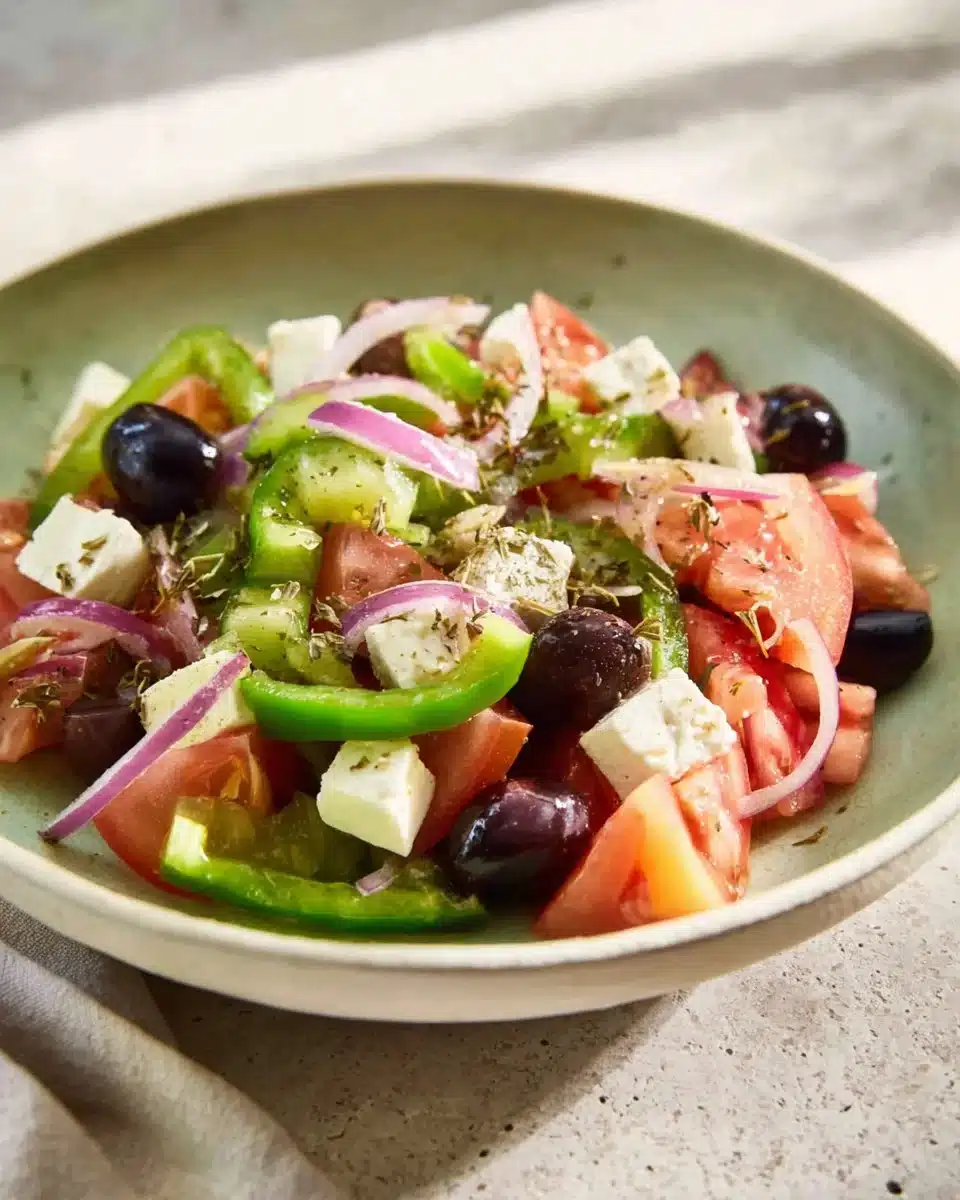
Greek salad with Homemade Dressing
Bright, crunchy bites of tomato, cucumber, and olive meet a lemony, oregano-packed vinaigrette that sings on the tongue. This Greek salad is built for texture and contrast: juicy tomatoes, crisp cucumber, briny olives, and creamy feta. I developed this version over years of testing for clarity of flavor — I made it eight times to land the exact oil-to-acid ratio and texture balance that keeps the vegetables lively without wilting the feta. The dressing is quick, emulsifies with a fork, and holds for a day in the fridge, so you can toss the salad just before serving for maximum crunch. If you love fresh, simple salads, try a different bright option like this Edamame Salad with Cilantro-Lime Dressing for variety. Read on for exact measurements, technique notes, and tips to get a restaurant-quality result every time.
Why This Recipe Works
- Balanced acid-to-oil ratio: 1 part acid to 3 parts oil gives brightness without harshness.
- Big-texture contrast: juicy tomatoes, crisp cucumber, and meaty olives create satisfying mouthfeel.
- Short marination: letting vegetables sit with a little salt for 5–10 minutes pulls out water and concentrates flavor without making them soggy.
- Crumbly feta added last preserves creamy pockets of flavor instead of dissolving into the dressing.
- Simple, fork-emulsified dressing avoids overworking and keeps texture light and glossy.
Ingredients Breakdown
- Tomatoes (400 g / about 4 medium): Use ripe but firm tomatoes. They provide sweetness and juice. Avoid overripe tomatoes — they make the salad watery.
- Cucumber (250 g / 1 medium English cucumber): Adds cool crunch. English or Persian cucumbers have fewer seeds. If using standard cucumbers, remove large seeds.
- Red onion (50 g / 1 small): Sharpness contrasts the rich feta. Soak sliced onion for 5 minutes in cold water to tame bite if desired.
- Kalamata olives (75 g / 1/2 cup, pitted): Provide briny depth. Rinse briefly if they taste too salty. Do not substitute with green Castelvetrano olives if you want authentic briny flavor.
- Feta cheese (150 g / 5.3 oz): Crumbled; this brings creaminess and tang. Use a good block feta, not pre-crumbled — block feta drains better and tastes fresher. Brand materially affects texture; choose a full-fat sheep or sheep-goat blend if available.
- Extra-virgin olive oil (60 ml / 1/4 cup): The dressing’s flavor base. Use a fruity, peppery oil for best results.
- Lemon juice (30 ml / 2 tbsp) and red wine vinegar (15 ml / 1 tbsp): Combine for bright acidity. The lemon keeps the dressing aromatic while vinegar adds classic Greek sharpness.
- Dried oregano (1 tsp / 1 tsp): Essential aromatic. Use Greek oregano if available for authentic flavor.
- Dijon mustard (1/2 tsp / 1/2 tsp): Helps emulsify the vinaigrette and gives balance.
- Kosher salt and freshly ground black pepper: Season to taste. If using Morton’s kosher salt, reduce amount by about 30% compared with Diamond Crystal.
- Optional: capers (1 tbsp / 15 g) for extra tang — add sparingly.
Substitutions with impact warnings:
- Swap feta for feta-style vegan cheese: texture will be firmer and salt profile may change.
- Replace olive oil with a neutral oil: flavor will be flatter. Use extra virgin olive oil for signature taste.
- Use apple cider vinegar instead of red wine vinegar: slightly sweeter profile.
Essential Equipment
- Large mixing bowl (3–4 L / 12–16 cups): Roomy enough to toss without splashing.
- Sharp chef’s knife and cutting board: Clean cuts keep vegetables crisp.
- Measuring spoons and scale (optional): Weights ensure consistent results.
- Small bowl or jar with lid for dressing: A jar lets you shake the dressing to emulsify.
- Salad servers or tongs: For gentle tossing.
If you don’t have a scale, measure tomatoes by medium fruit and use cup measures for other ingredients.
Step-by-Step Instructions
Prep Time: 15 minutes · Cook Time: 0 minutes · Inactive Time: 5–10 minutes · Total Time: 20–25 minutes · Servings: 4 (about 1½ cups / ~300 g per serving)
Step 1: Prepare the vegetables
Wash and dry the tomatoes and cucumber. Cut tomatoes into 2–3 cm (3/4–1¼ in) wedges and slice the cucumber into 5 mm (1/4 in) half-moons. Slice 50 g (1 small) red onion thinly. Toss vegetables in a large bowl with 1/2 tsp (3 g) kosher salt and let sit for 5–10 minutes so excess water drains and flavors concentrate.
Step 2: Make the dressing
In a small bowl or 250 ml (1 cup) jar combine 60 ml (1/4 cup) extra-virgin olive oil, 30 ml (2 tbsp) fresh lemon juice, 15 ml (1 tbsp) red wine vinegar, 1/2 tsp (2.5 g) Dijon mustard, 1 tsp (1 g) dried oregano, and 1/4 tsp (1 g) kosher salt. Shake or whisk for 15–20 seconds until slightly emulsified and glossy. Taste and adjust salt or acid — add up to 1 tbsp more lemon juice if you like brighter acidity. Do not over-whisk — you only need a light emulsion.
Step 3: Combine vegetables and dressing
Pour about two-thirds of the dressing over the vegetables and gently toss for 20–30 seconds until evenly coated. Let sit for 1–2 minutes to marry flavors. Reserve the remaining dressing to serve for guests or to add if you like a wetter salad. Toss briefly again before plating.
Step 4: Add olives and feta
Add 75 g (1/2 cup) pitted Kalamata olives and 150 g (5.3 oz) crumbled feta to the bowl. Fold in gently with tongs or a large spoon for 10–15 seconds so the feta stays in chunks rather than dissolving.
Step 5: Finish and serve
Adjust seasoning with 1–2 pinches of flaky sea salt and a few grinds of black pepper. Garnish with a pinch more dried oregano or a drizzle of olive oil. Serve immediately for best texture. If making ahead, keep dressing separate and add feta at the last minute.
Expert Tips & Pro Techniques
- Common mistake: overdressing too early. Toss with a little dressing, wait, then add more if needed — this preserves crunch.
- Make-ahead: store chopped vegetables and dressing separately for up to 24 hours; add dressing and feta just before serving.
- Professional shortcut adapted for home cooks: salt vegetables and let them drain in a colander for 5–10 minutes to remove excess moisture, then pat dry — this concentrates flavor without a vacuum setup.
- Knife technique: cut tomatoes into uniform wedges and cucumbers into equal slices to ensure even bites.
- Texture tweak: for extra crunch, add 50 g (1/2 cup) toasted pine nuts or walnuts just before serving.
- Avoid sogginess: never let feta sit in dressing for extended periods; it will begin to break down and make the salad greasy.
Storage & Reheating
- Refrigerator: Store leftovers in an airtight container for up to 2 days. Keep dressing separate if possible; otherwise expect softened vegetables.
- Freezer: Not recommended. Freezing changes texture of fresh vegetables and feta.
- Reheating: This salad is best served cold or room temperature. Do not reheat — heat will wilt the vegetables and separate the dressing.
Variations & Substitutions
- Vegetarian/Main-plate version (adds protein): Toss in 200 g (7 oz) grilled chicken breast, sliced. Keep all dressing quantities the same. Serve immediately.
- Vegan version: Replace feta with 150 g (5.3 oz) firm tofu, pressed and cubed, and use a vegan feta alternative. Taste and add 1/4 tsp extra salt to mimic tang.
- Heartier grain bowl: Add 200 g (1 cup cooked) farro or quinoa and increase dressing by 30–45 ml (2–3 tbsp). Grain will absorb dressing; toss just before serving.
- Lighter citrus dressing: Replace 15 ml (1 tbsp) red wine vinegar with extra 15 ml (1 tbsp) lemon juice for a brighter profile. No other changes.
- Low-sodium: Rinse olives and reduce salt by half; increase lemon and oregano for flavor lift.
Serving Suggestions & Pairings
- Main course pairing: Serve alongside basil-scented mains like Basil Chicken with Coconut for a contrast of savory and bright.
- Starch side: Roast potatoes or pita bread make excellent vehicles for the salad; try pairing with a rich dessert such as baked pumpkin cheesecake for a seasonal menu.
- Make-ahead dessert idea: If hosting, balance this fresh salad with a chilled pudding like Biscoff Banana Pudding that you can prepare a day ahead.
- Small sweet bites: Finish the meal with Biscoff truffles for a shareable dessert plate.
Nutrition Information
Per serving (serving size: about 1¼ cups / recipe makes 4 servings)
- Calories: 320 kcal
- Total Fat: 27 g
- Saturated Fat: 9 g
- Cholesterol: 25 mg
- Sodium: 580 mg
- Total Carbohydrates: 9 g
- Dietary Fiber: 2 g
- Sugars: 6 g
- Protein: 6 g
Nutrition values are estimates. Actual values may vary based on specific ingredients and preparation methods.
Frequently Asked Questions
Q: Why did my salad turn out watery?
A: The most common cause is overripe tomatoes or not draining them. Salt the chopped vegetables for 5–10 minutes to draw out excess water, then drain or pat dry before dressing.
Q: Can I make this without dairy or feta?
A: Yes. Use pressed firm tofu or a commercial vegan feta alternative. Expect a subtly different texture and add a pinch more salt or lemon to mimic feta’s tang.
Q: Can I double this recipe for a party?
A: Yes. Double all ingredients and make dressing in a larger jar. Toss vegetables in batches to ensure even coating. If serving to a crowd, keep dressing separate and add at the last minute.
Q: Can I prepare this the night before?
A: You can chop vegetables and make dressing up to 24 hours ahead, but store them separately. Add dressing and crumble feta right before serving to maintain texture.
Q: How long does this keep in the fridge?
A: Stored in an airtight container, dressed salad keeps up to 2 days but will lose crispness. Undressed vegetables with dressing stored separately will last 3–4 days.
Q: What olives work best?
A: Kalamata olives are traditional for their meaty texture and briny flavor. If you prefer milder olives, use Castelvetrano, but reduce added salt.
Q: Is there a gluten-free version?
A: This salad is naturally gluten-free if you use standard ingredients. Always check labels on packaged feta or olives if you need strict gluten-free certification.
Conclusion
This Greek salad is an easy, bright side that highlights fresh ingredients and a quick, emulsified dressing. For another home cook’s perspective and a slightly different take, see RecipeTin Eats’ Greek Salad, and for additional ideas on a classic Greek-style vinaigrette, refer to this Greek Salad Dressing recipe from Love and Lemons. Enjoy this salad as a light lunch, a picnic side, or a crisp partner to simply grilled proteins.
Print
Greek Salad with Homemade Dressing
- Total Time: 25 minutes
- Yield: 4 servings 1x
- Diet: Vegetarian
Description
A bright and crunchy Greek salad with juicy tomatoes, crisp cucumber, briny olives, and a lemony oregano vinaigrette that keeps the vegetables lively.
Ingredients
- 400 g ripe tomatoes, cut into wedges
- 250 g English cucumber, sliced
- 50 g red onion, thinly sliced
- 75 g Kalamata olives, pitted
- 150 g feta cheese, crumbled
- 60 ml extra-virgin olive oil
- 30 ml fresh lemon juice
- 15 ml red wine vinegar
- 1 tsp dried oregano
- 1/2 tsp Dijon mustard
- Kosher salt, to taste
- Freshly ground black pepper, to taste
Instructions
- Prepare the vegetables: Wash and dry the tomatoes and cucumber. Cut tomatoes into wedges and slice the cucumber into half-moons. Slice the red onion thinly. Toss vegetables with kosher salt and let sit for 5–10 minutes.
- Make the dressing: In a small bowl or jar, combine olive oil, lemon juice, red wine vinegar, Dijon mustard, dried oregano, and salt. Shake or whisk until emulsified.
- Combine vegetables and dressing: Pour about two-thirds of the dressing over the vegetables and toss gently. Let sit for 1-2 minutes.
- Add olives and feta: Gently fold in Kalamata olives and crumbled feta.
- Finish and serve: Adjust seasoning and serve immediately.
Notes
Best served immediately for maximum crunch. Store leftovers in an airtight container for up to 2 days.
- Prep Time: 15 minutes
- Cook Time: 0 minutes
- Category: Salad
- Method: No-cook
- Cuisine: Greek
Nutrition
- Serving Size: 1 serving
- Calories: 320
- Sugar: 6g
- Sodium: 580mg
- Fat: 27g
- Saturated Fat: 9g
- Unsaturated Fat: 18g
- Trans Fat: 0g
- Carbohydrates: 9g
- Fiber: 2g
- Protein: 6g
- Cholesterol: 25mg