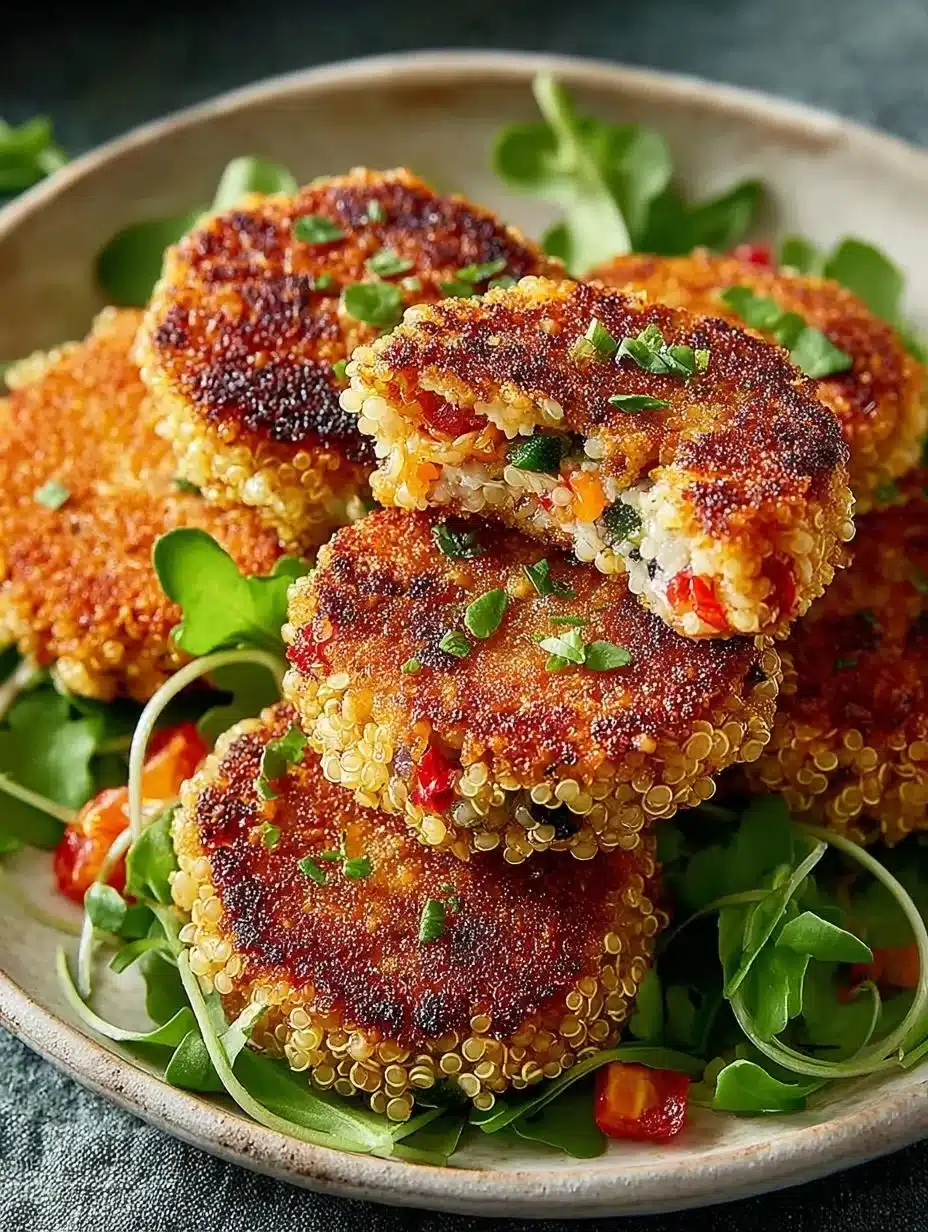
Traditional Crispy Quinoa Patties guide
Hook: If you’ve ever wanted a crispy, nutrient-packed patty that’s as versatile as it is satisfying, this guide will turn quinoa into one of your kitchen’s most dependable building blocks.
Immediate value: Read this end-to-end Traditional Crispy Quinoa Patties guide and you’ll learn why and how quinoa becomes crisp, how to troubleshoot every common issue, and how to adapt the recipe for dietary needs and advanced techniques. By the end you’ll be able to make reliably crisp patties, scale recipes, store them, and confidently create variations.
What you will gain: a clear conceptual map of ingredients and techniques, step-by-step instructions with time estimates, expert-level shortcuts, troubleshooting, and practical variations to match flavor goals and equipment.
Background & Context
Authentic Crispy Quinoa Patties origin traces to the modern fusion of ancient grains and contemporary plant-forward cooking. Quinoa is an Andean seed with a long history in Bolivia, Peru, and Ecuador. While traditional Andean cooking rarely produced “patties” in the Western sense, cooks adapted quinoa to new textures and formats as it spread globally.
Classic Crispy Quinoa Patties history in home kitchens is short but rich: once quinoa became widely available, cooks began combining cooked quinoa with eggs or binders and pan-frying to get a crisp surface and tender interior. The result quickly became popular among vegetarians, gluten-free cooks, and anyone looking for a portable, protein-rich option.
Practical relevance: these patties work as main dishes, sandwich fillings, salad toppers, or breakfast items. They’re forgiving, quick to scale, and friendly to meal prep.
Personal note: After testing dozens of ratios and methods, the single biggest determinant of crispness isn’t the pan oil or heat—but moisture control and binding. That’s the thread this guide follows.
Why This Approach Works
Clear benefits explained:
- Texture control: Separating moisture-management (cooking & cooling quinoa) from binding (eggs/starches) allows a crisp exterior and tender, cohesive interior.
- Flexibility: The approach adapts to pan-frying, oven-baking, or air-frying without changing the foundational technique.
- Accessibility: Ingredients are common; tools are basic. You can make excellent patties without specialized gear.
Why it’s reliable: crispness requires two things—surface dehydration and heat transfer. Removing excess moisture and adding a fine starch or binder lets heat create a brown, dry crust quickly while the interior sets.
Addressing objections:
- “Quinoa won’t get crispy like potatoes.” It can—if you manage moisture and use a thin patty with adequate surface-to-volume ratio.
- “Binders make them heavy.” Use minimal, appropriate binders and light-hand shaping to preserve lift.
Core Concepts Explained
Break the topic into components and explain each.
Quinoa cooking and cooling
- Rinse: Remove saponin for clean flavor. Rinsed quinoa steams and separates rather than clumps.
- Cook ratio: A commonly reliable ratio is 1 part quinoa to 1.5 parts water by volume for fluffy grains.
- Cool & dry: Spread cooked quinoa on a tray to cool and evaporate surface moisture. This is crucial for crisping.
Moisture control
- Why it matters: Excess moisture prevents browning and causes sogginess.
- Techniques: Drain thoroughly, press in cheesecloth, or chill uncovered for 20–40 minutes.
Binding agents
- Eggs: The simplest, providing protein to set and brown.
- Vegan alternatives: Flax or chia “eggs” plus a starch (potato/cornstarch) for cohesion.
- Starches: Cornstarch, tapioca, or potato starch help dry the mix and crisp the exterior.
Fillers and flavorings
- Aromatics: Shallots, garlic, scallions—sweat them to remove raw bite.
- Vegetables: Grated zucchini (squeezed dry), carrots, peppers—mind water content.
- Cheese: Adds fat, flavor, and binding proteins (parmesan is particularly effective).
- Herbs/spices: Toasted cumin, smoked paprika, fresh herbs—layer flavor for depth.
Shape and size
- Thin patties crisp faster. Aim for 1/2-inch thickness for best results.
- Consistency matters: Uniform shapes cook evenly.
Cooking medium and technique
- Pan frying: Classic method for deep, localized browning.
- Oven finish: Helps set internal temperature without burning the exterior.
- Air fryer: Efficient for small batches with less oil.
Alternatives and substitutions:
- Replace egg with 1 tablespoon ground flax + 3 tablespoons water per egg, plus 1 teaspoon starch.
- Use leftover rice or millet with similar technique; cooking adjustments apply.
Tools, Resources, or Foundations
Essentials:
- Fine-mesh sieve (for rinsing)
- Medium saucepan with lid (for cooking quinoa)
- Large bowl (for mixing)
- Nonstick or stainless skillet with a good flat surface
- Spatula (thin metal turner recommended)
- Measuring spoons and cups
Optional enhancements:
- Food processor (quickly mix and create a cohesive texture)
- Silicone spatula and ice cream scoop for uniform patties
- Cast-iron pan (excellent for consistent heat and crust)
- Cooling rack & baking sheet (for oven finishing)
Budget-friendly alternatives:
- Use a colander instead of fine-mesh sieve—rinse thoroughly.
- A well-seasoned skillet replaces cast-iron for an acceptable crust.
- Hand-mixing avoids a food processor; use an extra minute to mash gently.
Commentary on usefulness: You don’t need every gadget—focus on quality of base ingredients and method. A sharp spatula and decent skillet will yield results.
Step-by-Step Process
This section moves from beginner-friendly basics to intermediate adjustments.
Estimated total time: 45–70 minutes (including cooling). Active time: 25–35 minutes.
Cook quinoa (15–25 minutes)
- Rinse quinoa under cold water until runoff is clear.
- Combine 1 cup quinoa + 1.5 cups water in saucepan. Bring to a boil, lower heat, cover and simmer 12–15 minutes.
- Remove lid, let steam 5 minutes, then spread on a rimmed tray to cool and release steam.
Remove excess moisture (5–20 minutes)
- Method A (fast): Spread on tray and refrigerate uncovered for 10–15 minutes to dry surface.
- Method B (thorough): Press warmed quinoa in a towel to extract water—quick and effective for high-moisture mixes.
Mix base (5–10 minutes)
- In a bowl, combine cooled quinoa, cooked aromatics, finely grated veg (well-drained), 1–2 beaten eggs (or vegan binder), 2–3 tablespoons starch, 1/4 cup grated cheese if using, salt and spices.
- Taste raw mixture for seasoning (remember flavors concentrate when cooked).
Rest (optional, 10–20 minutes)
- Resting lets binders hydrate and starches set. Use this time to preheat pan.
Shape patties (5–10 minutes)
- Use a 1/3 – 1/2 cup measure or a small ice cream scoop. Press lightly into patties 3–4 inches wide and about 1/2 inch thick.
- Avoid overpacking—gentle compression helps them hold while allowing some interior air.
H3: Shaping tips for consistency
- Chill shaped patties for 10 minutes on a tray—firmer patties handle flipping better.
- Lightly dust with panko or flour to create a crisp exterior if desired.
- Cook: Pan-fry method (6–10 minutes per side for total 12–20)
- Heat 1–2 tablespoons neutral oil in a nonstick or cast-iron skillet over medium-high heat.
- Place patties spaced apart. Let brown without moving for 4–6 minutes until edges look set and deep golden.
- Flip and cook 3–6 minutes more. If interior is not set, finish in a 375°F (190°C) oven for 5–7 minutes.
H3: Oven-bake method
- Preheat to 425°F (220°C). Brush or spray patties lightly with oil, bake 15–20 minutes, flipping halfway for even crisping.
H3: Air-fryer method
- Preheat to 375°F (190°C). Spray patties lightly. Cook 10–12 minutes, flipping at 6 minutes.
Common mistakes + how to avoid them:
- Mistake: Patties fall apart. Fix: Add modest binder, chill patties, and ensure quinoa is slightly dry.
- Mistake: Soggy center. Fix: Make patties thinner or finish in the oven.
- Mistake: Burned exterior, undercooked center. Fix: Lower heat, pan-sear then oven-finish.
Pro tips:
- Use a heavy skillet for steady heat—thin pans lead to hot spots and burning.
- Don’t overcrowd the pan—steam builds and ruins crispness.
- Develop flavor by toasting spices before mixing.
Expert Techniques & Insights
Advanced strategies that elevate crispness and flavor.
Drying for crispness
- After cooking, spread quinoa thinly and place under a fan or in the refrigerator for 20–40 minutes to dry the outer grains. Drier surface equals better browning.
Starch layering
- Coat exterior lightly with fine panko or semolina before pan-frying to create an instant crisp crust.
Double-sear method
- Sear on high heat briefly to form a crust, reduce heat to finish, then place in oven if needed. This preserves color while allowing internal set.
Fat selection
- Use a blend of neutral oil and small amount of butter for flavor and browning. Butter promotes browning; oil raises smoke point.
Texture contrast
- Add a small amount (1–2 tablespoons) of cooked, cooled millet or buckwheat to introduce textural crunch.
Large-batch efficiency
- Cook patties on sheet pans and finish crisping in a hot oven to free up stovetop space. Re-crisp on a skillet when serving.
Lessons from experience:
- Patience with cooling pays off. Rushing straight from stovetop to pan produces inconsistent results.
- Smaller batches yield more consistent heat and even browning.
Variations & Adaptations
Use cases and flavor directions.
Vegan & gluten-free (beginner)
- Binder: 1 tbsp ground flax + 3 tbsp water per egg, plus 1–2 tbsp cornstarch.
- Coating: Use gluten-free panko or ground oats.
Mediterranean
- Add chopped sun-dried tomatoes, olives, feta, lemon zest, oregano. Serve with tzatziki or yogurt.
Indian-spiced
- Add garam masala, cilantro, grated carrot, green chili. Serve with chutney.
Breakfast patties
- Add chopped soft-cooked potatoes, sautéed spinach, cheddar, and a pinch of nutmeg. Top with a fried egg.
High-protein
- Mix in cooked lentils or finely chopped firm tofu for structure and protein boost.
Kid-friendly
- Use mild seasoning, shredded carrot, corn, and serve with ketchup or mild yogurt dip.
Skill-level adaptations:
- Beginner: Follow basic recipe, pan-fry medium size, use egg binder.
- Intermediate: Experiment with starch ratios and oven finishing.
- Advanced: Dehydrate quinoa surface, apply double-sear and air-dry methods, and integrate unconventional grains.
Cultural flexibility:
- Swap spices and herbs to match cuisines—quinoa is neutral and adapts well.
Analysis & Benefits Breakdown
A comparative table summarizing strengths and limitations.
| Method | Crispiness | Oil Use | Time | Texture Notes | Best for |
|—|—:|—:|—:|—|—|
| Pan-fry (cast-iron) | Very high | Moderate | 12–20 min | Deep crust, slightly oily | Small batches, max flavor |
| Oven-bake | Moderate | Low | 20–25 min | Even, dryer surface | Large batches, hands-off |
| Air-fryer | High | Low | 10–12 min | Crisp exterior, light | Quick reheating, small batches |
| Deep-fry | Very high | High | 3–6 min | Ultra-crisp, moist center | Special occasions |
Strengths, limitations, and considerations:
- Strength: Adaptable to diets; quick to make once quinoa is prepared.
- Limitation: Requires attention to moisture and sizing for best results.
- Consideration: Flavor carries well; seasoning must be confident because quinoa has a mild base.
Preparation, Retention & Long-Term Use
How to prepare effectively:
- Make quinoa ahead: Cook and refrigerate for up to 3 days. Spread on tray before shaping to remove surface moisture.
- Pre-measure binders and aromatics to speed assembly.
Retention or reuse strategies:
- Freeze shaped uncooked patties on a tray until firm, then transfer to freezer bags (up to 3 months).
- Cooked patties freeze well—layer with parchment. Reheat from frozen in an air fryer or oven for best crispness.
Reheating tips:
- Oven: 375°F (190°C) for 8–12 minutes uncovered.
- Air fryer: 350°F (175°C) 6–8 minutes, flipping once.
- Microwave: OK for warmth but will lose crispness—use only as a last resort.
Longevity of skills:
- Once you understand moisture control and binding, you can apply the same approach to other grains and legumes—skills last for years.
Troubleshooting & Common Problems
Problem: Patties fall apart when flipping.
- Likely cause: Not enough binder or excess moisture; patties too hot or soft.
- Solution: Chill patties 10–20 minutes, add a small extra binder (1/4 egg or 1 tsp starch), use gentle flip with thin spatula.
Problem: Interior soggy but exterior burned.
- Likely cause: Too high heat, thick patties.
- Solution: Lower heat, finish in oven, make thinner patties.
Problem: Soggy surface, no crisp.
- Likely cause: Overcrowded pan or too wet mix.
- Solution: Cook in batches, dry quinoa longer, dust with starch or panko.
Problem: Sticking to pan.
- Likely cause: Insufficient oil or pan not hot enough.
- Solution: Preheat pan properly, add oil, let patties set before turning.
Problem: Bland flavor.
- Likely cause: Undersalted or flavors lost in moisture.
- Solution: Season generously and taste mix before forming patties; include bold elements like cheese, lemon, or umami-rich ingredients.
Problem: Grainy quinoa inside (undercooked grains).
- Likely cause: Quinoa not fully cooked or too much cold liquid.
- Solution: Cook quinoa until translucent and germ ring visible, fluff, and cool properly.
FAQ
Can I use leftover quinoa?
- Yes. Leftover chilled quinoa is often ideal because it’s already drier than just-cooked quinoa.
What binds best for vegan patties?
- A combination of ground flaxseed (1 tbsp) + water (3 tbsp) per egg plus 1–2 tbsp of starch gives the best balance of structure and crisp.
How can I make these gluten-free?
- Use gluten-free breadcrumbs or panko, ensure starches are certified gluten-free, and avoid wheat-based binders.
How long do cooked patties keep in the fridge?
- Up to 4 days in an airtight container. Re-crisp in oven or air fryer.
Can I bake instead of fry to reduce oil?
- Yes—bake at 425°F (220°C) and flip halfway. Brush lightly with oil for browning.
Why did my patties taste bland even though I salted?
- Cold mixes sometimes taste dull; seasoning should be a touch more assertive pre-cooking, and acid (lemon, vinegar) brightens flavor.
Is quinoa the same as quinoa flour for binding?
- No. Cooked quinoa and quinoa flour behave differently. Flour absorbs moisture and changes texture; use with care.
Are crispy quinoa patties healthy?
- They’re nutrient-dense—high in protein, fiber, and micronutrients—but method matters: pan-frying adds oil. Oven or air-fryer methods reduce fat.
Related Topics & Next Steps
Logical extensions:
- Grain burgers: apply technique to barley, buckwheat, or farro.
- Legume patties: learn to balance moisture with lentils and chickpeas.
- Sauces & assemblies: develop complementary sauces (yogurt-based, tahini, herb chimichurri).
Complementary guides or skills:
- Mastering stovetop searing for crust development.
- Salting strategies and seasoning to taste.
- Basic food dehydration and drying techniques.
Suggested next steps:
- Practice two batches: one pan-fry, one oven-bake to compare.
- Keep a flavor journal noting binders, additives, and crispness outcome.
Quick Reference Summary
Condensed overview you can bookmark:
- Rinse quinoa; cook 1:1.5 quinoa:water.
- Cool and dry quinoa before mixing.
- Binder: 1 egg per 1.5–2 cups cooked quinoa or flax+starch for vegan.
- Starch: 1–3 tbsp (cornstarch, tapioca).
- Shape thin patties (1/2 inch) with light compression.
- Pan-fry medium-high then oven-finish if needed.
- Chill shaped patties for stability.
- Freeze uncooked or cooked patties for convenience.
Conclusion & Engagement
You’ve now got a complete, practical roadmap from the fundamentals of moisture control and binding to advanced crisping techniques. Take one recipe, follow the steps, then tinker: swap herbs, change the binder, or try an air-fryer finish. Share results with a friend or note what changed between pan-fry and oven attempts. Confidence comes from repetition—start small, iterate, and keep your adjustments intentional.
If you’d like, I can convert this framework into a printable checklist, a step-by-step recipe card, or adapt it into a video script for a cooking demo. Which would help you put these techniques into practice?
Conclusion
For recipe variations, visual inspiration, and additional instructions you can explore resources like Crispy Quinoa Patties – Sally’s Baking or try a nutrient-focused take at Crispy Quinoa Patties – Marisa Moore Nutrition.
Print
Traditional Crispy Quinoa Patties
- Total Time: 50 minutes
- Yield: 4 servings 1x
- Diet: Vegetarian, Gluten-Free
Description
Crispy, nutrient-packed quinoa patties that are versatile and satisfying, perfect for main dishes, salads, or snacks.
Ingredients
- 1 cup quinoa
- 1.5 cups water
- 2–3 tablespoons cornstarch
- 1/4 cup grated cheese (optional)
- 1–2 eggs (or vegan substitute)
- 1/2 cup grated vegetables (zucchini, carrots)
- 1/4 cup cooked aromatics (shallots, garlic)
- Salt and spices to taste
- 1–2 tablespoons neutral oil for frying
Instructions
- Rinse quinoa under cold water and combine with water in a saucepan. Bring to boil, then simmer for 12-15 minutes.
- Let quinoa steam for 5 minutes and cool on a tray to release steam.
- Remove excess moisture by refrigerating uncovered for 10-15 minutes or pressing in a towel.
- In a bowl, mix cooled quinoa with grated vegetables, cooked aromatics, eggs or vegan binder, starch, cheese, salt, and spices.
- Shape patties using a 1/3 to 1/2 cup measure and chill for 10 minutes.
- Heat oil in a skillet over medium-high heat and pan-fry patties for 4-6 minutes per side, or bake at 425°F for 15-20 minutes.
Notes
For a gluten-free option, use certified gluten-free starches and breadcrumbs. Chill patties for better handling before frying.
- Prep Time: 20 minutes
- Cook Time: 30 minutes
- Category: Main Course
- Method: Pan frying, Oven baking
- Cuisine: Vegan
Nutrition
- Serving Size: 1 patty
- Calories: 250
- Sugar: 2g
- Sodium: 350mg
- Fat: 8g
- Saturated Fat: 2g
- Unsaturated Fat: 5g
- Trans Fat: 0g
- Carbohydrates: 38g
- Fiber: 5g
- Protein: 10g
- Cholesterol: 60mg