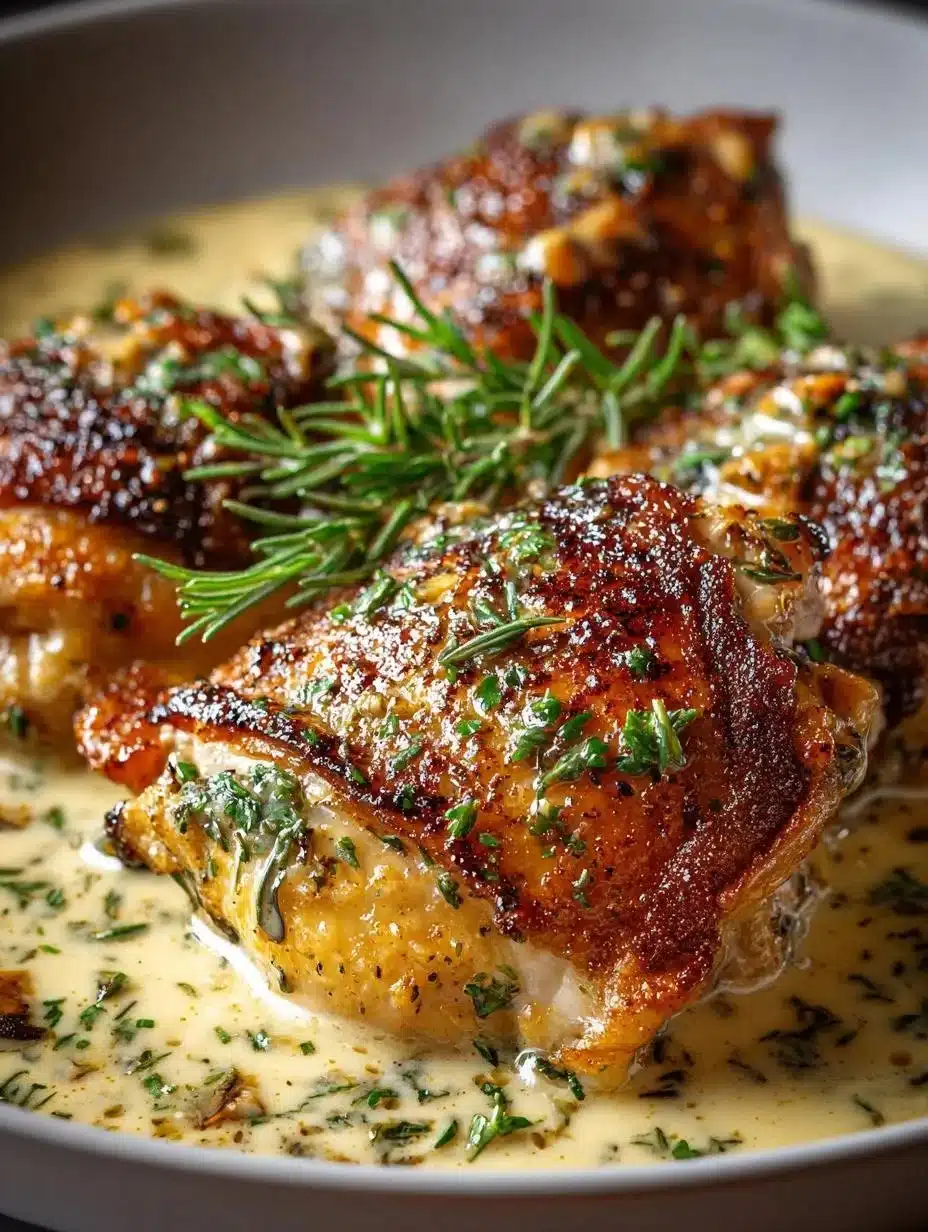
Traditional Creamy Garlic Chicken Thighs guide
If you want a dependable, flavorful weeknight dinner that feels indulgent but is straightforward to make, this Traditional Creamy Garlic Chicken Thighs guide is for you. In the next pages you’ll learn the why and how behind each step, practical substitutions, troubleshooting, and ways to scale the recipe from a simple family meal to a dinner-party centerpiece.
Read through once for the big picture, then use the step-by-step section when you’re cooking. By the end you’ll not only be able to reproduce the dish confidently, you’ll understand how to adapt or troubleshoot it on the fly.
Background & Context
Creamy garlic chicken dishes are a modern comfort-food staple, but their roots are practical and global. Many cultures combine tender braised poultry with rich dairy and aromatics; this dish is a clear heir to that tradition.
When we talk about the Authentic Creamy Garlic Chicken Thighs origin, we’re often tracing a path from rustic European pan-sauces and French-inspired cream reductions through home-cooked adaptations. In post-war kitchens where cream was a sign of luxury, cooks learned how a little dairy transformed simple proteins into something special.
Classic Creamy Garlic Chicken Thighs history also mirrors changing home cooking habits. As one-pot cooking became prized for convenience, cooks adapted braises and pan sauces into quicker skillet methods. Chicken thighs emerged as the preferred cut: forgiving, flavorful, and inexpensive.
A quick personal note: I first learned a version of this from a neighbor who always seared her thighs until the pan looked like the color of caramel. That sear, paired with crushed garlic and a splash of acid, taught me how small moves yield big flavor—this guide codifies those moves.
Why This Approach Works
This method emphasizes three fundamentals: texture contrast, flavor layering, and emulsion-based sauce making.
- Texture contrast: Crispy-seared skin vs. silky sauce makes every bite interesting.
- Flavor layering: Maillard browning on the chicken, aromatic garlic, fond (pan-browned bits), and a small acidic element all build complexity.
- Emulsified sauce: Gently reduced cream, finished with butter or an egg yolk (optional), produces a stable, glossy sauce that clings to the chicken.
Accessibility and flexibility are core benefits. You can make this on a single skillet, use pantry-friendly ingredients, and scale it up. Doubts like “will the sauce split?” or “what if I don’t have cream?” are valid; later sections explain why those issues occur and how to avoid them.
Core Concepts Explained
Break the dish into its logical components so you can improvise without losing the structure.
- Protein choice: Chicken thighs (bone-in, skin-on vs. boneless). Bone-in is juicier and more forgiving; boneless is quicker.
- Browning: Searing creates the fond, which is the flavor foundation for the sauce.
- Aromatics: Garlic is primary; onions, shallots, or leeks are common secondary choices.
- Deglazing: Liquid (wine, stock, or water) lifts fond and adds acidity.
- Cream and enrichment: Heavy cream creates body; butter or cheese can enrich; alternatives like full-fat coconut milk or cashew cream can substitute.
- Thickening/emulsification: Reduction, roux, or pan starches (cornstarch slurry) control consistency.
- Finishing acid and herbs: Lemon juice, vinegar, or fresh herbs brighten a heavy sauce.
Examples and substitutions:
- No cream? Reduce chicken stock more and finish with a knob of butter and a spoonful of full-fat yogurt off heat.
- Dairy-free? Use full-fat coconut milk and add a splash of lemon to balance sweetness.
- No wine? Use extra chicken stock with a tablespoon of white wine vinegar for acidity.
Tools, Resources, or Foundations
Essentials:
- Heavy skillet (cast iron or stainless steel) for reliable searing.
- Tongs and a spider or slotted spoon for moving chicken and skimming.
- Instant-read thermometer for doneness (165°F / 74°C target for chicken thighs).
- Measuring spoons and cups.
Optional enhancements:
- Immersion blender for silky sauces (useful if you’ve added mushrooms or onions and want a smooth finish).
- Ovenproof skillet for finishing in the oven.
- Silicone spatula and fine mesh strainer to clarify the sauce.
Budget-friendly alternatives:
- Nonstick skillet works if you’re careful—sear in smaller batches to avoid steaming.
- Use plain yogurt or milk-thickened with a little cornstarch if cream is too costly.
Brief commentary: start with the essentials, then add optional tools once you’re comfortable. A reliable pan and good salt will do more for the dish than any single gadget.
Step-by-Step Process
Follow this progression. Time estimates assume bone-in, skin-on thighs for 4 servings.
Total active time: 35–45 minutes. Passive/finish time: 5–15 minutes.
Step 1 — Prep (10–15 minutes)
- Pat chicken dry and season generously with salt and pepper.
- Mince garlic (3–5 cloves depending on preference). Optionally slice a shallot or small onion.
- Measure cream (1 to 1 1/2 cups for 4 thighs), 1 cup chicken stock, and any herbs.
Why: Dry skin sears; seasoning early improves flavor penetration.
Common mistake: Skipping the pat-dry step leads to poor browning. Solution: Use paper towels and give the chicken time to dry on a rack.
Pro tip: Let seasoned thighs sit skin-side up for 10 minutes to allow salt to draw moisture and then re-dry with a paper towel.
Step 2 — Searing & Building Flavor (8–12 minutes)
- Heat skillet over medium-high until hot. Add a high-smoke-point oil (2 tbsp).
- Place thighs skin-side down. Press briefly to ensure full contact.
- Sear until deep golden brown and the skin releases—about 6–8 minutes. Flip and brown the other side for 2–3 minutes.
Why: Maillard reaction creates the flavorful fond.
Common mistake: Crowding the pan. Solution: Sear in batches if necessary; overcrowding causes steaming instead of browning.
Pro tip: Use a metal spatula to gently scrape up stubborn fond while deglazing.
Step 3 — Deglazing & Aromatics (2–4 minutes)
- Remove excess fat if there’s more than 2 tablespoons.
- Reduce heat to medium. Add shallot/onion if using; cook until translucent.
- Add garlic and cook 30–45 seconds to yield aroma without bitterness.
- Deglaze with 1/4 to 1/2 cup dry white wine, vermouth, or a splash of stock; scrape fond.
Why: Deglazing lifts concentrated flavors and introduces a touch of acidity.
Common mistake: Burning garlic. Solution: Add garlic after onions have softened and keep heat moderate.
Pro tip: If you’re avoiding alcohol, use a tablespoon of white wine vinegar diluted in stock.
Step 4 — Making the Cream Sauce (5–10 minutes)
- Add chicken stock and return thighs to the pan, skin-side up.
- Simmer gently for 8–10 minutes to cook through; internal temp should reach 165°F.
- Remove thighs and rest on a plate. Reduce sauce slightly, then lower heat and add cream.
- Simmer until sauce coats the back of a spoon. Finish with butter or a splash of cream, and a squeeze of lemon to balance.
Why: Gentle simmering prevents cream from splitting and concentrates flavor.
Common mistake: Boiling the cream. Solution: Keep the heat low once cream is added.
Pro tip: Reserve a tablespoon of pan juices and whisk into cream off-heat if you want a silkier emulsion.
Step 5 — Finish & Serve (2–4 minutes)
- Return the thighs to the sauce to warm and integrate flavors.
- Taste and adjust seasoning. Add chopped parsley, thyme, or rosemary.
- Serve over mashed potatoes, rice, pasta, or alongside roasted vegetables.
Why: Resting allows juices to redistribute and the sauce to adhere.
Common mistake: Serving immediately without tasting. Solution: Always taste; salt and acid may need small adjustments.
Expert Techniques & Insights
Advanced cooks can lift this dish in predictable ways.
- Reverse sear for precise texture: Cook thighs skinless at low oven temp (275°F) until internal temp approaches 155°F, then quickly sear skin-side down at high heat for crispness.
- Confit-style thighs: Slow-cook thighs in oil until tender, then sear for texture; use pan juices to enrich the sauce.
- Make an emulsified pan sauce: Reduce stock to concentrate, add cream, then remove from heat and whisk in cold butter cubes for a glossy finish (monter au beurre).
- Use a liaison: Temper an egg yolk with warm sauce to thicken without over-reducing; whisk back into the sauce off heat.
- Clarify with a starch: A small slurry (1 tsp cornstarch + 1 tbsp cold water) helps stabilize sauces if you expect reheating.
Lessons learned:
- Salt early but adjust later. Early salting seasons the meat; final seasoning corrects for reductions.
- Acid is the finishing note. Even a teaspoon of lemon brightens a rich sauce immensely.
- Keep heat under control when dairy is involved; too hot and it breaks.
Variations & Adaptations
This recipe is a platform you can adapt.
- One-pot weeknight: Use boneless thighs for faster cook time and finish without removing thighs from the pan.
- Low-carb/keto: Skip starch-based thickeners and serve with cauliflower mash.
- Dairy-free: Substitute full-fat coconut milk and finish with lemon and herbs for balance.
- Mushroom & thyme: Add sliced mushrooms with the onions and finish with fresh thyme.
- Tomato & garlic: Add a tablespoon of tomato paste with the garlic for a deeper, slightly acidic base.
- Spicy version: Add red pepper flakes or harissa to the deglaze for a warm heat profile.
Skill-level adaptations:
- Beginner: Use boneless thighs, reduce cooking times, follow the recipe closely.
- Intermediate: Use bone-in thighs and practice pan temperature control.
- Advanced: Play with emulsions, wine reductions, or finishing techniques like a liaison.
Analysis & Benefits Breakdown
Below is a quick comparative table to evaluate versions and choices.
| Component | Strengths | Limitations | Use When |
|—|—:|—|—|
| Bone-in, skin-on thighs | Juicy, flavorful; forgiving | Longer cook time | Dinner for flavor and texture |
| Boneless thighs | Faster, easier to eat | Less depth of flavor | Quick weeknight meals |
| Heavy cream | Silky, stable sauce | Rich, higher calories | Special occasion or indulgence |
| Coconut milk (dairy-free) | Creamy, dairy-free | Coconut flavor | Dairy-free diets |
| Wine deglaze | Adds acidity and complexity | Not for non-drinkers | Balanced, layered sauce |
| Stock + vinegar | Alcohol-free acidity | Less nuanced | Alcohol-free cooking |
This snapshot helps you choose a path that matches dietary needs, time, and equipment.
Preparation, Retention & Long-Term Use
How to plan ahead:
- Make components ahead: Sear thighs and refrigerate separated from sauce. Reheat gently and finish in sauce before serving.
- Sauce ahead: Prepare the sauce and cool quickly. Reheat gently, whisking in a splash of cream or butter to revive emulsification.
Storage:
- Refrigerator: 3–4 days in an airtight container.
- Freezer: Up to 3 months if you freeze thighs in sauce; use freezer-safe containers and leave a little headspace.
Reheating:
- Thaw overnight in the refrigerator if frozen.
- Reheat on low heat on the stovetop; add a splash of stock or cream to loosen the sauce.
- Avoid high microwave heat which can split the sauce.
Longevity of skill:
- Once you master searing, deglazing, and finishing an emulsion, you can apply those techniques to fish, pork, and vegetable dishes.
- Understanding the balance of acid, fat, and salt makes you a more confident improvisor in any sauce-based cooking.
Troubleshooting & Common Problems
Problem → Cause → Solution
- Sauce tastes flat → Cause: Not enough acid or salt → Solution: Add a teaspoon of lemon juice or 1/4 tsp vinegar and adjust salt; taste iteratively.
- Sauce split or curdled → Cause: Too high heat when adding cream → Solution: Lower heat, add a splash of cold cream or butter, whisk vigorously; for severe split, strain and re-emulsify with an immersion blender.
- Chicken skin soggy → Cause: Overcrowding or insufficient heat during sear → Solution: Sear in batches; ensure pan is hot and chicken is dry.
- Undercooked thighs → Cause: Too-low simmer or thick pieces → Solution: Use an instant-read thermometer; if undercooked, finish in a 350°F oven until internal temp reaches 165°F.
- Sauce too thin → Cause: Insufficient reduction → Solution: Simmer longer, or whisk in a small slurry (1 tsp cornstarch + 1 tbsp cold water), heat gently until thickened.
- Sauce too salty → Cause: Over-reduced stock or early over-salting → Solution: Add unsalted cream or a splash of water and a bit of acidity (lemon) to balance.
These quick fixes will get you back on track without stress.
FAQ Section
Q: Can I use chicken breasts instead of thighs?
A: Yes, but breasts cook faster and can dry out. Use boneless breasts, sear briefly, and finish in sauce for just a few minutes until internal temp reaches 165°F.
Q: How much garlic is too much garlic?
A: Typically 3–5 medium cloves for 4 servings is balanced. Roasted whole garlic can be used if you prefer a milder, sweeter garlic note.
Q: Will the sauce get thicker as it cools?
A: Slightly. Sauces with cream and butter will thicken in the refrigerator due to fat solidifying. Reheat gently and add a splash of liquid to loosen.
Q: Can I make this in a slow cooker?
A: You can, but you’ll miss the crisp sear and fond. Sear first for flavor, then transfer to the slow cooker and reduce the braising liquid later into a sauce.
Q: Is white wine necessary?
A: No. White wine adds depth and acidity, but good chicken stock with a tablespoon of vinegar will substitute effectively.
Q: How do I keep the sauce from tasting heavy?
A: Finish with acid (lemon), fresh herbs, and a small amount of Dijon mustard for brightness and cut-through.
Q: What sides pair best with this dish?
A: Mashed potatoes, egg noodles, rice, crusty bread, roasted vegetables, or a simple green salad. Choose starches that can catch the sauce.
Q: Can I double the recipe?
A: Yes—cook in batches for browning, and use a larger pan for sauce. Taste as you go because seasoning scales non-linearly with volume.
Related Topics & Next Steps
Once you’re comfortable with this dish, expand into:
- Pan sauces for steaks and pork chops.
- Making and using liaisons and emulsions in sauces.
- One-pot skillet dinners that use similar techniques (deglazing, reduction).
- Simple wine reductions and their non-alcoholic alternatives.
Complementary guides:
- How to master pan searing proteins.
- A beginner’s guide to emulsified sauces.
- Batch cooking and freezing creamy sauces safely.
Quick Reference Summary
- Use bone-in, skin-on thighs for flavor; boneless for speed.
- Pat dry and season; sear skin-side down until deeply browned.
- Deglaze with wine or stock to lift fond.
- Simmer thighs in stock, remove to rest, then reduce and add cream.
- Finish with butter and acid (lemon) for balance.
- Avoid boiling cream; keep heat gentle.
- Store 3–4 days in fridge, freeze up to 3 months.
This quick checklist is ideal for bookmarking and referencing while you cook.
Conclusion & Engagement
You now have a full Traditional Creamy Garlic Chicken Thighs guide that walks you from foundational principles to advanced techniques. Use the step-by-step process on your first try, then experiment with the variations and expert tips to make the dish your own.
For practical recipe templates and additional one-pan variations to try after mastering this version, check these helpful resources: Creamy Garlic Chicken – The Country Cook and One Pot Creamy Garlic Chicken – Cook With Dana.
If you’d like, I can convert this guide into a printable recipe card, make-ahead plan, or a reusable system prompt for other writers or chefs. Which would you prefer next?
Print
Traditional Creamy Garlic Chicken Thighs
- Total Time: 45 minutes
- Yield: 4 servings 1x
- Diet: Gluten-Free
Description
A flavorful weeknight dinner featuring tender chicken thighs in a rich, creamy garlic sauce.
Ingredients
- 4 bone-in, skin-on chicken thighs
- Salt and pepper to taste
- 3–5 cloves of garlic, minced
- 1 small onion or shallot, sliced (optional)
- 1–1.5 cups heavy cream
- 1 cup chicken stock
- 2 tbsp high-smoke-point oil
- 1/4–1/2 cup dry white wine or vinegar for deglazing
- Fresh parsley, thyme, or rosemary for garnish
Instructions
- Pat chicken dry and season generously with salt and pepper.
- Mince garlic and optionally slice a shallot or onion.
- Measure out cream, chicken stock, and herbs.
- Heat a skillet over medium-high heat and add oil.
- Place thighs skin-side down and sear until golden brown for 6–8 minutes.
- Flip and brown the other side for 2–3 minutes.
- Remove excess fat, reduce heat, and cook onions if using until translucent.
- Add garlic and cook until aromatic (30–45 seconds).
- Deglaze the pan with wine or stock, scraping up fond.
- Add chicken stock and return thighs to the pan skin-side up.
- Simmer gently for 8–10 minutes until internal temperature reaches 165°F.
- Remove thighs and rest on a plate.
- Reduce sauce slightly and then add cream, simmering until it coats the back of a spoon.
- Finish sauce with butter or lemon before returning chicken to warm through.
- Garnish with herbs and serve hot over rice, pasta, or alongside vegetables.
Notes
This dish offers flexibility with ingredients; feel free to use boneless thighs, or substitute dairy-free options.
- Prep Time: 15 minutes
- Cook Time: 30 minutes
- Category: Main Course
- Method: Skillet Searing and Simmering
- Cuisine: French
Nutrition
- Serving Size: 1 serving
- Calories: 450
- Sugar: 3g
- Sodium: 500mg
- Fat: 20g
- Saturated Fat: 10g
- Unsaturated Fat: 8g
- Trans Fat: 0g
- Carbohydrates: 5g
- Fiber: 0g
- Protein: 35g
- Cholesterol: 130mg