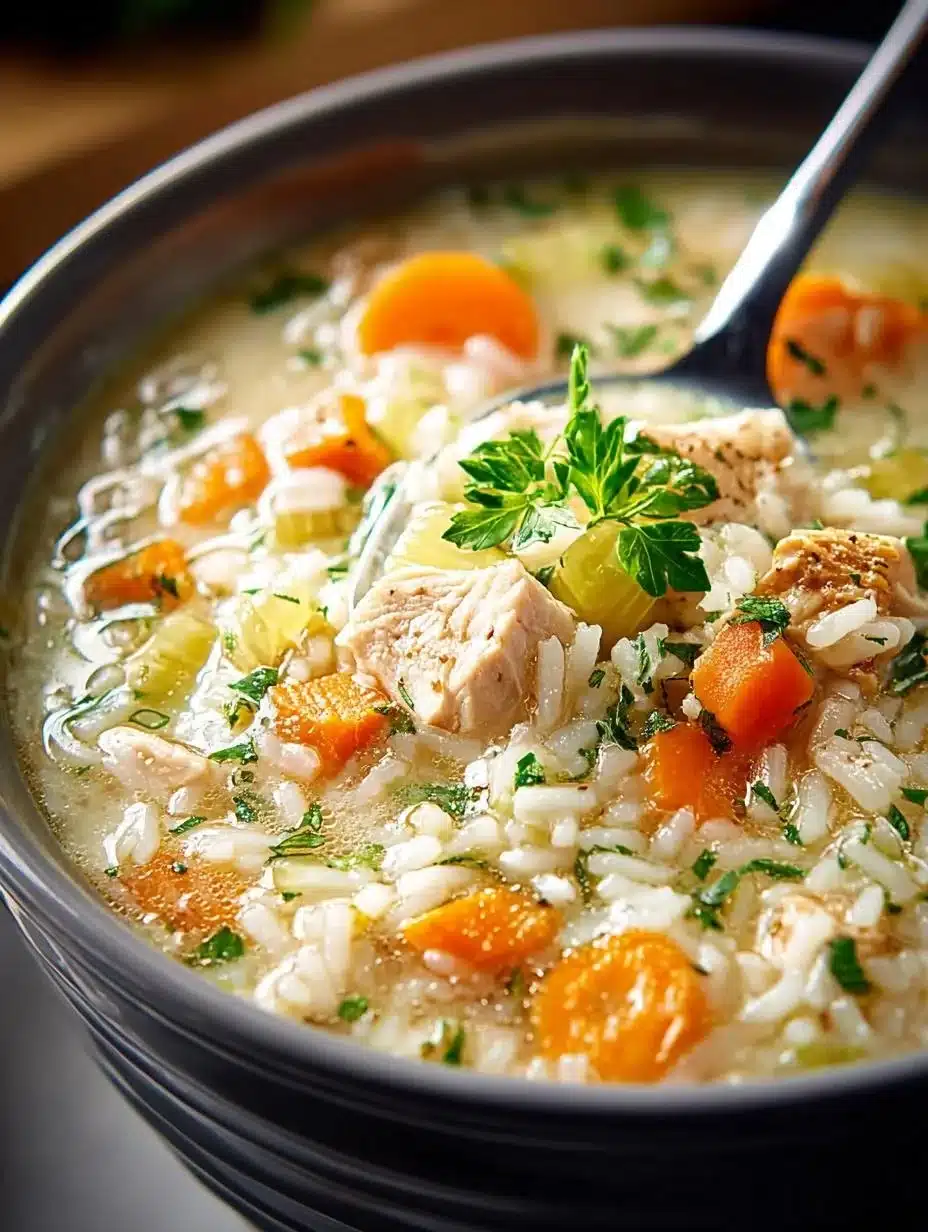
Traditional Comforting Turkey Rice Soup guide
If you’ve ever wanted a single, reliable recipe that feels like a warm hug and rescues weeknight dinners, you’re in the right place. This Traditional Comforting Turkey Rice Soup guide is a step-by-step resource that moves you from fundamentals to advanced techniques so you can make delicious, consistent soup every time.
By the end of this guide you will:
- Understand the fundamentals that make turkey rice soup comforting and balanced.
- Be able to make the soup from leftover turkey or from scratch with a fresh bird.
- Use techniques that improve flavor, texture, and shelf-life.
- Adapt the recipe for different skill levels, dietary needs, and time constraints.
Read on like you’re standing in a friendly kitchen with a mentor at your shoulder.
Background & Context
Turkey and rice soup is familiar comfort food across many households. It’s often made with holiday leftovers, turning abundance into warmth. The phrase "Authentic Comforting Turkey Rice Soup origin" points to a culinary practice rather than a single birthplace: stews and simple soups combining grain and protein exist in nearly every food culture because they’re practical, nutritious, and comforting.
Classic Comforting Turkey Rice Soup history traces back to the idea of thrift and nourishment. After a big roast, home cooks historically simmered bones and leftover meat with loose pantry staples—rice, onions, carrots—to stretch ingredients and deliver healing warmth. Over time, regional variations added herbs, spices, and local grains.
Personal note: I started making turkey rice soup the week after my first Thanksgiving living alone—leftover turkey, a stubbornly neglected onion, and a rice bag from the pantry became dinner that lasted a week. That soup taught me how technique can turn frugality into flavor.
Why This Approach Works
This guide’s approach emphasizes technique, flexibility, and flavor layering.
Benefits explained:
- Efficiency: Use leftover turkey or make a dedicated pot of broth; both routes are efficient with different time commitments.
- Accessibility: Ingredients are pantry staples—rice, onions, carrots, celery, and salt—so you don’t need specialty items.
- Flexibility: The method supports short-cook and long-simmer versions, stovetop or pressure cooker, gluten-free or low-carb swaps.
Why it’s reliable: rice and poultry are forgiving when cooked properly. Rice absorbs and anchors flavors, while turkey provides a mild, adaptable protein that highlights aromatics and herbs.
Addressing common doubts:
- “Does leftover turkey make good soup?” Yes. Proper reheating and fresh aromatics make leftover turkey sing again.
- “Is rice going to overcook?” Not if you time it correctly or cook rice separately when storing for leftovers.
Core Concepts Explained
Break the soup into logical components so you can adapt confidently.
Stock (the backbone)
- Purpose: Carries and concentrates flavor.
- Options: Homemade turkey stock (best), store-bought low-sodium chicken stock (convenient), or a quick vegetable stock (lighter).
- Example: Simmer turkey carcass with onion, carrot, celery, and bay leaf for 2–4 hours for deep flavor.
Protein (leftover turkey vs fresh)
- Leftover turkey: already cooked, adds texture and flavor when added toward the end.
- Fresh turkey: raw pieces (breast or thigh) need longer cooking for tenderness.
Rice (type and timing)
- Long-grain white rice cooks fast and stays separate.
- Brown rice requires longer; better cooked separately.
- Alternatives: jasmine, basmati, wild rice (adds chew, requires timing adjustments).
Aromatics & seasoning
- Classic combo: onion, celery, carrot.
- Herbs: parsley, thyme, bay leaf.
- Finishing: lemon, fresh parsley, or a splash of cream for richness.
Texture & mouthfeel
- Broth clarity vs body: simmer gently for clear broth; blend some vegetables or add a puree for body.
- Balance: acid brightens, fat enriches, salt enhances.
Preservation & reheating
- Rice can become mushy if stored in soup; cook rice separately for long-term storage.
- Freeze stock or soup without rice for best texture after thawing.
Alternatives and substitutions:
- Starch: replace rice with orzo or barley (note gluten), or use cauliflower rice for low-carb.
- Vegetarian: use hearty mushrooms and a rich vegetable stock, and add white beans for protein.
- Gluten-free: ensure stock and seasonings are gluten-free; rice and turkey are naturally GF.
Tools, Resources, or Foundations
Essentials:
- Large pot (6–8 quart) or slow cooker/pressure cooker.
- Fine mesh strainer or slotted spoon.
- Chef’s knife and cutting board.
- Measuring spoons and cups, or a kitchen scale.
Optional enhancements:
- Immersion blender (for partial puree to thicken).
- Stockpot with roasting rack for separating bones.
- Digital thermometer to gauge meat doneness.
Budget-friendly/beginner alternatives:
- Use store-bought low-sodium stock if making stock feels daunting.
- Use leftover roasted bones, frozen if necessary, to build stock over time.
Brief commentary: invest in a sturdy pot and a good knife; they make every recipe easier and more consistent.
Step-by-Step Process
Below is a clear, logical progression. Time estimates assume a stovetop approach using leftover turkey. For fresh turkey or from-scratch stock, add time accordingly.
Total time: 30–90 minutes depending on stock and rice choices.
Plan and prep (10–15 minutes)
- Chop aromatics (onion, carrot, celery).
- Pick meat from turkey carcass and shred or dice.
- Measure rice; consider cooking rice separately if planning leftovers.
Build flavor: make or heat stock (if using pre-made, skip to next)
- H3: Making quick turkey stock (30–90 minutes)
- Roast or break the carcass into a pot, cover with cold water, add a halved onion, celery stalks, carrot pieces, a bay leaf, and several peppercorns.
- Simmer gently, skimming foam for clarity.
- Strain and reserve.
- H3: Making quick turkey stock (30–90 minutes)
Sauté aromatics (5–8 minutes)
- H3: Sweat the base
- Warm oil or butter in your pot over medium heat.
- Add onion, celery, and carrot; cook until softened and aromatic but not browned (5–8 minutes).
- Add garlic for the last minute.
- H3: Sweat the base
Combine and simmer (10–20 minutes)
- Add stock and bring to a simmer.
- Add dried herbs (thyme, bay leaf); taste and adjust salt after simmering.
- If using raw turkey pieces, simmer until cooked through and tender (15–20 minutes).
Rice timing (varies)
- H3: Rice methods
- Method A: Cook rice separately (15–45 minutes depending on type). Add to bowls and ladle hot soup over it.
- Method B: Add uncooked long-grain white rice to simmering soup and cook 15–20 minutes. (Don’t do this if you plan to freeze soup.)
- Tip: Reserve some stock if you need to thin the soup when reheating.
- H3: Rice methods
Finish and serve (2–5 minutes)
- Add shredded turkey to warm through.
- Stir in fresh herbs and an acidic finish (squeeze of lemon) to lift flavors.
- Serve with crusty bread or a simple salad.
Common mistakes + how to avoid them:
- Overcooking rice in soup: prevent by cooking separately when you plan to store leftovers.
- Bland broth: always taste and adjust salt at the end; simmering concentrates salt differently than a quick broth.
- Cloudy stock: simmer gently and skim foam early.
Pro tips:
- Roast bones for deeper flavor before making stock.
- Use a little butter with aromatics for silkiness.
- Add a knob of butter or a splash of cream near the end for extra comfort.
Expert Techniques & Insights
Advanced strategies for flavor and efficiency.
- Layer flavor: Roast bones and vegetables, then sauté aromatics before adding liquid. Each step adds Maillard complexity.
- Clarify quickly: If you want a clear broth, strain through a fine-mesh sieve and refrigerate overnight to skim fat.
- Use an immersion blender lightly: Puree a quarter of the cooked carrots and onions into the broth for natural thickness without heavy cream.
- Pressure cooker/Instant Pot: Make rich stock in 45–60 minutes from raw bones, reducing active time dramatically.
- Freeze stock in portion trays: 1–2 cup portions freeze well and give you ready soup starters.
Lessons from experience:
- Cold stock is easier to defat quickly.
- Acid brightens late—add lemon, vinegar, or chopped herbs at service.
- Fresh herbs lose vibrancy with long simmering; hold them for the end.
Variations & Adaptations
Different contexts or use cases and how to adapt.
- Leftover holiday version: Use leftover stuffing flavors sparingly; add herbs carefully. Cook rice separately to avoid sogginess.
- Weeknight quick version: Use store-bought low-sodium stock, shredded rotisserie turkey, and pre-chopped mirepoix to be on the table in 30 minutes.
- Slow-simmer depth: Simmer bones for several hours and finish with short-grain rice or orzo for hearty texture.
- Low-carb: Replace rice with cauliflower rice or chopped turnips.
- Vegetarian adaptation: Replace turkey with roasted mushrooms and white beans; use vegetable stock and add umami elements like soy sauce or miso (watch sodium).
- Gluten-free: Ensure all broths and bouillons are gluten-free, and use rice as the starch.
Skill-level adaptations:
- Beginner: Use pre-made stock and leftover turkey; cook rice separately.
- Intermediate: Make a quick homemade stock and finish with a small amount of cream or butter.
- Advanced: Roast bones and vegetables, reduce stock, and blend components for refined texture.
Analysis & Benefits Breakdown
A comparative look at common approaches and their trade-offs.
| Approach | Flavor | Time | Cost | Storage | Best Use |
|———:|:——:|:—-:|:—-:|:——:|:——–|
| Leftover turkey + store stock | Good, quick | 30 min | Low | Good (cook rice separately) | Weeknight meals |
| Homemade turkey stock + leftover meat | Deep, rich | 3–6 hrs | Medium | Excellent (freeze stock) | Comfort meals, dinners |
| Pressure-cooked stock + fresh meat | Very good | 60–90 min | Medium | Excellent | Faster deep-flavor option |
| Vegetarian mushroom + bean | Earthy, hearty | 30–60 min | Low | Good | Meatless comfort food |
Strengths:
- Extremely adaptable.
- Comforting and nourishing.
- Good use of leftovers and pantry staples.
Limitations:
- Rice texture can deteriorate with long storage.
- Requires planning if starting from bones for deep flavor.
Considerations:
- If you want make-ahead convenience, freeze soup without rice.
- Consider the audience: kids and older adults often prefer softer textures and mild seasoning.
Preparation, Retention & Long-Term Use
Make this soup a reliable part of your meal planning.
How to prepare effectively:
- Plan stock-making on a low-activity day; use an Instant Pot to save hands-on time.
- Portion stock into freezer-friendly containers for quick future soups.
Retention or reuse strategies:
- Freeze soup without rice in 1–2 cup portions.
- Cook rice fresh at serving to preserve texture.
- Refrigerate soup up to 3–4 days when rice is cooked separately; remove rice from soup before storing if possible.
Longevity of knowledge or skills:
- Learning to make a good stock transfers to countless recipes—soups, risottos, gravies.
- Timing rice and protein separately is a technique that improves many one-pot dishes.
Troubleshooting & Common Problems
Problem → Cause → Solution
Problem: Soup tastes flat.
- Cause: Under-seasoned or lacks acidity.
- Solution: Simmer longer with aromatics, add salt gradually, finish with lemon juice or a splash of vinegar.
Problem: Rice is mushy after reheating.
- Cause: Rice cooked in soup and refrigerated.
- Solution: Cook rice separately next time; for now, stretch soup with fresh stock and add fresh cooked rice when reheating.
Problem: Broth is cloudy or greasy.
- Cause: Vigorous boiling or not skimming fat.
- Solution: Simmer gently; chill and skim fat; strain solids through a fine sieve.
Problem: Turkey is dry or tough.
- Cause: Overcooked white meat or reheating cooked turkey too long.
- Solution: Add turkey at the end to warm through only; for leftover dry meat, dice small and let it soak briefly in warm broth.
Problem: Soup lacks depth when using store-bought stock.
- Cause: Stock is low-sodium and less concentrated.
- Solution: Add a sautéed mirepoix, roasted tomatoes or a spoon of miso/soy for umami, and finish with acid and herbs.
FAQ Section
Q1: Can I use instant rice in turkey soup?
A1: Yes, instant rice works fast and is fine for same-day serving, but it tends to get soft if stored in soup. Cook separately for leftovers.
Q2: Is it safe to use turkey bones that have been refrigerated for several days?
A2: Yes, as long as the turkey was properly refrigerated within two hours of cooking and you use bones within 3–4 days. Freeze bones for longer storage.
Q3: How do I make the soup richer without cream?
A3: Roast the bones and vegetables, reduce the stock slightly, or puree a portion of cooked vegetables back into the broth for body.
Q4: How long does turkey rice soup keep in the freezer?
A4: Up to 3 months for best quality. Freeze without rice for optimal texture; add fresh rice at serving.
Q5: Can I use leftover gravy in the soup?
A5: A small amount adds flavor, but leftovers often contain concentrated seasoning. Start with a tablespoon, taste, and adjust.
Q6: Which herbs pair best with turkey rice soup?
A6: Parsley, thyme, and bay leaf are classic. Use rosemary sparingly as it can overpower the delicate turkey flavor.
Q7: Can I turn this into a one-pot comfort meal for kids?
A7: Yes. Use mild seasoning, smaller rice grains or orzo, and soften vegetables thoroughly. Puree part of the soup if a smoother texture is preferred.
Q8: How do I reheat leftover turkey rice soup safely?
A8: Reheat on the stovetop to a steady simmer, or in the microwave stirring frequently. Ensure soup reaches 165°F (74°C) for safety.
Related Topics & Next Steps
Extend your skills and flavor repertoire with:
- How to make a universal poultry stock from scratch.
- Rice grain guide: choosing the right rice for the dish.
- One-pot dinners: balancing starch, protein, and vegetables.
- Homemade bread basics for serving with soups.
Try pairing this soup-building method with a simple pilaf technique or a vegetables-first roast to create weekly meal rotations.
Quick Reference Summary
- Stock: Make it when you can; store in 1–2 cup portions.
- Rice: Cook separately for storage, add to bowls at service.
- Meat: Add leftover turkey at the end; cook raw pieces fully before adding rice.
- Herbs & acid: Add fresh herbs and acid just before serving to brighten flavors.
- Storage: Freeze without rice; refrigerate up to 4 days if rice is separate.
Bookmark these quick tips and keep a running list of stock-making sessions on your phone.
Conclusion & Engagement
You now have a complete, practical reference for making and adapting a Classic Comforting Turkey Rice Soup history and technique into your own kitchen. Use these methods to convert leftovers into something nourishing, host a low-effort comfort dinner, or build a soup routine that scales.
For quick inspiration and practical templates, check these helpful recipes: Leftover Turkey and Rice Soup (30 Minute Meal Ideas) and Turkey and Rice Soup (30 Minutes!).
If you’d like, I can:
- Convert this into a reusable system prompt for writers.
- Adapt it into a printable recipe card or step-by-step tutorial.
- Create a checklist to evaluate home-cooked soups against quality markers.
Which would you like next?
Print
Traditional Comforting Turkey Rice Soup
- Total Time: 45 minutes
- Yield: 4 servings 1x
- Diet: None
Description
A warm and nourishing turkey rice soup that’s perfect for using up leftover turkey or making from scratch. This recipe emphasizes technique and flavor for a comforting meal.
Ingredients
- 2 cups shredded cooked turkey
- 1 cup long-grain white rice
- 1 large onion, chopped
- 2 carrots, diced
- 2 celery stalks, diced
- 4 cloves garlic, minced
- 8 cups turkey or low-sodium chicken stock
- 1 bay leaf
- 1 tsp dried thyme
- Salt and pepper to taste
- Juice of 1 lemon
- Fresh parsley for garnish
Instructions
- In a large pot, heat oil or butter over medium heat.
- Add chopped onion, carrots, and celery; sauté until softened (5-8 minutes).
- Add minced garlic and cook for another minute.
- Pour in the stock and bring to a simmer.
- Add bay leaf and thyme; adjust salt after simmering for 10-20 minutes.
- If using raw turkey, add now and cook until tender.
- Meanwhile, cook the rice separately according to package instructions, or add it to the pot and simmer for 15-20 minutes.
- Stir in the shredded turkey to warm through.
- Add a squeeze of lemon juice and garnish with fresh parsley before serving.
Notes
For best texture, cook rice separately if planning to store leftovers. Freeze soup without rice for up to 3 months.
- Prep Time: 15 minutes
- Cook Time: 30 minutes
- Category: Soup
- Method: Stovetop
- Cuisine: American
Nutrition
- Serving Size: 1 serving
- Calories: 350
- Sugar: 4g
- Sodium: 450mg
- Fat: 10g
- Saturated Fat: 3g
- Unsaturated Fat: 5g
- Trans Fat: 0g
- Carbohydrates: 40g
- Fiber: 2g
- Protein: 25g
- Cholesterol: 70mg