Introduction
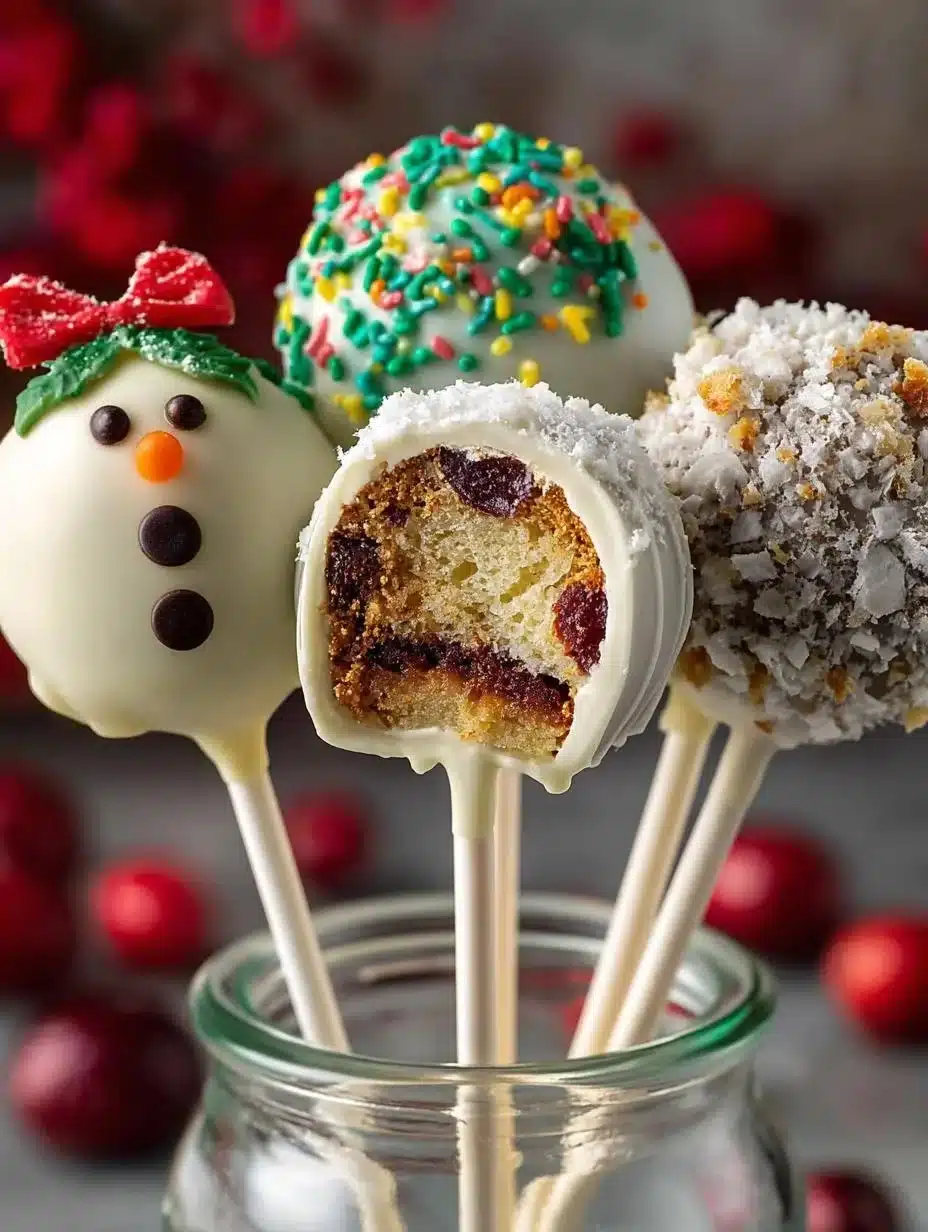
If you remember hiding a bite-sized, festive round on a stick and calling it holiday magic, you already know the power of cake pops. This Traditional Christmas Cake Pops guide will take that warm feeling and turn it into reliable skill: from understanding where these treats come from to mastering advanced decorating techniques.
Read on and you’ll gain a clear roadmap: the history behind the idea, the core concepts to get perfect texture and coating, a step-by-step recipe and timeline, troubleshooting for every common problem, and advanced insights for show-stopping holiday presentations. Whether you’re a first-timer making a batch for school parties or an experienced baker scaling for gifts, this guide teaches the why as well as the how.
Background & Context
Cake pops—small balls of cake, coated and mounted on a stick—feel modern, but they grew from older traditions of portable sweets and novelty confections.
The phrase Classic Christmas Cake Pops history connects to two strands: the modern cake pop movement popularized in the early 2000s by creative bakers and cafés, and the longer tradition of bite-sized holiday sweets like truffles and gingerbread lollies. The modern trend made the treat visually playful and customizable to holidays, turning cakes into handheld ornaments.
When discussing Authentic Christmas Cake Pops origin it’s useful to note the technique’s practical roots. Leftover celebration cake + frosting = cake pop mixture. That resourceful origin explains why cake pops spread quickly: they’re economical, portable, and decorative.
Culturally, these pops became staples at children’s parties, bake sales, and holiday tables because they combine confection control (single servings, portioning) with a high “wow” factor. Observationally, success hinges less on rare ingredients and more on mastering texture and coating technique.
Why This Approach Works
This guide emphasizes foundational technique, progressive skill building, and troubleshooting.
- It teaches the science behind texture: why cake-to-frosting ratios matter and how temperature affects coatings.
- It prioritizes repeatability: clear time estimates and small tests to validate steps.
- It balances accessibility and ambition: novice-friendly methods plus advanced tricks (tempering, mirror coatings, molding).
Addressing typical doubts up front:
- “Do I need to bake special cake?” No — this guide shows how to use fresh or leftover cake and gives alternatives.
- “Is tempering chocolate necessary?” Not always. You’ll learn when it matters and affordable substitutes for holiday use.
- “Are cake pops fragile?” They can be if mishandled; the guide explains structural choices for durability.
This practical approach reduces surprise failures and boosts confidence.
Core Concepts Explained
Break the cake pop into four logical components: base cake, binder (frosting), shaping/structure, and coating/finishing.
- Base cake: texture (crumb size, moisture) affects how well cake binds. Dense, moist cakes compress into a cohesive ball. Dry, crumbly cakes need more binder.
- Binder: usually frosting or ganache. It lubricates and holds crumbs together. Too much makes a paste; too little makes the balls fall apart.
- Shaping & structure: chilling firms the mixture; a central stick and headspace in storage keep coating from cracking.
- Coating/finishing: creates a barrier and aesthetic. Coatings range from tempered chocolate to candy melts to royal icing. Each behaves differently with temperature and humidity.
Alternatives and substitutions:
- For binder: cream cheese frosting gives tang and softness; ganache adds stability. Use marshmallow fluff for a lighter, less sweet option.
- For coating: candy melts are user-friendly; tempered chocolate gives shine and snap. Cocoa butter-based coatings let you paint colors.
- Flavor swap: swap vanilla for spiced buttercream for extra holiday notes.
Examples
- A dense chocolate bundt produces sturdy pops with minimal binder.
- A light genoise or chiffon needs more frosting or a stabilizing ganache.
Tools, Resources, or Foundations
Essentials:
- Mixing bowl and spatula
- Baking sheet or tray
- Lollipop sticks or cake-pop sticks
- Microwave-safe bowl or double boiler for melting
- Candy thermometer (if tempering)
- Cooling rack and upright holders (styrofoam block or cake-pop drying stand)
Optional enhancements:
- Piping bags and tips for drizzles
- Food coloring gel (less water content than liquid)
- Edible glitter, sanding sugar, sprinkles
- Silicone molds for shaped pops
- Chocolate tempering machine (for high-volume production)
Budget-friendly beginner alternatives:
- Use skewers or wooden coffee stirrers if sticks are unavailable (trim and wrap in tape if sharp).
- Use a glass jar filled with sugar instead of a styrofoam block to hold pops upright during drying.
- Substitute candy melts with chopped couverture chocolate tempered using a simple seeding method.
Brief commentary on usefulness:
Invest in a small set of quality sticks and a drying stand; these improve workflow and reduce cracking. Tempering tools pay off only if you plan regular baking; otherwise candy melts and technique adjustments suffice.
Step-by-Step Process
This section walks you from raw cake to finished pops. Total active time: ~60–90 minutes; chilling/drying time adds 2–4 hours. Batch shown: ~24 pops.
- Gather ingredients and tools (10 minutes).
- Prepare cake (if baking) or break down store-bought cake (5–10 minutes).
- Mix cake and binder, shape the balls (20–30 minutes).
- Chill to firm balls (30–60 minutes).
- Insert sticks, dip, and decorate (30–60 minutes).
- Final drying/chilling (30–60 minutes).
Common mistakes and how to avoid them are listed after the detailed steps.
H3 – Step A: Prep the Cake and Binder
- Crumble cooled cake into a large bowl; aim for even crumbs the size of coarse sand.
- Add frosting gradually. Start with about 3 tablespoons per 2 cups of crumbs; mix until the texture holds together when pinched but is not sticky.
Time: 10–15 minutes.
Pro tip: If using very moist cake, start with less frosting. For a drier cake, add a tablespoon of simple syrup or a splash of milk and another tablespoon of frosting.
H3 – Step B: Shape and Chill
- Roll mixture into uniform balls (20–25g each for small enough bite size).
- Place on a parchment-lined tray. Freeze or chill: 15–20 minutes in the freezer or 30–60 in the fridge.
Time: 15–30 minutes.
Pro tip: Use a cookie scoop for uniformity. Uniform size ensures consistent dipping and presentation.
H3 – Step C: Prepare Sticks and Dip Base Coat
- Melt coating (candy melts or tempered chocolate).
- Dip the tip of each stick into coating, then insert the stick halfway into a chilled ball. This creates a glue-like anchor.
Time: 10 minutes.
Common mistake: Not dipping the stick first — balls can slide off while dipping. Solution: always anchor sticks before full coating.
H3 – Step D: Full Dip and Decorate
- Reheat coating to working temperature.
- Holding the stick, dip the pop fully. Tap the wrist lightly to remove excess coating and swirl to smooth.
- Sprinkle decorations before coating sets, or pipe details after the coating has set.
Time: 20–40 minutes depending on decoration complexity.
Pro tip: Work quickly in small batches. Keep coatings warm and thin—if the coating is too thick, it’ll clump and look uneven.
Common Mistakes + How to Avoid Them
- Cracks in coating: Cause — cold cake pop placed in hot coating. Solution — ensure pops are chilled but not frozen hard; choose slightly cooled coating.
- Sogginess: Cause — too much binder or prolonged storage at room temperature. Solution — reduce frosting slightly and store in cool location.
- Falling off sticks: Cause — not anchoring stick, or liquid binder. Solution — dip stick tip in coating and re-chill.
- Dull, streaky coating: Cause — unmelted lumps or overheated coating. Solution — stir, strain if needed, and maintain correct temperatures.
Expert Techniques & Insights
- Tempering for shine and snap: If you want professional finishes, temper chocolate to 88–90°F for dark, 86–88°F for milk, and 82–84°F for white chocolate. Use seeding or tabling methods. Tempered chocolate sets with a glossy sheen and resists melting at room temperature.
- Mirror finish: Use couverture chocolate with added cocoa butter and very smooth tempering. Apply a thin base coat, chill lightly, then apply the final glaze.
- Layered coatings: Apply a thin “seal” coat to lock crumbs before a thick decorative coat. This prevents porous surfaces that absorb liquid and get soggy.
- Stability for shipping: Use denser cake (like pound cake) and ganache binder. Individually wrap in airtight bags and add cold packs in transit.
Lessons learned:
- Practice on 2–3 test pops before committing to full batches.
- Work in a cool, dry room — humidity wrecks coatings.
- Keep kids included: they can add sprinkles, but finish delicate piping yourself.
Variations & Adaptations
Contextual adjustments:
- Gluten-free: Use a dense gluten-free cake base and xanthan-stabilized frosting. Chill slightly longer.
- Vegan: Use vegan buttercream and dairy-free chocolate; add a small amount of coconut oil to help smooth consistency.
- Savory-inspired novelty (advanced): Make cheese-based bite-sized savory “pops” for a cheese board, coated in seasoned breadcrumbs; not a direct holiday sweet, but a creative twist.
Skill-level adaptations:
- Beginner: Use store-bought cake and candy melts; stick to simple sprinkles.
- Intermediate: Bake from scratch, use cream cheese frosting, practice drip techniques with white chocolate.
- Advanced: Temper chocolate, paint metallics with edible gold dust mixed into alcohol or extract for painting.
Cultural flexibility:
- Use spice blends (eg, ginger, cinnamon, clove) for a Nordic or European twist.
- Flavor with matcha, rose, or pistachio for Middle Eastern-inspired pops.
- Color palette and motifs reflect regional holiday aesthetics.
Analysis & Benefits Breakdown
Below is a comparison of common methods to achieve identified benefits.
| Method | Ease | Appearance | Shelf-stability | Cost |
|—|—:|—|—:|—:|
| Store-bought cake + candy melts | Very easy | Good, less glossy | Medium (2–3 days) | Low |
| Homemade cake + buttercream + candy melts | Easy–Moderate | Very good | Medium–high (3–4 days) | Moderate |
| Homemade cake + ganache + tempered chocolate | Moderate–Advanced | Professional (gloss & snap) | High (4–7 days if cool) | Higher |
| Frozen cake base + chocolate coating | Moderate | Variable (can be grainy) | Low–Medium (if thawed too fast) | Low–Moderate |
Strengths, limitations, considerations:
- Use candy melts for speed and color variety; accept lower sheen.
- Use tempered chocolate for display quality and resilience; accept more time and skill required.
- Storage considerations impact method choice—shop displays vs home gifting differ.
Preparation, Retention & Long-Term Use
How to prepare effectively:
- Plan flavors, colors, and packaging ahead. Assemble a workstation with all decorations in small bowls.
- Make extra stick anchors and test a temperature swatch. Run a small taste test for seasoning balance.
Retention or reuse strategies:
- Freeze pops for longer storage: pre-freeze on a tray, then wrap individually in plastic wrap and store in airtight container; they keep up to 3 months. Thaw slowly in the fridge to avoid condensation.
- Salvaging failed pops: If coating cracks or falls, refresh with melted coating and new decoration, or crumble into truffles.
Longevity of skills:
- Once you master ratios and dip technique, you can adapt the process to other treats (truffles, cake balls, ice-cream pops).
- Skill longevity improves if you practice tempering and decorating monthly; these are perishable skills, but basic shaping and mixing are easy to retain.
Troubleshooting & Common Problems
Problem → Cause → Solution
- Cracked coating → Cold interior meets hot coating OR coating too thick → Warm coating slightly and ensure pops are chilled but not frozen; thin coating with a small amount of neutral oil.
- Pops sliding off sticks → Not anchored or mixture too soft → Dip stick tip in coating, re-chill the pop and keep binder ratio lower.
- Coating streaky or lumpy → Poorly melted coating → Re-melt gently and strain if necessary; avoid overheating.
- Dull chocolate → Untempered or overheated chocolate → Use tempering or add small amount of cocoa butter for sheen.
- Sticky surface after drying → High humidity OR sugar bloom → Dry in a cool, dry area or use a dehumidifier; recoat with a thin tempered layer.
- Grainy texture → Overworking or incorrect chocolate → Use higher-quality chocolate and avoid water contact.
Focus on clarity and reassurance: most issues are fixable with one corrective step. Test small batches to find the exact fix for your environment.
FAQ
Q1: How long do cake pops last?
A: Properly stored in an airtight container in a cool place, cake pops last 3–5 days. Refrigerate for longer life; freeze for up to 3 months.
Q2: Can I use box cake mix?
A: Yes. Box cake produces consistent results and is a great beginner option. Adjust frosting amounts based on moisture.
Q3: Do cake pops need to be refrigerated?
A: If using cream cheese or perishable fillings, refrigerate. For short-term display (a few hours) at cool room temperature, refrigeration isn’t required.
Q4: What’s the best coating for beginners?
A: Candy melts. They’re forgiving, melt easily, and come in varied colors.
Q5: Why do my cake pops crack after coating?
A: Usually thermal shock. Ensure pop centers aren’t frozen and maintain coating at a moderate temperature.
Q6: Can I make them ahead of time for gifting?
A: Yes. Make, freeze solid, then thaw in the fridge and package. Alternatively, finish them and pack with cold packs when transporting.
Q7: How do I get bright, consistent colors?
A: Use gel food coloring in your coating if compatible, or use colored candy melts. For painted details, use edible paints or lustre dust mixed with clear alcohol.
Q8: Is there a low-sugar option?
A: Modify frosting with reduced sugar alternatives and choose dark chocolate coatings. Expect changes in texture and set time.
Related Topics & Next Steps
Once you’re comfortable with cake pops, logical extensions include:
- Advanced sugar art and piping skills.
- Cake-decorating fundamentals: crumb coating, fondant use.
- Chocolate work: tempering, molding, and painting.
- Packaging and small-business scaling: pricing, labeling, shipping considerations.
Complementary guides or skills:
- How to temper chocolate for bakers.
- Simple ganache and buttercream recipes.
- Holiday flavor pairings and seasonal spice blends.
Quick Reference Summary
- Aim for firm, moist cake crumbs and a binder ratio that creates a holdable, not sticky, mix.
- Chill before inserting sticks and dipping.
- Anchor sticks with a dip of coating.
- Work in small batches; keep coatings at working temperature.
- Use tempered chocolate for shine; candy melts for ease.
- Store chilled; freeze for long-term preservation.
Bullet recap:
- Tools: sticks, stand, candy thermometer (optional).
- Foundation: cake crumb + binder = shapeable mixture.
- Key step: chill before dipping.
- Troubleshoot: temperature and moisture are primary causes of failure.
Conclusion
You’ve gone from history to hands-on technique in this Traditional Christmas Cake Pops guide. You now understand not just how to make cake pops, but why certain choices—binder ratios, chilling, coating temperatures—move a good pop toward great.
If you want a quick, tested recipe to practice these techniques, try this Easy Christmas Cake Pops Recipe (For The Holidays) – Basics With …. For another practical, step-by-step holiday recipe that aligns well with the methods here, see this Easy Christmas Cake Pops Recipe.
You’re now equipped to experiment confidently: tweak flavors, try tempering for shine, or scale for gifting. When you make your first successful batch, take notes and photos—these become the reference you return to next season. If you’d like, I can convert this framework into a printable checklist, adapt it for a workshop handout, or create a recipe card with timed steps. Which would help you most?
Print
Traditional Christmas Cake Pops
- Total Time: 45 minutes
- Yield: 24 servings 1x
- Diet: Vegetarian
Description
Delicious, bite-sized cake pops perfect for holiday celebrations, combining festive flavors and creative decorations.
Ingredients
- 2 cups crumbled cake (any flavor)
- 3 tablespoons frosting (adjustable based on cake moisture)
- Candy melts or tempered chocolate (for coating)
- Sprinkles or edible decorations (optional)
- Lollipop sticks
Instructions
- Crumble cooled cake into a large bowl, adding frosting gradually until mixture holds together.
- Roll the mixture into uniform balls and place them on a parchment-lined tray.
- Chill the balls in the freezer for 15-20 minutes or in the fridge for 30-60 minutes.
- Melt your coating and dip the tip of each stick into the coating before inserting it halfway into each cake ball.
- Fully dip each pop in the coating, tapping off excess and adding decorations before the coating sets.
- Let the decorated cake pops dry completely before serving.
Notes
If using very moist cake, start with less frosting. Ensure pops are well-chilled before dipping to avoid cracks.
- Prep Time: 10 minutes
- Cook Time: 30 minutes
- Category: Dessert
- Method: Chilling and Dipping
- Cuisine: American
Nutrition
- Serving Size: 1 pop
- Calories: 150
- Sugar: 12g
- Sodium: 50mg
- Fat: 8g
- Saturated Fat: 4g
- Unsaturated Fat: 3g
- Trans Fat: 0g
- Carbohydrates: 18g
- Fiber: 0g
- Protein: 2g
- Cholesterol: 25mg