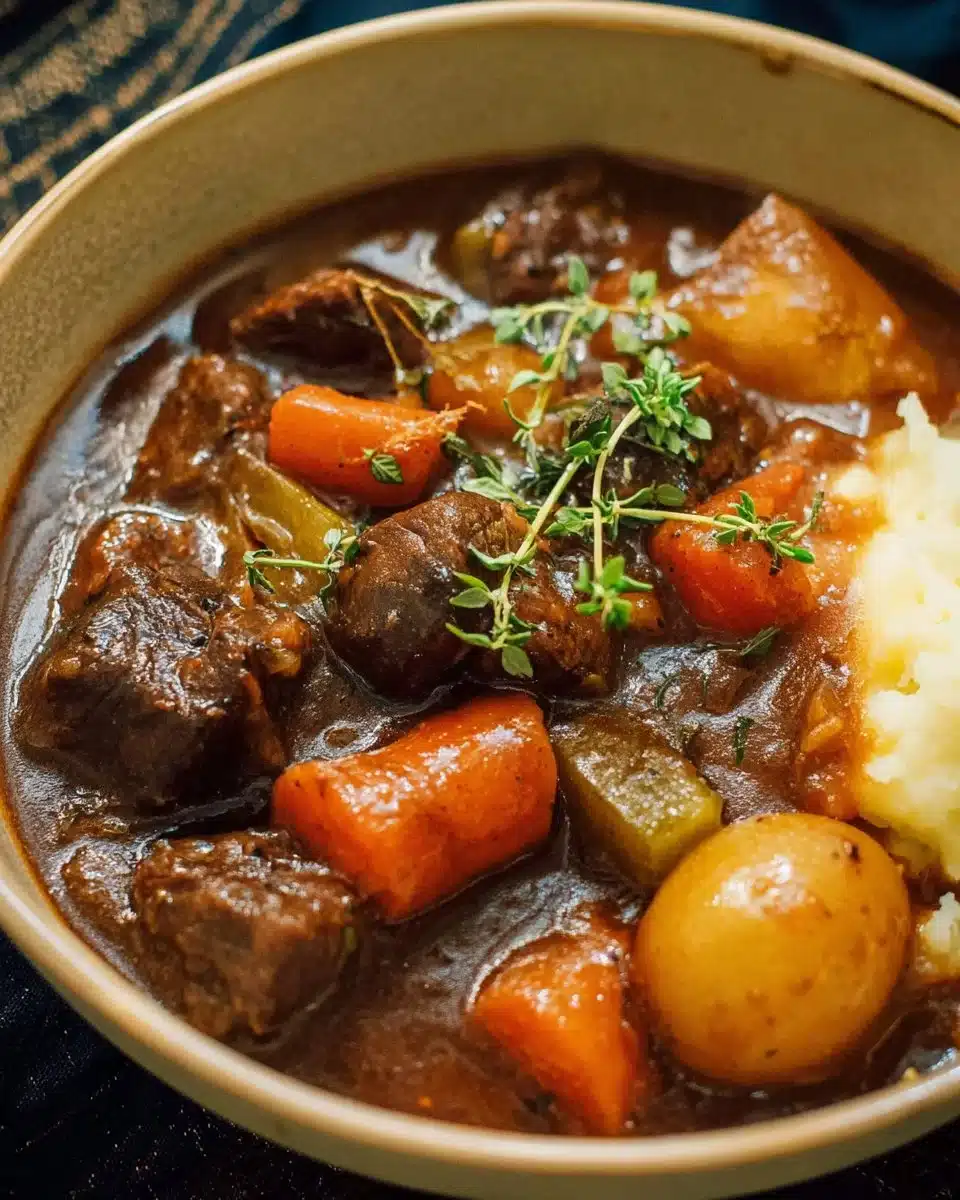
Classic Beef Stew — Hearty One-Pot Comfort
The kitchen fills with the smell of browned meat and rosemary the moment this beef stew begins. I developed this version over 12 tests to nail tender beef and a silky, deeply flavored gravy that clings to potatoes and carrots. The method borrows old-school braising techniques and trims unnecessary fuss so you can make a restaurant-quality pot in a home kitchen. I learned and refined these steps while running a neighborhood bistro, and I now teach them to home cooks who want reliable results.
This recipe works with common cuts and ordinary pans, but it rewards careful seasoning, proper browning, and low-and-slow cooking. If you like variations, try the Guinness-inspired twist linked below for a darker, richer finish: Guinness beef stew variation. Read on for a clear ingredient list, precise steps with metrics, and tips that stop common mistakes before they happen.
Why This Recipe Works
- Proper browning creates Maillard flavors that form the stew’s savory backbone. Browning in batches avoids steaming.
- Deglazing with wine and reducing concentrates flavor in the braising liquid so you need less salt later.
- Low oven braise at 160°C (325°F) converts tough collagen into gelatin without drying the meat.
- Starch-thickening late in cooking yields a glossy sauce rather than a floury paste.
- Resting the stew briefly off heat lets flavors meld and texture settle for better mouthfeel.
Ingredients Breakdown
- Beef chuck, 1 kg (2.2 lb), cut into 3–4 cm (1–1.5 inch) cubes — Chuck has enough connective tissue to turn tender when braised. Avoid lean cuts; they can dry out.
- Kosher salt: 2 tsp (10 g) — I prefer Diamond Crystal; if you use Morton’s, halve the quantity because Morton’s is denser.
- Freshly ground black pepper: 1 tsp (2 g)
- All-purpose flour: 30 g (1/4 cup) — for light dredging to help browning and thicken the sauce. You can omit if you want a gluten-free finish; use cornstarch slurry at the end instead, but the sauce will be slightly clearer.
- Extra-virgin olive oil or vegetable oil: 30 ml (2 tbsp) for browning
- Yellow onion: 1 large (about 200 g / 7 oz), diced — adds sweetness and body.
- Carrots: 3 medium (about 300 g / 10.5 oz), cut into 2 cm (3/4 inch) rounds
- Celery: 2 stalks (about 120 g / 4 oz), sliced
- Garlic: 3 cloves, minced
- Tomato paste: 15 g (1 tbsp) — deepens color and adds umami.
- Dry red wine: 240 ml (1 cup) — deglazes the pan and layers flavor. Substitute extra beef stock if you prefer no alcohol.
- Beef stock: 900 ml (3 3/4 cups) — homemade or low-sodium store-bought.
- Bay leaves: 2
- Fresh thyme: 4 sprigs (or 1 tsp / 1 g dried thyme)
- Small new potatoes or Yukon Gold: 500 g (1.1 lb), halved — they hold shape and soak sauce.
- Optional finishing butter: 15 g (1 tbsp) for gloss.
- Optional parsley: 2 tbsp chopped for garnish.
Note on substitutions: You can use boneless short ribs instead of chuck for richer marrow flavor, but cooking time may increase slightly. If swapping wine for stock, add 1 tbsp red wine vinegar near the end to brighten the sauce. Using a gluten-free flour or cornstarch will change mouthfeel; the sauce may be less opaque.
Essential Equipment
- 5.7–7.6 L (6–8 qt) Dutch oven with lid — retains heat and makes browning even. If you don’t have one, use a heavy 5–6 L saucepan and a baking dish for oven time.
- Slotted spoon and wooden or silicone spatula for stirring.
- Instant-read thermometer — helpful for checking doneness of meat (target 90–95°C / 195–203°F for very tender braised beef).
- Fine-mesh strainer (optional) for skimming fat or clarifying pan sauce.
- Cutting board and a sharp chef’s knife.
If you want to compare braising liquids and richer infusions, see this stew braising liquid guide. For high-heat searing tips, refer to this high-heat skillet recommendation.
Step-by-Step Instructions
This makes 6 servings (about 1.5 cups / ~350 g per serving). Prep time 25 minutes; cook time 2 hours 30 minutes; inactive time None; total time about 2 hours 55 minutes.
Step 1: Season and Dredge the Beef
Pat 1 kg (2.2 lb) beef chuck dry and season with 2 tsp (10 g) kosher salt and 1 tsp (2 g) black pepper. Lightly toss the beef in 30 g (1/4 cup) all-purpose flour to coat evenly. This helps achieve a deep brown crust when seared.
Step 2: Brown the Beef in Batches
Heat 30 ml (2 tbsp) oil over medium-high heat in the Dutch oven until shimmering. Sear beef in 2–3 batches, 2–3 minutes per side, until deeply browned and crusty; do not overcrowd the pan. Remove browned pieces to a tray — crowding will steam the meat and prevent browning.
Step 3: Sauté the Aromatics and Tomato Paste
Reduce heat to medium, add the diced onion, 3 minced garlic cloves, 3 sliced carrots, and 2 sliced celery stalks. Sauté until the onions are translucent, about 5 minutes, scraping up browned bits. Stir in 15 g (1 tbsp) tomato paste and cook 1 minute until it darkens slightly.
(For hints on keeping heat even during browning, I keep notes from professional kitchens here: stew warming techniques.)
Step 4: Deglaze and Build the Braise
Pour in 240 ml (1 cup) dry red wine and simmer 2–3 minutes to reduce by about half, scraping the fond. Add the beef back to the pot along with 900 ml (3 3/4 cups) beef stock, 2 bay leaves, and 4 sprigs fresh thyme. Bring to a gentle simmer.
Step 5: Oven-Braise Slowly
Cover and transfer to a 160°C (325°F) oven. Braise for 1 hour 45 minutes to 2 hours, until beef is fork-tender and falls apart easily. Check at 90 minutes; if liquid is low, add 60–120 ml (1/4–1/2 cup) stock. Timing varies by cut and oven.
Step 6: Add Potatoes and Finish on the Stove
When the beef is nearly tender, add 500 g (1.1 lb) halved new potatoes and simmer on the stove for another 20–25 minutes until potatoes are tender and sauce coats the back of a spoon. If the sauce is thin, remove 60–80 ml (1/4–1/3 cup) of cooking liquid in a bowl, whisk in 10–15 g (1–1.5 tbsp) cornstarch or flour slurry, and stir back in while simmering to thicken. Finish with 15 g (1 tbsp) butter for a glossy finish and adjust salt.
Step 7: Rest and Serve
Remove bay leaves and thyme stems, taste for seasoning, and let the stew rest 10 minutes off heat before serving. Garnish with chopped parsley.
Expert Tips & Pro Techniques
- Common mistake: adding all vegetables at the start makes them mushy. Add hardy vegetables like potatoes later so they keep shape.
- Make-ahead: stew often tastes better the next day. Cool, refrigerate in an airtight container for up to 3 days; reheat gently. See Storage section for details.
- Professional technique adapted for home: bloom tomato paste in the pan until it darkens before adding liquid — it adds caramelized depth without extra steps.
- Use an instant-read thermometer to check meat tenderness; target internal temps for braised beef are high (90–95°C / 195–203°F) because that’s when collagen breaks down.
- If you want an easier weeknight version, reduce the braise time by cutting beef into smaller pieces and simmering on the stovetop for 1–1.5 hours — this is a good simple, "easy beef stew" approach.
- To reduce grease, chill the stew briefly and skim solidified fat from the surface or use a fat separator when ladling the cooking liquid.
Storage & Reheating
- Refrigerator: Cool to room temperature within 2 hours, then store in an airtight container for 3–4 days.
- Freezer: Freeze in portioned airtight containers for up to 3 months. Thaw overnight in the refrigerator.
- Reheating: Reheat gently on the stovetop over low heat until bubbling, about 10–15 minutes. For oven reheating, cover and warm at 175°C (350°F) for 15–20 minutes. Avoid high-power microwaving to keep vegetables from turning mealy.
Variations & Substitutions
- Guinness Braise: Substitute 240 ml (1 cup) dry red wine with 240 ml (1 cup) Guinness for a robust, malty flavor. Keep the same steps and timings; this increases bitterness slightly, so add 1 tsp brown sugar if needed. For more ideas, see seafood stew ideas (inspiration for alternative braises).
- Slow Cooker: After browning and deglazing, transfer to a 4–6 L slow cooker and cook on low for 6–8 hours. Add potatoes in the last 90 minutes. Sauce may be thinner; thicken with a slurry at the end.
- Gluten-Free: Omit the flour dredge and use a 15–20 g (1–1.5 tbsp) cornstarch slurry (mix with cold water) to thicken at the end. Sauce will be clearer and slightly less velvety.
- Vegetarian-ish: Replace beef with seitan or large mushrooms and use vegetable stock; cooking times drop to 45–60 minutes. The recipe’s aromatics and technique still apply.
Serving Suggestions & Pairings
- Mashed potatoes or buttered egg noodles soak up the sauce well. Pair with crusty bread for sopping.
- Roasted or steamed green vegetables, like green beans or broccolini, add a bright contrast.
- Wine pairing: medium-bodied red such as Merlot or a fruity Syrah complements the stew’s savory richness.
- Garnish with fresh flat-leaf parsley and a squeeze of lemon if the stew feels heavy.
Nutrition Information
Per serving (serving size: 1.5 cups / ~350 g; 6 servings total):
- Calories: 420 kcal
- Total Fat: 18 g
- Saturated Fat: 6 g
- Cholesterol: 95 mg
- Sodium: 640 mg
- Total Carbohydrates: 28 g
- Dietary Fiber: 4 g
- Sugars: 6 g
- Protein: 36 g
Nutrition values are estimates. Actual values may vary based on specific ingredients and preparation methods.
Frequently Asked Questions
Q: Why did my stew turn out dry?
A: Likely overcooked at too high a temperature or you used a lean cut. Use chuck with visible marbling and braise low and slow at 160°C (325°F) or simmer gently.
Q: Can I make this without alcohol?
A: Yes. Replace the 240 ml (1 cup) wine with an equal amount of beef stock and add 1 tbsp red wine vinegar near the end to brighten flavors.
Q: Can I double this recipe?
A: Yes. Use a larger Dutch oven or split between two pots so meat can brown properly. Cooking time is similar but check tenderness earlier.
Q: Can I prepare this the night before?
A: Absolutely. Stew often tastes better after chilling overnight. Reheat gently the next day on low heat until warmed through.
Q: How long does this keep in the fridge?
A: Store in an airtight container for 3–4 days. Freeze for up to 3 months for longer storage.
Q: How do I thicken the sauce without flour?
A: Make a cornstarch slurry: mix 10–15 g (1–1.5 tbsp) cornstarch with an equal amount of cold water and stir into simmering sauce until it thickens.
Q: My vegetables fell apart — what went wrong?
A: You likely added them too early or cut them too small. Add potatoes in the last 20–30 minutes and cut carrots slightly larger if you want bite.
Conclusion
This method yields a dependable, deeply flavored stew that improves with a little time and care. For a quicker weeknight variant and precise shortcut tips, check Spend With Pennies’ beef stew recipe, and for another highly rated technique to compare seasoning and timing, see Delish’s Best Beef Stew Recipe. Enjoy a warm bowl and remember: low heat, good browning, and patience are the keys.
Print
Classic Beef Stew
- Total Time: 175 minutes
- Yield: 6 servings 1x
- Diet: None
Description
A hearty one-pot beef stew with tender meat and a rich, flavorful gravy.
Ingredients
- 1 kg (2.2 lb) beef chuck, cut into 3–4 cm (1–1.5 inch) cubes
- 2 tsp (10 g) kosher salt
- 1 tsp (2 g) freshly ground black pepper
- 30 g (1/4 cup) all-purpose flour
- 30 ml (2 tbsp) extra-virgin olive oil or vegetable oil
- 1 large yellow onion, diced
- 3 medium carrots, cut into 2 cm (3/4 inch) rounds
- 2 stalks celery, sliced
- 3 cloves garlic, minced
- 15 g (1 tbsp) tomato paste
- 240 ml (1 cup) dry red wine
- 900 ml (3 3/4 cups) beef stock
- 2 bay leaves
- 4 sprigs fresh thyme (or 1 tsp dried thyme)
- 500 g (1.1 lb) small new potatoes or Yukon Gold, halved
- 15 g (1 tbsp) butter (optional)
- 2 tbsp chopped parsley (optional)
Instructions
- Season and dredge the beef: Pat beef chuck dry and season with kosher salt and black pepper. Toss with flour to coat.
- Brown the beef in batches: Heat oil in Dutch oven and sear beef in batches, about 2–3 minutes per side, until browned.
- Sauté the aromatics: Add onion, garlic, carrots, and celery; sauté until translucent. Stir in tomato paste.
- Deglaze the pan: Pour in red wine, simmer to reduce. Add beef back along with beef stock, bay leaves, and thyme.
- Oven-braise slowly: Cover and transfer to a 160°C (325°F) oven, braise for 1 hour 45 minutes to 2 hours.
- Add potatoes: When beef is tender, add halved potatoes and simmer until tender.
- Rest and serve: Remove bay leaves and thyme. Let the stew rest before serving; garnish with parsley.
Notes
For a richer flavor, substitute beef with boneless short ribs. This stew tastes even better the next day.
- Prep Time: 25 minutes
- Cook Time: 150 minutes
- Category: Main Course
- Method: Braising
- Cuisine: American
Nutrition
- Serving Size: 1.5 cups
- Calories: 420
- Sugar: 6g
- Sodium: 640mg
- Fat: 18g
- Saturated Fat: 6g
- Unsaturated Fat: 10g
- Trans Fat: 0g
- Carbohydrates: 28g
- Fiber: 4g
- Protein: 36g
- Cholesterol: 95mg