Asparagus Risotto for Spring — Creamy, Fast Weeknight
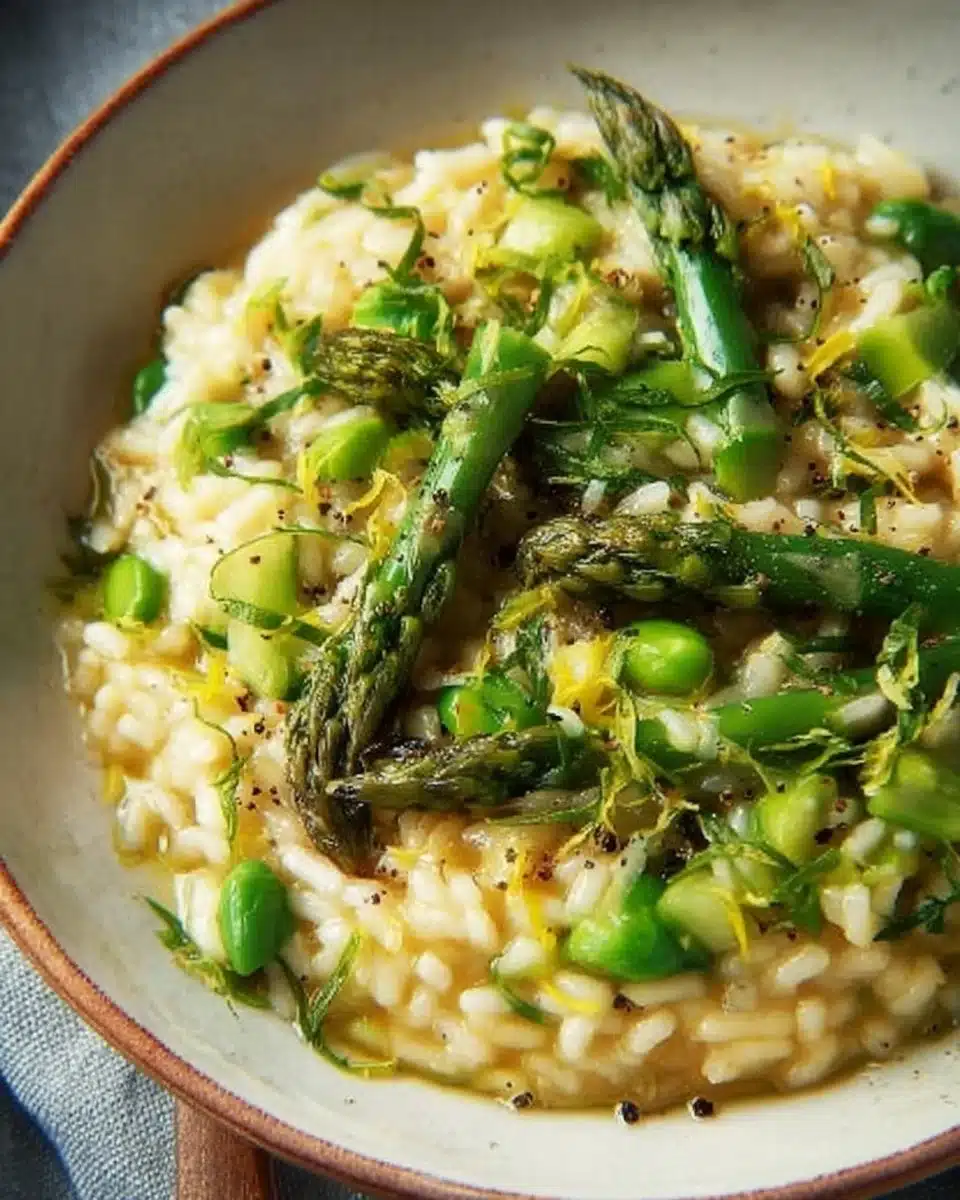
Bright, green asparagus and glossy, al dente rice make this asparagus risotto sing with a fresh, spring flavor. I developed this version during a spring menu run at my small trattoria and tested it at home eight times to lock in the timing and texture. The rice finishes with a silky chew, not gluey, and the asparagus stays tender-crisp so each bite has lift. Read on for exact timings, metric/imperial measures, and pro tricks that stop common failures and save you time the next day. If you like deeper caramelized notes, compare techniques in our caramelized onion tomato risotto to learn how longer onion sweats change flavor and texture.
Why This Recipe Works
- Controlled liquid additions: Adding warm broth in measured ladles lets the rice release starch gradually for a creamy, smooth texture without becoming gummy.
- Brief par-cooking of asparagus: Blanching the stalks before finishing preserves the color and snap while preventing overcooking during the final stir.
- High-quality starch choice: Arborio rice releases enough starch to thicken naturally; we balance it with wine and cheese for silkiness rather than heaviness.
- Temperature control: Keeping the broth warm and the pan at medium heat avoids temperature shocks that slow cooking and lead to uneven grains.
- Finishing technique: Off-heat stirring with butter and cheese (mantecatura) creates a glossy emulsion that coats each grain.
Ingredients Breakdown
- Arborio rice: 300 g (1 1/2 cups) — the short-grain rice that gives risotto its signature creaminess. Do not substitute with long-grain rice.
- Asparagus: 450 g (1 lb), woody ends trimmed — use medium-thickness spears for even cooking. Thicker spears need 1–2 minutes extra blanching.
- Vegetable or chicken broth: 1.2 L (5 cups), kept warm — a neutral, hot broth ensures steady absorption; avoid cold broth that slows the cook.
- Dry white wine: 120 ml (1/2 cup) — adds acidity that brightens the dish. Omit only if you must and replace with 120 ml extra broth plus 1 tsp lemon juice.
- Yellow onion: 1 small (about 100 g / 1 cup) finely diced — provides savory backbone. Shallots work but are sweeter; reduce quantity by half.
- Garlic: 1 clove minced — optional for a subtle layer; do not burn.
- Unsalted butter: 30 g (2 tbsp) for cooking; + 30 g (2 tbsp) cold for finishing — using two additions helps texture control.
- Extra-virgin olive oil: 15 ml (1 tbsp) — for sweat and flavor.
- Freshly grated Parmesan: 60 g (1/2 cup) — adds salt and umami; use Parmigiano-Reggiano if possible.
- Salt: Diamond Crystal kosher salt, 1 to 1 1/2 tsp (see note) — if using Morton’s, halve the amount because it’s denser.
- Black pepper: freshly ground, to taste.
Substitutions and impact warnings: - Swap broth type freely, but switching to a very salty broth will make the risotto overly salty; taste the broth first.
- For a dairy-free version: omit butter and Parmesan and stir in 2 tbsp nutritional yeast at the end for umami, but creaminess will be slightly reduced.
Essential Equipment
- Heavy-bottomed sauté pan or wide, shallow skillet, 28–30 cm (11–12 inches) — a wide surface encourages even evaporation.
- Saucepan to keep broth warm — maintaining hot broth is crucial.
- Heatproof ladle for measured liquid additions.
- Sharp chef’s knife and cutting board.
- Microplane or fine grater for Parmesan.
- Slotted spoon or tongs to transfer asparagus after blanching.
If you lack a wide skillet, use a 3.8–4.7 L (4–5 quart) saucepan as a substitute; it will still work but stir more often to ensure even cooking.
Step-by-Step Instructions
Serves 4 • Prep: 15 minutes • Cook: 30 minutes • Inactive: None • Total: 45 minutes
Step 1: Prepare the ingredients
Trim woody ends from 450 g (1 lb) asparagus and cut into 4 cm (1 1/2 inch) pieces, reserving the tips whole. Finely dice 100 g (1 small) onion and measure 300 g (1 1/2 cups) Arborio rice. Warm 1.2 L (5 cups) broth in a saucepan over low heat, keeping it at a gentle simmer.
Step 2: Blanch the asparagus
Bring a pot of salted water to a boil and blanch the stalks (not tips) for 1 minute, then immediately transfer to an ice bath to stop cooking; this preserves color and texture. Blanch tips separately for 30 seconds if they are very thin. Drain and set aside.
Step 3: Sweat the aromatics
Heat 15 ml (1 tbsp) olive oil and 30 g (2 tbsp) butter in the wide pan over medium heat. Add diced onion and cook until translucent and fragrant, about 4–5 minutes, stirring often so they do not brown. Add 1 minced garlic clove and cook 30 seconds.
Step 4: Toast the rice and deglaze
Add 300 g (1 1/2 cups) Arborio rice to the pan and stir for 1–2 minutes until each grain looks glossy and slightly translucent at the edges. Pour in 120 ml (1/2 cup) dry white wine and stir until mostly absorbed, about 1–2 minutes.
Step 5: Add the hot broth gradually
Ladle in 120 ml (1/2 cup) warm broth and stir until mostly absorbed, about 2–3 minutes. Continue adding broth in 120 ml (1/2 cup) increments, stirring frequently and allowing the rice to absorb between additions, for 18–22 minutes total. Do not dump all the broth at once — slow additions coax out starch for a creamy texture. The rice should be al dente and creamy when done.
Step 6: Finish with asparagus and fat
When the rice is tender but still has a slight chew (about 18–20 minutes total), stir in the blanched asparagus and cook 1–2 minutes more to warm through. Remove pan from heat and quickly stir in 30 g (2 tbsp) cold butter and 60 g (1/2 cup) grated Parmesan until glossy. Taste for salt and add freshly ground black pepper.
Step 7: Plate and serve
Serve immediately in warmed bowls and top with reserved asparagus tips and a light drizzle of extra-virgin olive oil if desired. Risotto will firm up as it cools, so plan to serve right away.
Expert Tips & Pro Techniques
- Common mistake and fix: If your risotto is gummy, you likely added broth too quickly or overcooked the rice. Reduce stirring, use warm broth, and stop when grains are al dente.
- Knife timing: Trim asparagus ends and peel thicker lower stalks to avoid fibrous bites.
- Make-ahead: Cook rice until two-thirds done, cool quickly, and refrigerate for up to 24 hours. Reheat with warm broth and finish with butter and cheese; add asparagus in the final 1–2 minutes.
- Professional technique for home cooks: Use a wide pan rather than a deep pot — more surface area speeds evaporation and gives control over texture.
- Wine alternative: If you skip wine, stir in 1 tsp lemon juice at the end to brighten the dish.
- Texture checkpoint: Taste a grain every 2–3 minutes after the 15-minute mark—look for a creamy exterior and a slightly firm core.
Storage & Reheating
- Refrigerator: Store leftovers in an airtight container for up to 3 days. Cool to room temperature within 2 hours before refrigerating.
- Freezer: Risotto does not freeze well; freezing changes texture and makes it watery when reheated. If you must, freeze for up to 1 month in a shallow airtight container and expect some separation.
- Reheating: Reheat gently on the stovetop over low heat with 60–120 ml (1/4–1/2 cup) warm broth per serving, stirring until creamy, about 3–5 minutes. Avoid microwaving if you want best texture.
Variations & Substitutions
- Lemon-Parm Version: Keep quantities the same; add 1 tsp lemon zest and 1 tbsp lemon juice when you finish for a bright finish. Everything else remains the same.
- Mushroom-Asparagus: Sear 200 g (7 oz) sliced cremini mushrooms in 15 g (1 tbsp) butter until golden and set aside; sauté mushrooms with the onions and proceed as directed, folding them back in with the asparagus at the end.
- Vegetarian / Vegan: Use vegetable broth and replace butter with 30 g (2 tbsp) olive oil; swap Parmesan for 2 tbsp nutritional yeast and a pinch of kala namak for a savory hit. Texture will be slightly less glossy.
- Lower-sodium option: Use low-sodium broth and omit added salt; finish with a sprinkle of Pecorino if you need more flavor.
- Gluten-free note: This recipe is naturally gluten-free if you use a gluten-free wine and verify broth labels.
Serving Suggestions & Pairings
- Simple green salad with lemon vinaigrette — the acidity cuts the richness of the risotto.
- Lightly roasted fish, such as cod or sea bass, for a balanced plate.
- Crusty bread and an antipasto board for a casual dinner.
- If you want a vegetable side, check our sautéed asparagus and mushrooms recipe for a complementary skillet dish: sautéed asparagus and mushrooms with garlic.
Nutrition Information
Serving Size: about 1 generous bowl (serves 4)
Per serving (estimate):
- Calories: 460 kcal
- Total Fat: 15 g
- Saturated Fat: 7 g
- Cholesterol: 30 mg
- Sodium: 780 mg (varies with broth and salt)
- Total Carbohydrates: 63 g
- Dietary Fiber: 4 g
- Sugars: 3 g
- Protein: 11 g
Nutrition values are estimates. Actual values may vary based on specific ingredients and preparation methods.
Frequently Asked Questions
Q: Why did my risotto turn out too dry?
A: Likely you absorbed nearly all the broth with little residual cream. Add 60–120 ml (1/4–1/2 cup) warm broth or water off heat and stir vigorously to restore creaminess.
Q: Can I make this without wine?
A: Yes. Replace the wine with an equal amount of warm broth plus 1 tsp lemon juice for brightness. The flavor will be slightly less complex.
Q: Can I double this recipe for a larger crowd?
A: You can double the ingredients, but use a very large, wide pan and increase stirring and attention. Work in two pans if your cookware is too small to keep evaporation steady.
Q: Can I prepare this the night before?
A: Partially: cook until the rice is two-thirds done, cool quickly, refrigerate, and finish within 24 hours. Reheat with warm broth and finish with butter and cheese just before serving.
Q: How long does this keep in the fridge?
A: Stored in an airtight container, it keeps 3 days refrigerated. Reheat gently with a splash of warm broth.
Q: Why are my asparagus tips mushy?
A: You likely overblanched or left them in hot broth too long. Blanch tips separately for 30 seconds and add them in the final minute of finishing.
Q: Can I use other rice like Carnaroli or Vialone Nano?
A: Yes. Carnaroli and Vialone Nano are excellent for risotto and may give a slightly creamier or firmer texture; adjust timing by a couple of minutes and watch for the same al dente center.
Conclusion
If you want additional inspiration and different approaches to asparagus risotto, see this fresh take from Love and Lemons’ asparagus risotto recipe, and compare a rustic, herb-forward version at Sidewalk Shoes’ asparagus risotto. These variations can help you tune acidity and herb choices to your taste.
Print
Asparagus Risotto for Spring
- Total Time: 45 minutes
- Yield: 4 servings 1x
- Diet: Vegetarian
Description
A creamy and vibrant asparagus risotto that captures the essence of spring, featuring tender asparagus and al dente Arborio rice.
Ingredients
- 300 g Arborio rice (1 1/2 cups)
- 450 g asparagus, woody ends trimmed (1 lb)
- 1.2 L vegetable or chicken broth, kept warm (5 cups)
- 120 ml dry white wine (1/2 cup)
- 1 small yellow onion (about 100 g / 1 cup), finely diced
- 1 clove garlic, minced (optional)
- 30 g unsalted butter (2 tbsp) for cooking; + 30 g (2 tbsp) cold for finishing
- 15 ml extra-virgin olive oil (1 tbsp)
- 60 g freshly grated Parmesan (1/2 cup)
- Salt, to taste
- Freshly ground black pepper, to taste
Instructions
- Prepare the ingredients: Trim woody ends from asparagus and cut into pieces, reserving the tips whole. Finely dice onion and measure rice. Warm broth in a saucepan over low heat.
- Blanch the asparagus: Bring salted water to a boil and blanch stalks for 1 minute, then transfer to an ice bath. Blanch tips separately if very thin.
- Heat oil and butter in a pan over medium heat. Add onion and cook until translucent. Add minced garlic and cook for another 30 seconds.
- Add Arborio rice to the pan and stir until glossy and slightly translucent. Pour in white wine and stir until mostly absorbed.
- Ladle in warm broth gradually, stirring until mostly absorbed between additions for a total of 18–22 minutes.
- Stir in blanched asparagus and cook for 1–2 minutes. Remove from heat and blend in cold butter and grated Parmesan until glossy.
- Serve immediately in warmed bowls topped with asparagus tips and a drizzle of olive oil if desired.
Notes
Serve immediately for the best texture as risotto firms up when cool. Store leftovers in an airtight container for up to 3 days.
- Prep Time: 15 minutes
- Cook Time: 30 minutes
- Category: Main Course
- Method: Baking
- Cuisine: Italian
Nutrition
- Serving Size: 1 serving
- Calories: 460
- Sugar: 3g
- Sodium: 780mg
- Fat: 15g
- Saturated Fat: 7g
- Unsaturated Fat: 8g
- Trans Fat: 0g
- Carbohydrates: 63g
- Fiber: 4g
- Protein: 11g
- Cholesterol: 30mg