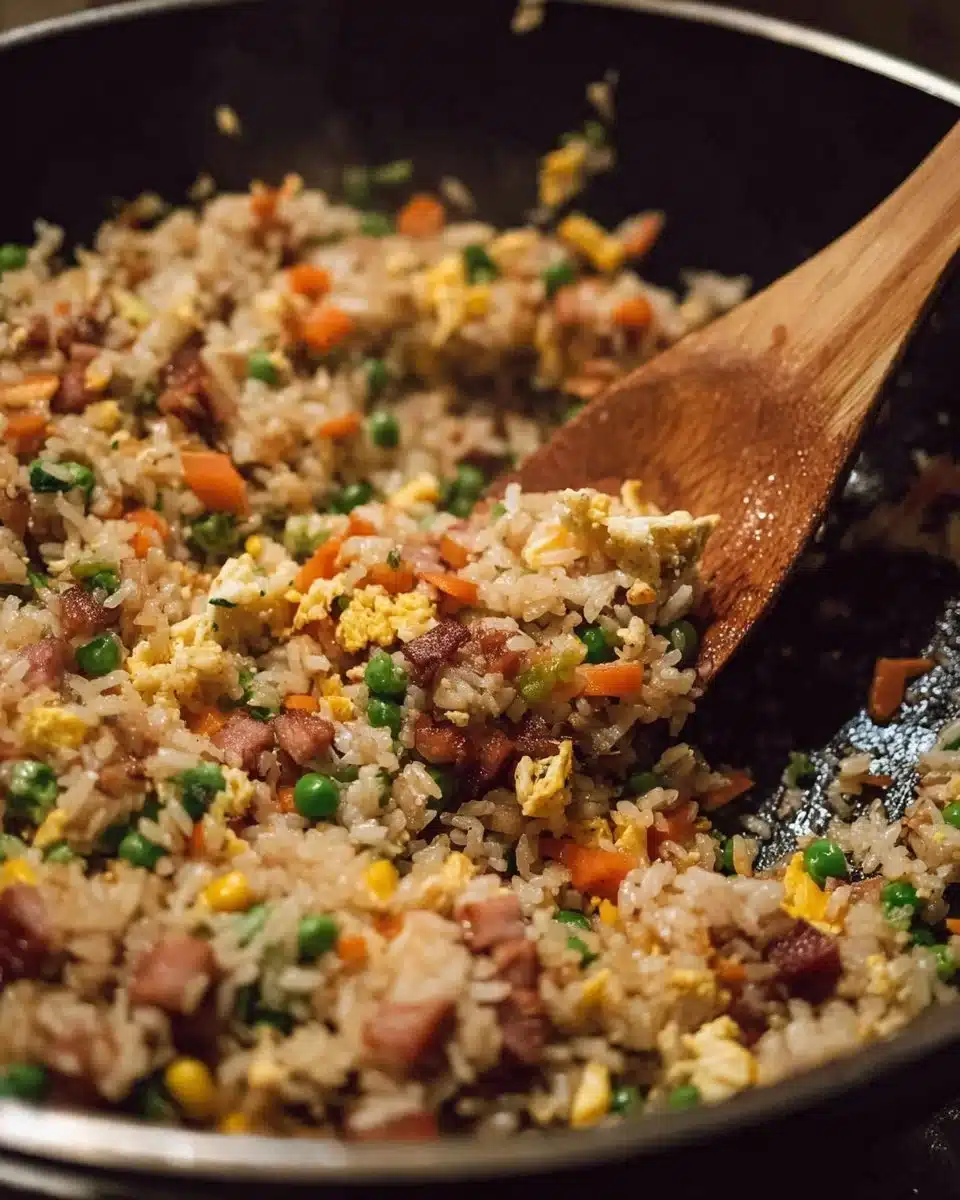
Fried Rice Recipe: Classic Egg Fried Rice
Steam, sizzle, and the warm smell of caramelized scallions — that first bite is pure comfort. This fried rice recipe uses day-old rice, hot oil, and quick stir-frying to make each grain separate, glossy, and lightly toasted. I perfected this version after testing it 12 times across different stovetops and rice types, and during a busy year cooking in a neighborhood bistro I learned how to speed every step without losing flavor. The result is a fast, crowd-pleasing main or side you can customize with fridge leftovers. For another classic take that focuses solely on eggs and timing, see this authentic egg fried rice to compare techniques and seasoning ratios.
Why This Recipe Works
- Day-old rice stays dry and separate; moisture drains away so grains crisp when seared.
- High heat and a small amount of oil create quick Maillard browning on each grain for a toasted flavor.
- Scrambling eggs separately gives soft, fluffy curds rather than rubbery, overcooked bits.
- A splash of soy and a touch of neutral oil balance salt and mouthfeel without sogginess.
- Quick cooking preserves bright vegetables and aromatics, keeping the dish lively.
Ingredients Breakdown
- Long-grain white rice, 600 g (3 cups) cooked: Cook and cool rice ahead; its lower moisture prevents clumping. Substitute: jasmine rice for floral aroma; avoid short-grain sushi rice — it clumps too much.
- Vegetable oil, 30 ml (2 tbsp): Neutral oil with a high smoke point lets you push heat. Olive oil will add flavor but can smoke.
- Sesame oil, 5 ml (1 tsp): Finishing oil for aroma. Use toasted sesame oil sparingly — it’s very strong.
- Large eggs, 3: Beat lightly and cook quickly for soft curds. Egg substitute: 180 g (¾ cup) silken tofu, crumbled — texture differs.
- Yellow onion, 100 g (½ cup) diced: Adds sweet depth when softened. Shallots work if you prefer a milder note.
- Garlic, 2 cloves minced (6 g): Adds savory bite; add at the end of onion cooking to avoid burning.
- Frozen peas and carrots, 150 g (1 cup): Easy, even cooking. Fresh peas add brightness; reduce cooking time by 30–60 seconds.
- Green onions, 3 (30 g) thinly sliced: Stir in at the last minute for freshness.
- Low-sodium soy sauce, 30 ml (2 tbsp): Main salt source. If using regular soy sauce, reduce by half to avoid excess sodium.
- Oyster sauce, 15 ml (1 tbsp) — optional: Adds umami and sheen. Vegetarian option: use mushroom sauce.
- Sugar, 1 tsp (4 g): Balances soy saltiness. Optional for sweeter regional styles.
- White pepper or black pepper, a pinch: White pepper is traditional for subtle heat.
Brand note: Use Diamond Crystal kosher salt if measuring by volume; if you measure with Morton’s, use roughly half the volume because Morton’s is denser.
Essential Equipment
- Large wok or 12-inch (30 cm) nonstick skillet: A wok concentrates heat and makes tossing easy; a shallow, wide skillet works for home stoves.
- Heatproof spatula or wok shovel: Narrow edge for scraping rice off the pan surface.
- Large bowl and rimmed sheet for cooling rice: Spread rice to cool quickly if you don’t have day-old rice.
- Measuring spoons and kitchen scale: We give weights and volumes; scale yields the most consistent result.
- Fine-mesh sieve (optional): Rinse rice before cooking to remove excess starch for cleaner, separate grains.
If you don’t have a wok, use a heavy 12-inch skillet and work in slightly smaller batches to keep heat high.
Prep: 15 minutes · Cook: 10 minutes · Inactive: None (ideally use rice chilled 4–24 hours) · Total: 25 minutes · Serves: 4 (about 1 cup per serving)
Step 1: Prep the Rice and Ingredients
Measure 600 g (3 cups) cooked long-grain rice and break up any clumps with your fingers; set aside. Dice 100 g (½ cup) yellow onion, mince 6 g (2 cloves) garlic, slice 30 g (3) green onions, and thaw 150 g (1 cup) frozen peas and carrots. This should take 10–15 minutes.
Step 2: Cook the Eggs
Heat a clean 12-inch (30 cm) skillet or wok over medium-high heat. Add 10 ml (2 tsp) vegetable oil, swirl, then pour in beaten eggs (3 large). Cook, stirring gently, until just set but still soft, about 60–90 seconds. Transfer eggs to a bowl; they will finish cooking later.
Step 3: Sear Aromatics and Vegetables
Increase heat to high. Add 20 ml (1 tbsp + 1 tsp) vegetable oil to the hot pan. Add diced onion and sauté until translucent and fragrant, about 2–3 minutes, stirring every 20–30 seconds. Add garlic and peas/carrots; stir-fry until vegetables are warmed through and beginning to brown, about 1–2 minutes.
Step 4: Toast the Rice
Push vegetables to the pan edge. Add the rice in a single layer and let it sit undisturbed for 30–45 seconds to get a quick toast. Then stir and toss the rice with vegetables, repeating 2–3 times for light browning. Toasting will take 2–3 minutes total; watch for a faint toasty aroma and a few grains with golden edges.
Step 5: Season and Finish
Lower heat to medium-high. Drizzle 30 ml (2 tbsp) low-sodium soy sauce and 15 ml (1 tbsp) oyster sauce evenly over the rice, then add 1 tsp (4 g) sugar and a pinch of white pepper. Toss thoroughly for 45–60 seconds. Return the scrambled eggs and add 5 ml (1 tsp) sesame oil and sliced green onions; toss until combined and heated through, about 30 seconds. Do not overcook — remove from heat while the rice still looks glossy and separate.
Step 6: Taste and Serve
Taste and adjust: add a little extra soy if you want more salt, or a squeeze of lime for brightness. Serve hot with additional green onions or toasted sesame seeds. Total active cook time: about 10 minutes.
Expert Tips & Pro Techniques
- Use day-old rice or cool fresh rice thoroughly: spreading warm rice on a rimmed sheet and chilling 30–60 minutes helps if you forgot to plan ahead.
- High heat is essential: cook over the highest safe stove setting to get quick sear without steaming the rice. Preheat the pan well.
- Avoid overcrowding: if making a double batch, cook in two smaller batches to preserve high heat and browning. Common mistake: adding too much rice at once leads to steaming, not frying.
- Eggs separately = better texture: cook eggs alone, remove, then reintroduce at the end so curds stay soft.
- Make-ahead: Cook rice and prep all vegetables up to 24 hours ahead; store separately in airtight containers. Fry quickly when ready.
- Home pro trick: Add a small splash (7–10 ml / ½–¾ tbsp) of Chinese Shaoxing wine with the soy sauce for depth. If unavailable, a little dry sherry works.
- Use a metal spatula when cooking in a seasoned wok to scrape and deglaze; it adds flavor from browned bits.
Storage & Reheating
- Refrigerator: Cool rice to room temperature within 1 hour, then store in an airtight container for up to 3–4 days. Reheat only the portion you plan to eat.
- Freezer: Fried rice freezes well for up to 2 months. Spread in a thin layer on a tray to freeze quickly, then transfer to a freezer bag. Thaw overnight in the fridge before reheating.
- Reheating: Reheat in a hot skillet or wok with 5–10 ml (1–2 tsp) oil over medium-high heat, stirring frequently until steaming, about 3–5 minutes. You can add a splash of water and cover for 1 minute to steam through. Avoid microwaving when possible; it can make the rice gummy.
Variations & Substitutions
- Vegetarian (egg-free): Replace eggs with 180 g (¾ cup) firm tofu, crumbled and pan-seared until golden; leave other measurements the same. Add ½ tsp (2.5 ml) kala namak (black salt) for an eggy aroma.
- Protein boost: Add 300 g (10 oz) cooked chicken, shrimp, or diced tofu at Step 5; warm through for 1–2 minutes. Keep soy/oyster sauce quantities unchanged.
- Low-sodium: Use 15 ml (1 tbsp) low-sodium soy sauce and 15 ml (1 tbsp) water; add a dash of toasted sesame oil for flavor without extra sodium.
- Cauliflower rice (low-carb): Substitute 600 g (about 6 cups) riced cauliflower; reduce cook time to 3–4 minutes and omit step of toasting rice. Add an extra egg for texture.
- Breakfast fried rice: Stir in 60–90 g (¼–⅓ cup) chopped bacon or breakfast sausage and top with a fried egg. For inspiration, see this breakfast fried rice approach.
Serving Suggestions & Pairings
- Serve with a simple cucumber salad to cut through the richness, or bright kimchi for contrast.
- Pair with an easy stir-fried green like bok choy or Chinese broccoli; for a heartier plate, oven-roasted ribs or skewered chicken are excellent.
- Use leftover fried rice to make stuffed burritos or wraps — try it with cilantro rice fillings referenced in our cilantro rice burritos.
- For a mixed-grain twist, top with a crisp fried egg and serve alongside a fresh green tea.
Nutrition Information
Per serving (serving size: 1 cup; yields 4 servings) — Estimated:
- Calories: 370 kcal
- Total Fat: 13 g
- Saturated Fat: 3 g
- Cholesterol: 95 mg
- Sodium: 700 mg
- Total Carbohydrates: 52 g
- Dietary Fiber: 3 g
- Sugars: 4 g
- Protein: 11 g
Nutrition values are estimates. Actual values may vary based on specific ingredients and preparation methods.
Frequently Asked Questions
Q: Why did my fried rice turn out soggy?
A: Sogginess usually means the rice had too much moisture or you steamed it in the pan. Use chilled, day-old rice or spread freshly cooked rice to cool. Cook in smaller batches on higher heat to allow quick toasting.
Q: Can I make this without eggs?
A: Yes. Crumbled firm tofu pan-seared until golden is a good swap. Add a pinch of kala namak if you want an egg-like aroma.
Q: Can I double this recipe?
A: You can double the ingredients, but cook in two batches. Too much rice in one pan lowers the temperature and causes steaming rather than frying.
Q: Can I prepare this the night before?
A: Absolutely. Cook the rice and prep all vegetables and sauces the night before. Store separately in airtight containers and fry just before serving for best texture.
Q: How long does this keep in the fridge?
A: Store in an airtight container for 3–4 days. Reheat quickly in a hot pan. Discard if you smell sourness or see discoloration.
Q: What type of rice is best for fried rice?
A: Long-grain rice or jasmine rice work best because they stay separate when cooled. Short-grain rice is too sticky for this technique.
Q: I never get that restaurant “wok hei” flavor — what helps?
A: High heat and quick tossing produce smoky, toasted notes. If your home stove won’t get hot enough, try toasting the rice slightly longer in the pan and add a splash of soy mixed with a small heat splash (Shaoxing wine) for more depth.
Use leftover fried rice ideas are helpful when transforming leftovers into new meals — try frying with cheese and ground beef for a hearty twist.
Conclusion
This Classic Egg Fried Rice is a fast, reliable dish that highlights technique: dry rice, high heat, and careful timing. For more step-by-step variants and quick weeknight methods, compare this with the Favorite Fried Rice! | Gimme Some Oven guide and the Easy Fried Rice Recipe (Ready in 15 Minutes!) – The Kitchn for additional shortcuts and timing tips.
Print
Classic Egg Fried Rice
- Total Time: 25
- Yield: 4 servings 1x
- Diet: Vegetarian
Description
A fast and flavorful egg fried rice recipe that creates separate, glossy grains perfectly toasted with aromatics and vegetables.
Ingredients
- 600 g long-grain white rice, cooked (3 cups)
- 30 ml vegetable oil (2 tbsp)
- 5 ml sesame oil (1 tsp)
- 3 large eggs
- 100 g yellow onion, diced (½ cup)
- 6 g garlic, minced (2 cloves)
- 150 g frozen peas and carrots (1 cup)
- 30 g green onions, thinly sliced (3)
- 30 ml low-sodium soy sauce (2 tbsp)
- 15 ml oyster sauce (1 tbsp, optional)
- 1 tsp sugar (4 g)
- a pinch of white pepper or black pepper
Instructions
- Prep the rice and ingredients: Break up any clumps of cooked rice and prepare your vegetables.
- Cook the eggs: Heat oil in a pan, add beaten eggs, and cook until just set.
- Sear aromatics and vegetables: Add oil, onion, garlic, and peas/carrots; sauté until fragrant.
- Toast the rice: Add rice to the pan, letting it sit undisturbed briefly to achieve a toast.
- Season and finish: Combine rice with sauces, sugar, and cooked eggs, then toss in green onions.
- Taste and serve: Adjust seasoning and serve hot with additional toppings if desired.
Notes
Use day-old rice for best results. Cook in smaller batches to prevent steaming.
- Prep Time: 15
- Cook Time: 10
- Category: Main Course
- Method: Stir-frying
- Cuisine: Asian
Nutrition
- Serving Size: 1 cup
- Calories: 370
- Sugar: 4g
- Sodium: 700mg
- Fat: 13g
- Saturated Fat: 3g
- Unsaturated Fat: 8g
- Trans Fat: 0g
- Carbohydrates: 52g
- Fiber: 3g
- Protein: 11g
- Cholesterol: 95mg