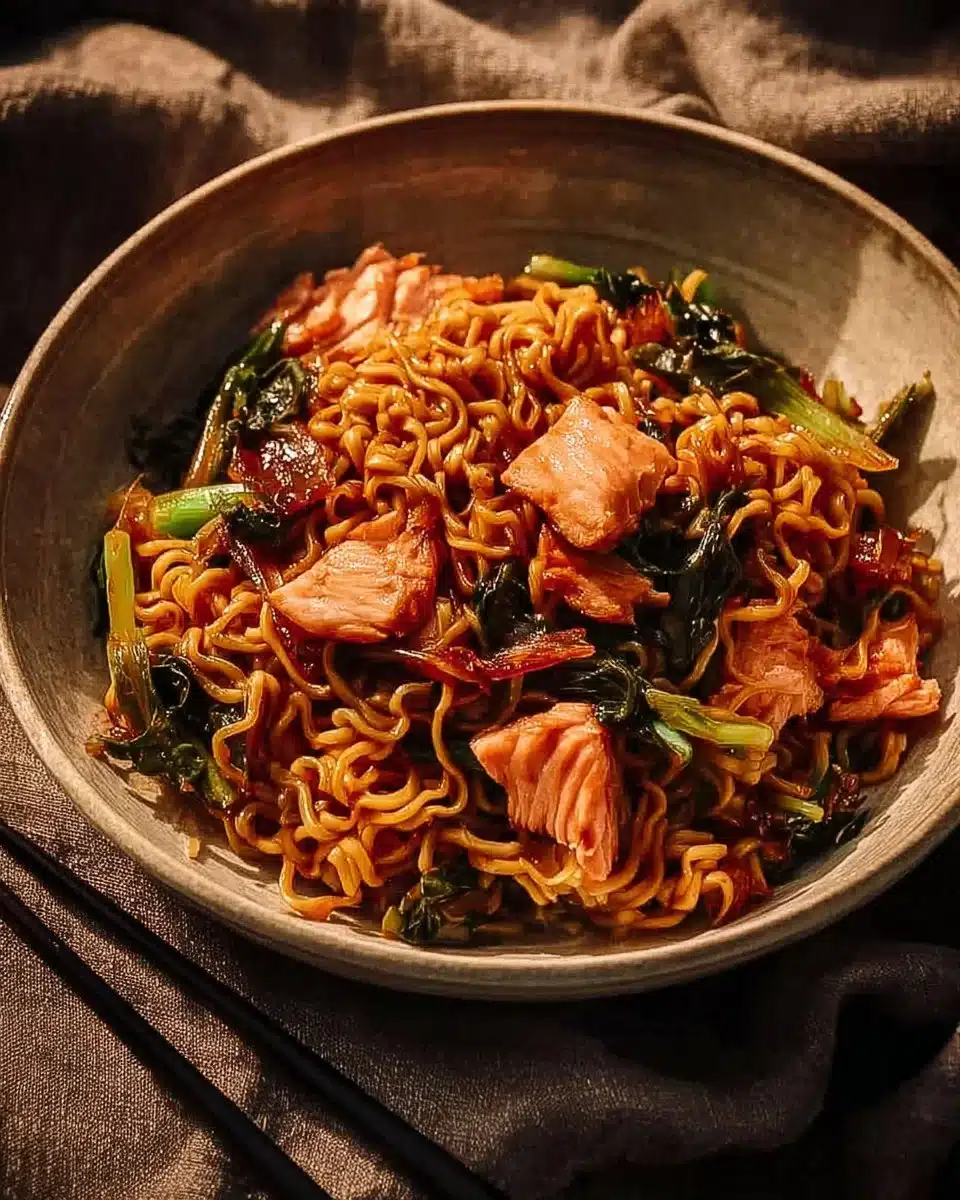
Teriyaki Salmon Noodles with Sesame Veggies
Silky noodles, glossy teriyaki sauce, and flaky salmon meet in a single bowl that hits sweet, salty, and toasty notes all at once—Teriyaki Salmon Noodles are a weeknight winner. I developed this version while testing fast, restaurant-quality weeknight dinners and refined the sauce and timing over eight trials to get the glaze, texture, and balance right. The salmon is seared to a caramelized edge while the sauce reduces just enough to cling to both fish and noodles. If you like a citrus lift, try an orange-teriyaki twist for a bright finish from our other recipe collection at orange teriyaki salmon. Read on for precise steps, swap options, and pro tips so you can make this the go-to salmon noodle bowl in your rotation.
Why This Recipe Works
- The sauce uses a small simmer to concentrate flavor so it clings to noodles and salmon instead of pooling.
- A quick sear at high heat creates Maillard browning on the salmon, boosting savory flavor without overcooking.
- Toasted sesame oil and seeds add a nutty aroma that balances the sauce’s sugar.
- Tossing the noodles with a little oil before adding sauce prevents clumping and helps even coating.
- Finishing with a splash of rice vinegar brightens the bowl and lifts sweetness.
Ingredients Breakdown
- Salmon fillets (600 g / 1.3 lb total; about 150 g / 5 oz per serving): Use skin-on for easier searing and crisp texture. You can use skinless, but cooking time may be a little shorter.
- Soy sauce (120 ml / ½ cup): The backbone of the sauce. For lower sodium, pick a low-sodium soy and taste before adding more.
- Mirin (60 ml / ¼ cup) and brown sugar (30 g / 2 tbsp): Mirin adds sweetness and acidity; if you omit mirin, use 1 tbsp rice vinegar plus 1 tbsp extra sugar.
- Sake (optional) (30 ml / 2 tbsp): Adds depth. If you avoid alcohol, replace with an equal amount of water and 1 tsp extra sugar.
- Garlic (2 cloves, minced) and fresh ginger (1 tbsp, minced): Fresh aromatics are essential; ground ginger is a weak substitute.
- Sesame oil (15 ml / 1 tbsp): Adds toasted flavor—do not use as the main cooking oil, as it burns easily.
- Vegetable oil (30 ml / 2 tbsp) or neutral oil for searing: High smoke point is important for a good sear.
- Noodles (360 g / 12 oz dried udon or ramen): Thick noodles hold the sauce best. If using spaghetti (for pantry swaps), cook 1 minute less than package for slightly firm texture.
- Scallions, sesame seeds, shredded cabbage, and a lime wedge: Fresh garnishes add crunch and acidity.
- Cornstarch slurry (500 ml / 2 cups water + 1 tsp cornstarch) — optional: Use a 1 tsp (4 g) cornstarch + 15 ml (1 tbsp) water slurry to thicken if you want a clingier glaze. Too much cornstarch will make the sauce gummy.
Substitution note: You can substitute Greek yogurt for a creamy topping in fusion bowls, but it will change the bright, glossy finish of the teriyaki glaze.
Essential Equipment
- Large nonstick or stainless steel skillet (10–12 inch / 25–30 cm): Allows one-pan searing of salmon and quick sauce reduction.
- Medium pot for boiling noodles (3–4 L / quarts): Plenty of water prevents sticking.
- Tongs or fish spatula: For gentle turning of salmon.
- Small bowl for the sauce and cornstarch slurry.
- Optional: Cast-iron skillet for extra crust; if you don’t have one, use your heaviest pan. For an alternative cooking method, see our guide to air fryer salmon which works well for batch cooking.
Step-by-step Instructions
Prep Time: 15 minutes | Cook Time: 15 minutes | Inactive Time: None | Total Time: 30 minutes | Servings: 4 (1 bowl each)
Step 1: Make the teriyaki sauce
Combine 120 ml (½ cup) soy sauce, 60 ml (¼ cup) mirin, 30 ml (2 tbsp) sake, 30 g (2 tbsp) brown sugar, 2 minced garlic cloves, and 1 tbsp (6 g) minced fresh ginger in a small saucepan. Bring to a gentle simmer over medium heat, then cook for 3–4 minutes until the sugar dissolves and the sauce smells bright. If you want a thicker glaze, whisk 4 g (1 tsp) cornstarch into 15 ml (1 tbsp) cold water and stir it in, cooking 1–2 minutes more until glossy.
Step 2: Prepare the noodles and garnishes
Bring a large pot of salted water to a boil and cook 360 g (12 oz) udon or ramen according to package directions, usually 7–9 minutes for udon. Drain and toss with 15 ml (1 tbsp) neutral oil to prevent sticking. Slice 2 scallions, toss shredded cabbage, and toast 15 g (1 tbsp) sesame seeds in a dry pan for 1–2 minutes until fragrant.
Step 3: Season and pat-dry the salmon
Pat 600 g (1.3 lb) salmon fillets dry and season with a pinch of salt and pepper. Dry surface ensures a good sear. If using skin-on, score the skin lightly to prevent curling.
Step 4: Sear the salmon
Heat 30 ml (2 tbsp) vegetable oil in a 25–30 cm (10–12 inch) skillet over high heat until shimmering. Place salmon skin-side down and sear for 3–4 minutes without moving, until skin is deeply browned and crisp. Flip and cook 1–2 minutes more until the internal temperature reaches 52–55°C (125–130°F) for medium-rare, or 63°C (145°F) if you prefer fully cooked. Do not overcook—the fish will continue to cook in the sauce.
Step 5: Glaze the salmon
Lower heat to medium-low and spoon 60–90 ml (¼–⅓ cup) teriyaki sauce over the salmon, simmering for 1 minute to glaze. The sauce should be glossy and slightly thickened. Remove from heat.
Step 6: Toss noodles with sauce and assemble
Return drained noodles to the pot or a warm bowl and add 60–90 ml (¼–⅓ cup) of the teriyaki sauce, tossing to coat evenly for 30–60 seconds. Divide noodles into bowls, top with salmon, scatter cabbage and scallions, sprinkle sesame seeds, and add a lime wedge.
Step 7: Serve immediately
Serve while the salmon is warm and the noodles are just coated. A final squeeze of lime or a few drops of toasted sesame oil (5 ml / 1 tsp) brings brightness and aroma.
Expert Tips & Pro Techniques
- Rest the salmon at room temperature for 10–15 minutes before cooking for more even doneness.
- Common mistake: Overcrowding the pan. Cook salmon in batches if needed; crowded fish steams instead of searing. Use a hot, spacious skillet to avoid this.
- Make-ahead: Prepare the sauce up to 3 days in advance and store in the fridge. Reheat gently before glazing. Cook the noodles and toss with a small amount of oil; refrigerate separately and reheat by dunking briefly in boiling water.
- Professional shortcut: Reduce the sauce to concentrate flavor, then strain out solids for a glossy finish like restaurants do. This removes foam and yields clean flavor.
- For a crispier skin, press the fish gently with a spatula for the first 30 seconds of searing.
- If you want an extra-charred finish like a broiler, sear as directed and finish under a preheated 260°C (500°F) broiler for 30–60 seconds, watching closely.
Try air-fryer methods for faster batch cooking of proteins when serving a crowd.
Storage & Reheating
- Refrigerator: Store components separately in airtight containers. Noodles: 3–4 days. Salmon: 2 days in the fridge in a shallow airtight container.
- Freezer: Cooked teriyaki sauce freezes well for up to 3 months in a freezer-safe container. Cooked salmon and noodles do not freeze well together—salmon can be frozen for 2 months; thaw overnight in the fridge.
- Reheating: Reheat noodles and salmon gently. For salmon, warm at 150°C (300°F) in the oven for 6–8 minutes to avoid drying; finish with a quick 30-second pan-sear to crisp skin. Noodles reheat well by briefly dunking in boiling water or microwaving covered for 30–60 seconds with a splash of water. Avoid microwaving salmon uncovered for long periods—this dries it.
Variations & Substitutions
- Teriyaki Salmon Bowl (bowl-style): Swap udon for 240 g (8 oz) steamed rice per serving and keep all sauce amounts the same. Add steamed broccoli and a soft-boiled egg.
- Gluten-Free Version: Use tamari or a gluten-free soy sauce substitute (120 ml / ½ cup). Use tamari to taste; flavor may be slightly less sweet. Sauce and cook times stay the same.
- Vegan Twist: Replace salmon with 400 g (14 oz) extra-firm tofu, pressed and cut into 2 cm (¾ inch) slabs. Sear tofu 3–4 minutes per side and glaze the same way; add 1 tbsp cornstarch to the sauce to cling to tofu.
- Air-fryer Salmon: For hands-off cooking, cook salmon at 200°C (392°F) for 7–9 minutes in the air fryer, depending on thickness. See our air-fryer guide for timing adjustments at air fryer salmon.
- Spicy Teriyaki: Add 1 tsp (5 ml) chili garlic sauce to the sauce while simmering for a mild kick.
Serving Suggestions & Pairings
- Sides: Lightly pickled cucumber salad or quick kimchi add a crunchy, acidic counterpoint.
- Drinks: Jasmine tea or a crisp lager pairs well with the sweet-salty glaze.
- Garnish: Top with a soft-boiled egg or a spoonful of quick chili oil for heat.
- For a cozy combo, pair with a tomato-cilantro salmon soup for a starter — see our take at cilantro salmon tomato soup.
Nutrition Information
Per serving (1 bowl). Servings: 4.
- Calories: 620 kcal
- Total Fat: 27 g
- Saturated Fat: 5 g
- Cholesterol: 95 mg
- Sodium: 820 mg
- Total Carbohydrates: 58 g
- Dietary Fiber: 4 g
- Sugars: 18 g
- Protein: 34 g
Nutrition values are estimates. Actual values may vary based on specific ingredients and preparation methods.
Frequently Asked Questions
Q: Why did my salmon turn out dry?
A: Most often you overcooked it. Cook to 52–55°C (125–130°F) for medium-rare. The fish will keep cooking a bit in the sauce. Use an instant-read thermometer for accuracy.
Q: Can I make this without soy sauce?
A: Yes. Use coconut aminos as a lower-sodium and soy-free alternative in a 1:1 swap, but expect a less salty, slightly sweeter flavor.
Q: Can I double this recipe?
A: Yes. Double the salmon and noodle quantities and make the sauce at 2–3× strength because larger volumes dissipate heat differently. Work in batches for searing to avoid overcrowding.
Q: Can I prepare this the night before?
A: You can make the sauce and cook the noodles ahead. Store components separately and assemble just before serving to keep textures bright.
Q: How long does this keep in the fridge?
A: Noodles: 3–4 days. Cooked salmon: 2 days. Store in airtight containers to maintain freshness.
Q: Can I use a different fish?
A: Firm fish like tuna or cod work, but adjust cook times: thinner fish cooks faster. Use the same glaze and searing method.
Q: What’s the best noodle for this dish?
A: Thick udon or chewy ramen are ideal because they hold sauce well. Thin noodles will still work but can get overwhelmed.
Conclusion
If you enjoy alternate takes, this version sits comfortably beside other teriyaki noodle recipes like the RecipeTin Eats teriyaki salmon noodles for inspiration and the hearty bowl approach in The Cozy Apron’s teriyaki salmon bowl for more serving ideas. Try the simple sauce first, then tweak sugar and acid to suit your taste—this bowl is forgiving and fast.
Print
Teriyaki Salmon Noodles with Sesame Veggies
- Total Time: 30 minutes
- Yield: 4 servings 1x
- Diet: Pescatarian
Description
Silky noodles, glossy teriyaki sauce, and flaky salmon meet in a single bowl that hits sweet, salty, and toasty notes all at once—perfect for a weeknight dinner.
Ingredients
- 600 g salmon fillets
- 120 ml soy sauce
- 60 ml mirin
- 30 g brown sugar
- 30 ml sake (optional)
- 2 cloves garlic, minced
- 1 tbsp fresh ginger, minced
- 15 ml sesame oil
- 30 ml vegetable oil
- 360 g udon or ramen noodles
- 2 scallions, sliced
- 15 g sesame seeds, toasted
- shredded cabbage
- lime wedge
- 500 ml water + 1 tsp cornstarch (optional)
Instructions
- Combine soy sauce, mirin, sake, brown sugar, garlic, and ginger in a saucepan and simmer for 3–4 minutes.
- Bring salted water to a boil and cook noodles according to package directions, then drain and toss with oil.
- Pat salmon dry and season with salt and pepper before searing.
- Heat vegetable oil in a skillet over high heat, then sear salmon for 3–4 minutes skin-side down and flip to cook for 1–2 minutes more.
- Lower the heat, spoon teriyaki sauce over salmon for 1 minute.
- Toss noodles with sauce and serve in bowls topped with salmon, scallions, cabbage, and sesame seeds.
- Serve immediately with a lime wedge.
Notes
For extra flavor, allow salmon to rest at room temperature before cooking. You can make the sauce up to 3 days in advance.
- Prep Time: 15 minutes
- Cook Time: 15 minutes
- Category: Main Course
- Method: Searing
- Cuisine: Japanese
Nutrition
- Serving Size: 1 bowl
- Calories: 620
- Sugar: 18g
- Sodium: 820mg
- Fat: 27g
- Saturated Fat: 5g
- Unsaturated Fat: 22g
- Trans Fat: 0g
- Carbohydrates: 58g
- Fiber: 4g
- Protein: 34g
- Cholesterol: 95mg