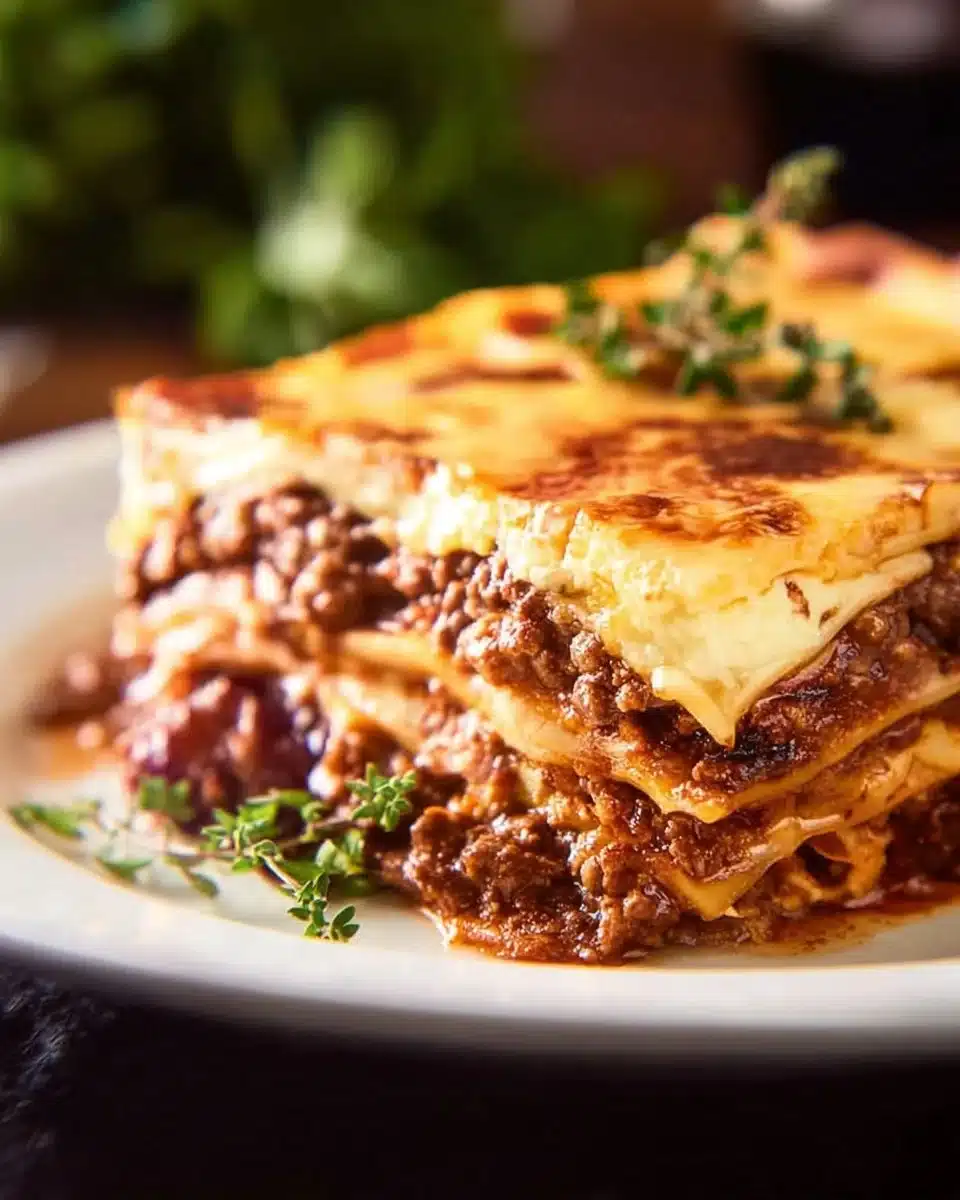
Layered meat and cheese lasagna
Steam of oregano and bubbling cheese greets you when you open the oven — this classic lasagna recipe is the one I keep returning to. After testing this version eight times with different ragù ratios and noodle brands, I settled on a balance that gives tender pasta, savory meat, and a silky béchamel that keeps every bite saucy. I developed and refined the timing while cooking service at a busy trattoria, so these steps are tuned for home ovens and busy weeknights. Read on for a clear ingredient breakdown, precise step-by-step instructions, and pro techniques that prevent the usual soggy-bottom or dried-out edges. If you like vegetable-forward kitchens, try a layered vegetable approach inspired by vegetable lasagna to make this lighter without losing depth.
Why this recipe works
- Long-simmered ragù concentrates savory flavor while keeping the sauce loose enough to prevent dry pasta.
- A thin béchamel layer adds silk and protects noodles from direct heat, producing even texture.
- Alternating cheese blends (ricotta + mozzarella + aged parmesan) gives creamy pockets and crisp, golden top browning.
- Slightly undercooking the noodles before layering prevents the final bake from turning them mushy.
- Resting the lasagna for 15–20 minutes after baking lets the layers set, so slices hold clean shapes.
Ingredients breakdown
- Ground meat (500 g / 1.1 lb total): I use a 50/50 mix of ground beef and pork for flavor and mouthfeel. Beef provides savory depth; pork adds sweetness and fat. You can use all beef — the result will be leaner.
- Onion, carrot, celery (150 g / 1 cup total, finely diced): The classic soffritto (Italian flavor base) creates a sweet, aromatic backbone. Do not skip — it mellows the tomato’s acidity.
- Garlic (3 cloves, minced): Adds bright aromatics. Add near the end of sweating to avoid burning.
- Canned tomatoes (800 g / 28 oz whole plum or crushed): Use high-quality tomatoes for better sauce flavor. Crush by hand or pulse briefly with a blender.
- Red wine (120 ml / ½ cup): Deglazes the pan and lifts meaty fond. If you avoid alcohol, use extra stock plus 1 tbsp balsamic vinegar.
- Beef or chicken stock (240 ml / 1 cup): Keeps the ragù loose enough to cook pasta without drying.
- Tomato paste (2 tbsp / 30 g): Intensifies tomato flavor without adding liquid.
- Milk (120 ml / ½ cup): A splash in the ragù rounds acidity and helps the béchamel integrate.
- Dried oregano, salt, black pepper: Season progressively.
- Lasagna noodles (12 sheets; about 375 g / 13 oz): I prefer oven-ready noodles that still benefit from saucy layers. If using dried standard noodles, boil until al dente.
- Ricotta (450 g / 1 cup? Actually 450 g is 2 cups — use 450 g (2 cups) ricotta): Adds creamy pockets and stabilizes the cheese layer. Drain watery ricotta in a fine sieve for 30 minutes if necessary.
- Mozzarella (400 g / 14 oz, shredded): Use low-moisture for less water release.
- Parmesan (100 g / 1 cup, finely grated): Adds umami and sharpness.
- Butter, flour, whole milk for béchamel (60 g / 4 tbsp butter, 60 g / ½ cup flour, 720 ml / 3 cups milk): Makes a white sauce that keeps the lasagna silky. You can substitute Greek yogurt for part of the ricotta, but the tang will be more pronounced.
- Olive oil: For sautéing.
- Salt type note: Use Diamond Crystal kosher salt if you have it; if using Morton’s, use about half the quantity called for because it’s denser.
Essential equipment
- 23 x 33 cm (9 x 13 inch) baking dish — this size holds the layers without overflowing.
- Large sauté pan or Dutch oven (4–5 L / qt) for ragù.
- Medium saucepan for béchamel with a whisk.
- Fine-mesh sieve for draining ricotta and skimming fat.
- OVEN thermometer (optional) to confirm your oven temperature; home ovens vary.
- Bench scraper or spatula for clean layering. If you don’t have oven-ready noodles, use a large pot to boil and a rimmed baking sheet to spread and cool noodles.
Step-by-step instructions
Prep Time: 30 minutes | Cook Time: 1 hour | Inactive Time: None | Total Time: 1 hour 30 minutes | Servings: 8 (1 slice each)
Step 1: Make the ragù
Heat 30 ml (2 tbsp) olive oil in a 3 L (3 qt) Dutch oven over medium heat. Add 150 g (1 cup) finely diced onion, 80 g (¾ cup) carrot, and 60 g (½ cup) celery; sauté until tender and fragrant, about 8 minutes. Add 3 minced garlic cloves and cook 30 seconds. Increase heat, add 500 g (1.1 lb) ground beef and pork, and brown for 6–8 minutes until no pink remains, breaking up meat.
Step 2: Deglaze and simmer the sauce
Stir in 120 ml (½ cup) red wine and scrape browned bits for 1–2 minutes. Add 2 tbsp (30 g) tomato paste and cook 1 minute. Add 800 g (28 oz) crushed tomatoes, 240 ml (1 cup) stock, 120 ml (½ cup) milk, 1 tsp salt, and black pepper; bring to a simmer. Reduce heat and simmer gently for 30–40 minutes, stirring every 10 minutes until slightly thickened and glossy.
Step 3: Prepare the béchamel
Melt 60 g (4 tbsp) unsalted butter in a saucepan over medium heat, whisk in 60 g (½ cup) all-purpose flour and cook 1–2 minutes without browning. Gradually whisk in 720 ml (3 cups) whole milk; simmer until thick enough to coat the back of a spoon, about 6–8 minutes. Season with ¼ tsp nutmeg and ½ tsp salt. Cool slightly before layering so it doesn’t curdle the ricotta.
Step 4: Combine cheeses and assemble
In a bowl, mix 450 g (2 cups) ricotta, 1 large egg (50 g / optional, for structure), 75 g (¾ cup) grated parmesan, and a pinch of salt. Spread a thin layer (about 120 ml / ½ cup) of ragù on the bottom of the baking dish to prevent sticking. Layer 3 lasagna sheets, then 180–240 ml (¾–1 cup) ragù, a third of the ricotta mixture, a third of shredded mozzarella (130 g / 4.5 oz), and 120–180 ml (½–¾ cup) béchamel. Repeat for three layers finishing with béchamel and remaining 100 g (1 cup) parmesan and 120 g (4 oz) mozzarella.
Step 5: Bake and rest
Preheat the oven to 180°C (350°F). Bake uncovered for 35–40 minutes until the top is golden and bubbling and internal temperature reaches 74°C (165°F). For a browned top, broil for 1–2 minutes, watching closely. Let rest 15–20 minutes before slicing for clean portions.
Expert Tips & Pro Techniques
- Use a 50/50 pork-to-beef ratio for moist, flavorful ragù. If using all beef, add 1 tbsp olive oil for fat.
- Common mistake: over-saucing the noodles without enough béchamel causes a soggy bottom. Use a thin base layer of ragù and a moderate amount of béchamel between layers to stabilize moisture.
- Make-ahead: Bake the lasagna up to 24 hours in advance, cool completely, cover tightly, and refrigerate. Reheat in a 175°C (350°F) oven for 25–30 minutes covered, then 10 minutes uncovered. This keeps the structure and flavor. For longer storage, see the freezer notes.
- Professional technique adapted for home: Temper the béchamel by whisking a ladle of hot ragù into the béchamel before layering; this helps fusion and prevents curdling when hot sauce meets milk.
- If using no-boil noodles, ensure ragù is loose and fairly saucy to allow the noodles to hydrate fully during baking.
- For the cleanest slices, cool 20 minutes and use a thin-bladed knife cleaned between cuts.
Storage & Reheating
- Refrigerator: Cool to room temperature, cover tightly with foil or an airtight container, and store up to 4 days.
- Freezer: Lasagna freezes well. Freeze before baking (assembled and tightly wrapped) for up to 3 months, or freeze baked portions for up to 2 months. Thaw overnight in the fridge before baking/reheating.
- Reheating: Reheat in a 175°C (350°F) oven for 25–30 minutes if cold, covered with foil, then 8–10 minutes uncovered to refresh browning. For single slices, heat in a 180°C (350°F) oven for 12–15 minutes.
Variations & Substitutions
- Vegetarian lasagna: Replace meat with a sautéed mix of mushrooms (400 g / 14 oz) and chopped spinach (200 g / 7 oz), increase tomato stock to 360 ml (1.5 cups) to keep moisture, and use the same cheese ratios. Link to a vegetable-forward version in Ingredients for more ideas.
- Gluten-free: Swap lasagna sheets for a 1:1 gluten-free lasagna noodle or thinly sliced eggplant. If using eggplant, roast slices at 220°C (425°F) for 12 minutes to remove excess moisture first.
- White lasagna (no tomato): Skip tomatoes and use a béchamel-rich sauce with braised leeks and shredded chicken. Baking time is the same.
- Make it lighter: Use part-skim ricotta (450 g / 2 cups) and reduce mozzarella to 200 g (7 oz). Add more herbs like basil and parsley for brightness.
- Slow-cooker adaptation: Brown meat and combine ingredients, then layer par-cooked noodles; cook on low 2–3 hours. Finish under a broiler for 2–3 minutes for a crisp top.
Serving suggestions & pairings
- Simple salad: A peppery arugula salad dressed with lemon and olive oil cuts richness and brightens each bite.
- Vegetable side: Roast garlic green beans or a warm fennel salad work well with the lasagna’s deep flavors.
- Beverage pairing: A medium-bodied red like Chianti or Sangiovese balances tomato and cheese.
- Finish: Grate fresh parmesan and scatter chopped parsley for color and lift. For another creative pairing, see our layered dessert ideas such as holiday lasagna dessert for a playful ending.
Butternut squash and kale lasagna gives insight on swapping layers for seasonal produce, and if you want to study a sweet take on layering technique, our example with cookies is an unexpected reference: cookie lasagna.
Nutrition information (per serving — 8 servings; serving size: 1 slice)
- Calories: 560 kcal
- Total Fat: 29 g
- Saturated Fat: 14 g
- Cholesterol: 110 mg
- Sodium: 620 mg
- Total Carbohydrates: 32 g
- Dietary Fiber: 3 g
- Sugars: 8 g
- Protein: 36 g
Nutrition values are estimates. Actual values may vary based on specific ingredients and preparation methods.
Frequently asked questions
Q: Why did my lasagna turn out dry?
A: Dry lasagna often means too little sauce or overcooked noodles. Use enough ragù and béchamel and avoid pre-baking noodles past al dente. Also check oven temperature — if your oven runs hot, reduce time by 5–10 minutes.
Q: Can I make this without eggs in the ricotta layer?
A: Yes. The egg helps set the ricotta for cleaner slices but is optional. Omit the egg and add 1–2 tbsp of grated parmesan to help bind the cheese.
Q: Can I double this recipe for a larger gathering?
A: Yes. Use two 23 x 33 cm (9 x 13 inch) dishes or a larger hotel pan. Baking time may increase by 5–10 minutes; check for bubbling and an internal temperature of 74°C (165°F).
Q: Can I prepare this the night before?
A: Absolutely. Assemble, cover tightly, and refrigerate overnight. Bake from cold at 180°C (350°F) for 40–50 minutes, covered, then uncover for 8–10 minutes to brown.
Q: How long does this keep in the fridge?
A: Stored in an airtight container or tightly wrapped, baked lasagna keeps 3–4 days. Reheat thoroughly to 74°C (165°F) before serving.
Q: Can I substitute bechamel with more ricotta?
A: You can, but béchamel contributes silk and prevents dryness. Replacing it with ricotta will change texture and may make the dish denser and less cohesive.
Q: Is there a faster weeknight version?
A: Yes — use store-bought marinara, pre-cooked meat, and oven-ready noodles for a quicker assembly. For a tested quick method, try our reference to an alternate lasagna method with fewer steps.
Conclusion
If you’re pressed for time but want reliable results, this method keeps the texture and flavor you expect. For a quicker, simplified approach with useful shortcuts, check an easy homemade lasagna recipe that adapts well to weeknights. For a thoughtful read on kitchen victories and the patience cooking requires, I recommend Victories, Large and Small, which pairs nicely with the slow satisfaction of baking lasagna.
Print
Layered Meat and Cheese Lasagna
- Total Time: 90 minutes
- Yield: 8 servings 1x
- Diet: Non-Vegetarian
Description
A classic lasagna recipe with a savoring long-simmered ragù, rich béchamel, and alternating cheese layers for a creamy and satisfying dish.
Ingredients
- 500 g Ground beef and pork (50/50 mix)
- 150 g Onion, finely diced
- 80 g Carrot, finely diced
- 60 g Celery, finely diced
- 3 cloves Garlic, minced
- 800 g Canned whole plum or crushed tomatoes
- 120 ml Red wine
- 240 ml Beef or chicken stock
- 2 tbsp Tomato paste
- 120 ml Milk
- Dried oregano, salt, and black pepper, to taste
- 12 Lasagna noodles (about 375 g)
- 450 g Ricotta cheese
- 400 g Mozzarella cheese, shredded
- 100 g Parmesan cheese, finely grated
- 60 g Unsalted butter
- 60 g All-purpose flour
- 720 ml Whole milk for béchamel
- Olive oil for sautéing
Instructions
- Heat 30 ml olive oil in a Dutch oven over medium heat. Add onion, carrot, and celery; sauté for 8 minutes.
- Add minced garlic and cook for 30 seconds. Increase heat, add ground meat, and brown for 6–8 minutes.
- Stir in red wine and scrape browned bits for 1–2 minutes. Add tomato paste and cook for 1 minute.
- Add crushed tomatoes, stock, milk, salt, and pepper; bring to a simmer and simmer gently for 30–40 minutes.
- Melt butter in a saucepan, whisk in flour, gradually add milk, and cook until thickened for béchamel.
- Mix ricotta cheese with an egg and season. Layer in baking dish with ragù, cheeses, and béchamel.
- Preheat oven to 180°C (350°F) and bake for 35–40 minutes until golden. Let rest for 15–20 minutes before slicing.
Notes
For a lighter version, substitute meat with sautéed mushrooms and spinach.
- Prep Time: 30 minutes
- Cook Time: 60 minutes
- Category: Main Course
- Method: Baking
- Cuisine: Italian
Nutrition
- Serving Size: 1 slice
- Calories: 560
- Sugar: 8g
- Sodium: 620mg
- Fat: 29g
- Saturated Fat: 14g
- Unsaturated Fat: 9g
- Trans Fat: 0g
- Carbohydrates: 32g
- Fiber: 3g
- Protein: 36g
- Cholesterol: 110mg