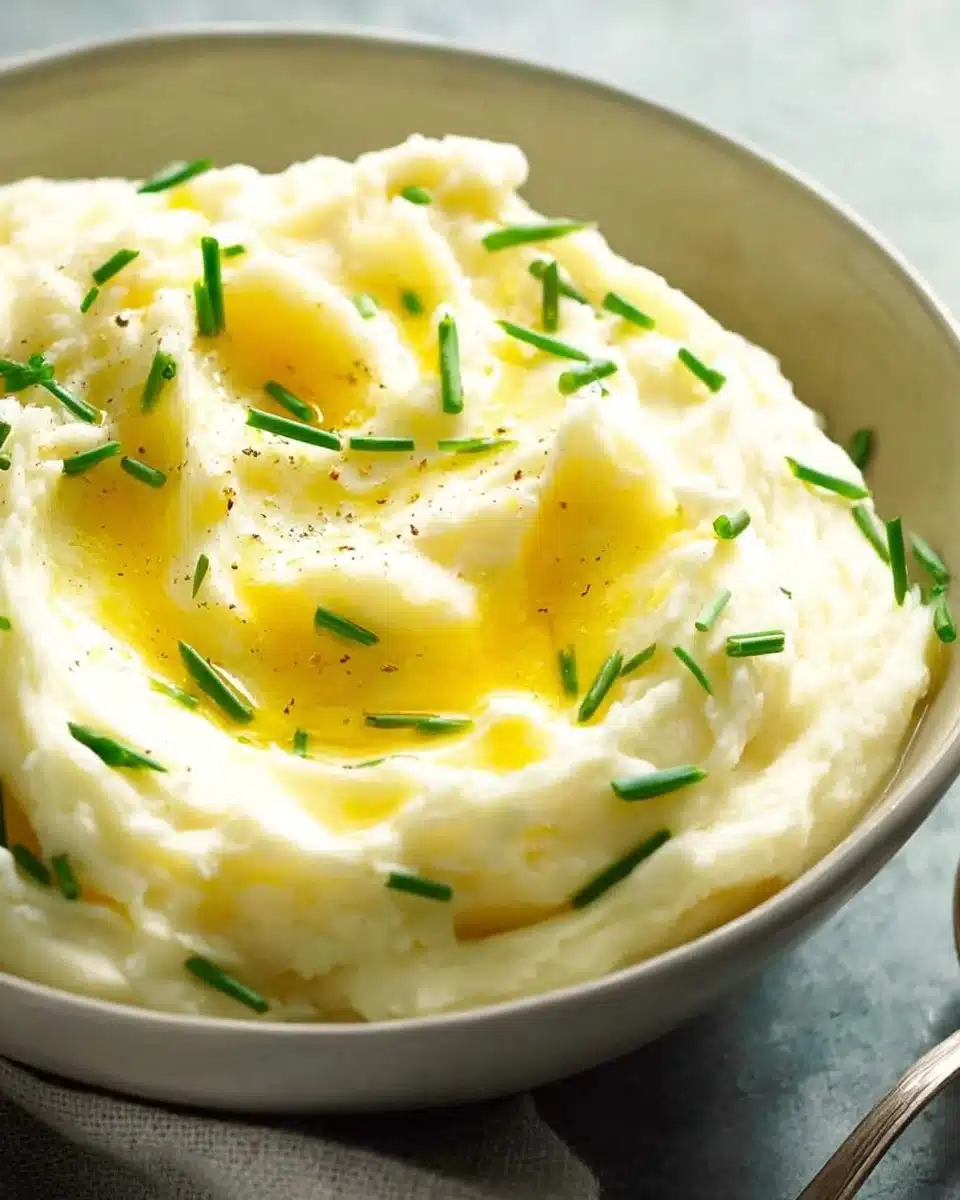
Creamy Mashed Potato — Foolproof Ultra-Buttery
Steam-hot, buttery clouds of potatoes melt on the tongue and carry a whisper of cream and garlic in every bite. This Creamy Mashed Potato is my go-to side when I need comfort and polish on the same plate. I developed and refined this method over years in restaurant kitchens and at home, testing it across eight potato varieties and three mashing tools to find the most consistent, velvety result. The method below balances starch control, heat management, and fat timing so you get smooth, not gluey, mashed potatoes every time. Ready to make the creamiest batch of your life? Let’s get practical.
Why This Recipe Works
- Cook potatoes whole and start them in cold water so they cook evenly and avoid gummy edges.
- Warm the dairy before adding to the potatoes; hot liquid integrates faster and keeps texture silky.
- Use a ricer or food mill for the smoothest texture; a hand masher works but produces more rustic lumps.
- Balance butter and sour cream for flavor and mouthfeel: butter adds richness; sour cream adds subtle tang and stability.
- Salt at two stages (in the cooking water and at the end) to build depth without over-salting.
Ingredients Breakdown
- 1,200 g (2.6 lb) Yukon Gold potatoes, peeled — Yukon Golds have a naturally creamy texture and moderate starch that makes the mash silky without the gluey finish of high-starch russets. You can use russets for a fluffier, lighter mash; expect a slightly drier texture.
- 113 g (1 stick / 1/2 cup) unsalted butter, cubed and at room temperature — Butter is the primary source of richness. Using unsalted lets you control sodium. For a more pronounced butter flavor, brown the butter lightly and cool before adding.
- 240 ml (1 cup) whole milk, warmed to 60°C (140°F) — Warm milk incorporates faster and prevents the potatoes from cooling and seizing. You can substitute half-and-half for a richer result.
- 120 g (1/2 cup) sour cream or crème fraîche — Adds tang, body, and a velvety mouthfeel. If you use Greek yogurt, expect a brighter tang and slightly thinner texture.
- 2 tsp kosher salt (Diamond Crystal) — If using Morton kosher salt, use 1 tsp (Morton is denser). Salt the cooking water liberally so the potatoes are seasoned throughout.
- 2 cloves garlic, smashed (optional) — Mild roasted garlic flavor infuses the potatoes if you simmer it with the milk or cook it with the potatoes.
- Freshly ground black pepper, to taste.
- Chives or parsley, finely chopped, for garnish (optional).
Essential Equipment
- Large pot with lid — big enough to hold potatoes in one layer with 2–3 cm (1 inch) of water above.
- Potato ricer or food mill (recommended) — gives the silkiest texture. If you don’t have one, use a sturdy hand masher.
- Fine-mesh sieve or chinois (optional) — for an ultra-smooth finish after ricing.
- Heatproof bowl or saucepan to warm milk and sour cream.
- Rubber spatula and wooden spoon.
- Instant-read thermometer (helpful for warming dairy to 60°C / 140°F).
- If you lack a ricer: pass potatoes through a coarse sieve and finish with a vigorous whisk for smoother results.
Step-by-Step Instructions
Prep Time: 15 minutes | Cook Time: 25 minutes | Inactive Time: None | Total Time: 40 minutes | Servings: 6 (about 1 cup / ~220 g per serving)
Step 1: Prepare and cut the potatoes
Place 1,200 g (2.6 lb) peeled Yukon Gold potatoes into a large pot and cut any very large pieces in half so pieces are uniform. Rinse briefly to remove surface starch. This ensures even cooking; cut pieces should finish boiling at the same time, about 20–25 minutes.
Step 2: Cover with cold, salted water and bring to a simmer
Cover potatoes with cold water by 2–3 cm (about 1 inch) and add 1 tsp (if Diamond Crystal) to 2 tsp kosher salt. Bring to a gentle simmer over medium heat, then reduce to maintain a low simmer. Simmer until a knife slides easily into the center, 15–20 minutes depending on piece size.
Step 3: Warm the dairy
While the potatoes simmer, heat 240 ml (1 cup) whole milk and 120 g (1/2 cup) sour cream with the smashed garlic (if using) in a small saucepan over low heat to 60°C (140°F), about 3–4 minutes. Remove garlic and keep the mixture warm. This prevents cooling the potatoes and helps the dairy blend smoothly.
Step 4: Drain thoroughly and return to pot
Drain potatoes in a colander for 1–2 minutes, then return to the hot, empty pot over very low heat for 30–60 seconds, shaking the pot gently to evaporate excess moisture. This step removes surface water that can dilute texture. Sensory cue: you should see a faint dry steam and the pot should feel warm to the touch.
Step 5: Rice or mash the potatoes
Press warm potatoes through a ricer or food mill into a warm bowl. If using a hand masher, mash until mostly smooth but stop before they become gummy. Do not overwork the potatoes — stop as soon as no large lumps remain.
Step 6: Fold in butter, then warm dairy
Add 113 g (1 stick / 1/2 cup) cubed unsalted butter to the riced potatoes and fold gently until melted and incorporated, 1–2 minutes. Then slowly pour warmed milk and sour cream mixture while folding, 30–60 seconds, until the mash is silky and spreadable. Taste and season with more salt and pepper as needed.
Step 7: Final texture and serve
If you want extra-silky mash, press once through a fine sieve using a spatula. Serve immediately with a pat of butter and chopped chives. If holding for service, keep covered in a warm oven at 90–100°C (200–210°F) for up to 20 minutes, stirring once.
Expert Tips & Pro Techniques
- Use Yukon Gold for a naturally creamy texture; use russets for a lighter, fluffier mash. I tested both and found Yukon Golds produce the most consistent creaminess without extra dairy.
- Common mistake: adding cold milk straight to hot potatoes. That cools the mash and makes it gluey. Warm your dairy to 60°C (140°F) before adding.
- If you overworked starch and the mash is gluey, fold in 1–2 tbsp of warm cream or melted butter and gently aerate with a whisk to loosen the texture slightly.
- Make-ahead: prepare the mash through Step 5, cool quickly, then refrigerate in an airtight container for up to 2 days. Reheat gently with warmed milk and a knob of butter.
- Pro technique for the silkiest result: pass the riced potatoes through a fine-mesh sieve and press with the back of a ladle. This is the method chefs use when plating refined dishes.
- For garlic-flavored mash without raw bite: simmer garlic in the milk while warming, or roast garlic and fold it in at the end for a sweeter, caramelized garlic flavor.
Storage & Reheating
- Refrigerator: Store mashed potatoes in an airtight container for up to 3–4 days. Press a piece of plastic wrap directly on the surface to prevent skin forming.
- Freezer: Mashed potatoes can be frozen for up to 2 months in freezer-safe containers. Portion into 1-cup servings for easy thawing. Thaw in the refrigerator overnight before reheating.
- Reheating: Reheat gently on the stovetop over low heat with 1–2 tbsp warm milk per cup of potatoes until just heated through, stirring frequently. Alternatively, reheat in a 175°C (350°F) oven in an ovenproof dish, covered, for 15–20 minutes. Microwaving is fastest but can dry and change texture; if microwaving, rehydrate with a splash of warm milk and stir halfway through.
Variations & Substitutions
- Garlic & Herb: Add 2 roasted garlic cloves and 2 tbsp chopped chives to the finished mash. Everything else stays the same.
- Vegan Version: Replace butter with 113 g (1/2 cup) vegan butter and whole milk with 240 ml (1 cup) unsweetened oat milk. Use dairy-free sour cream substitute 120 g (1/2 cup). Texture will be slightly lighter and less rich.
- Cheesy Mashed Potato: Fold in 120 g (1 cup) grated sharp cheddar at the end until melted. Keep the butter and milk measurements the same. Melt cheese over low heat to avoid graininess.
- Lighter, Lower-Fat: Use 60 g (1/4 cup) butter and replace sour cream with 120 g (1/2 cup) low-fat Greek yogurt; use 240 ml (1 cup) skim milk warmed. Expect a tangier, less rich result and slightly firmer texture.
- Herb-Infused: Warm the milk with a sprig of thyme and remove before adding. Keep all other quantities and times the same.
Serving Suggestions & Pairings
- Roast Chicken and Pan Gravy — The buttery mash carries a glossy pan sauce beautifully. Pair with a simple roasted chicken.
- Steaks or Braised Short Ribs — The silky texture complements rich, meaty mains.
- Bright Side: Serve with steamed green beans tossed in lemon and butter for freshness. For a modern twist, try our creamy green bean and potato recipe as a companion side.
- Party Idea: Scoop leftover mash and turn into cheesy bites using this Air Fryer Cheesy Mashed Potato Balls recipe for a crunchy snack.
Nutrition Information
Per serving (Serving size: about 1 cup; recipe yields 6 servings)
- Calories: 355 kcal
- Total Fat: 20 g
- Saturated Fat: 12 g
- Cholesterol: 55 mg
- Sodium: 320 mg (varies with salt type and added salt)
- Total Carbohydrates: 39 g
- Dietary Fiber: 3 g
- Sugars: 3 g
- Protein: 6 g
Nutrition values are estimates. Actual values may vary based on specific ingredients and preparation methods.
Frequently Asked Questions
Q: Why did my mashed potatoes turn out gluey?
A: Overworking releases excess starch. If you used a high-speed mixer or beat them too long, the starch will become gummy. Stop mashing as soon as lumps disappear and consider folding in warm dairy rather than whisking vigorously.
Q: Can I make this without dairy or eggs?
A: Yes. Replace butter with vegan butter and milk with plant milk (oat or almond). Use dairy-free sour cream or mashed avocado for creaminess. No eggs are needed in this recipe.
Q: Can I double this recipe for a crowd?
A: Yes. Double the potatoes and dairy proportionally and cook in a pot large enough to avoid crowding. If doubling, consider dividing into two pots for even cooking and easier draining.
Q: Can I prepare this the night before?
A: Absolutely. Prepare through mashing, cool quickly, and refrigerate in an airtight container. Reheat gently with warm milk and butter the next day. This is a great make-ahead strategy.
Q: How long does this keep in the fridge?
A: Stored in an airtight container, mashed potatoes keep 3–4 days in the refrigerator. For longer storage, freeze (see Storage section).
Q: What’s the best tool for the smoothest mashed potatoes?
A: A ricer or food mill gives the silkiest result by breaking potatoes into uniform strands without overworking the starch. A hand masher works for rustic mash; an electric mixer risks gumminess.
Q: Should I salt the potatoes while cooking or after mashing?
A: Do both. Salt the cooking water to season the potatoes from within, then taste and adjust seasoning after mashing so you can fine-tune.
Conclusion
If you want more variations and techniques for perfect mashed potatoes, Natasha’s Kitchen offers a highly rated method I often compare against, and RecipeTin Eats has a great creamy, buttery take that highlights a slightly different technique. For additional inspiration and recipes, see Natasha’s Kitchen’s BEST Mashed Potatoes Recipe and RecipeTin Eats’ Creamy Buttery Mashed Potato.
Print
Creamy Mashed Potato — Foolproof Ultra-Buttery
- Total Time: 40 minutes
- Yield: 6 servings 1x
- Diet: Vegetarian
Description
Steam-hot, buttery clouds of potatoes melt on the tongue and carry a whisper of cream and garlic in every bite.
Ingredients
- 1,200 g (2.6 lb) Yukon Gold potatoes, peeled
- 113 g (1 stick / 1/2 cup) unsalted butter, cubed and at room temperature
- 240 ml (1 cup) whole milk, warmed to 60°C (140°F)
- 120 g (1/2 cup) sour cream or crème fraîche
- 2 tsp kosher salt (Diamond Crystal)
- 2 cloves garlic, smashed (optional)
- Freshly ground black pepper, to taste
- Chives or parsley, finely chopped, for garnish (optional)
Instructions
- Prepare and cut the potatoes: Place 1,200 g (2.6 lb) peeled Yukon Gold potatoes into a large pot and cut any very large pieces in half so pieces are uniform. Rinse briefly to remove surface starch.
- Cover with cold, salted water and bring to a simmer: Cover potatoes with cold water by 2–3 cm (about 1 inch) and add 1 tsp (if Diamond Crystal) to 2 tsp kosher salt. Simmer until a knife slides easily into the center, 15–20 minutes depending on piece size.
- Warm the dairy: Heat 240 ml (1 cup) whole milk and 120 g (1/2 cup) sour cream in a small saucepan over low heat to 60°C (140°F), about 3–4 minutes.
- Drain thoroughly and return to pot: Drain potatoes in a colander for 1–2 minutes, then return to the hot, empty pot over very low heat.
- Rice or mash the potatoes: Press warm potatoes through a ricer or food mill into a warm bowl. Stop before they become gummy.
- Fold in butter, then warm dairy: Add cubed butter to the riced potatoes and fold gently until melted, then slowly pour warmed milk and sour cream mixture while folding.
- Serve immediately: If you want extra-silky mash, press once through a fine sieve using a spatula. Serve immediately with a pat of butter and chopped chives.
Notes
Use Yukon Gold for a naturally creamy texture; place a piece of plastic wrap directly on the surface of the mash to prevent skin forming during storage.
- Prep Time: 15 minutes
- Cook Time: 25 minutes
- Category: Side Dish
- Method: Boiling
- Cuisine: American
Nutrition
- Serving Size: 1 serving
- Calories: 355
- Sugar: 3g
- Sodium: 320mg
- Fat: 20g
- Saturated Fat: 12g
- Unsaturated Fat: 8g
- Trans Fat: 0g
- Carbohydrates: 39g
- Fiber: 3g
- Protein: 6g
- Cholesterol: 55mg