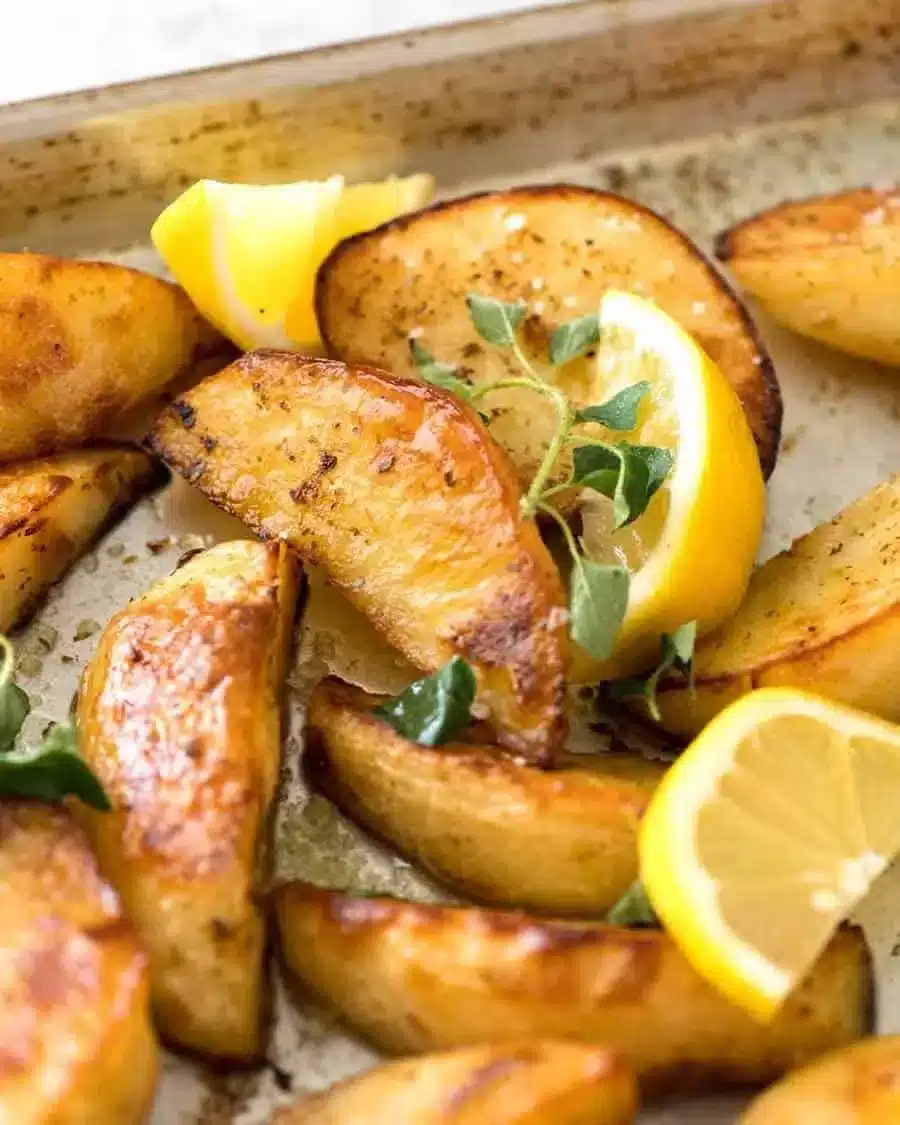
Greek Lemon Potatoes | Classic Roasted with Garlic
The first bite hits with bright lemon, warm garlic, and crunchy golden edges. Greek lemon potatoes capture sunshine and comfort in one pan, and this version is the one I rely on when I want a sure crowd-pleaser. After testing this recipe in home kitchens and at a small bistro, I perfected the roast-and-simmer technique that gives potatoes soft interiors and caramelized exteriors without drying them out. Read on for exact timings, metric and imperial measures, and pro tips to make them every week.
Why this recipe stands out:
- The potatoes simmer briefly in the lemon-olive oil broth, allowing acid to penetrate and flavor the center without making them mushy.
- Roasting at a high temperature after a short braise creates crisp, caramelized edges and a silky interior.
- Using both lemon juice and lemon peel builds layered citrus flavor that holds up after reheating.
- A final toss in fresh oregano and a splash of extra virgin olive oil brightens the dish and adds aroma.
- Tested across Yukon Gold and red potatoes to ensure consistent texture and timing.
Ingredients Breakdown
- Potatoes: 1 kg (2.2 lb) Yukon Gold or red potatoes, scrubbed and cut into 2–3 cm (1-inch) wedges. Yukon Golds hold their shape and yield a creamy center. Avoid high-starch russets; they fall apart in the braise.
- Olive oil: 60 ml (1/4 cup) extra virgin olive oil. It flavors and helps crispen the edges. Use a good quality oil for aroma.
- Lemon: 120 ml (1/2 cup) fresh lemon juice (about 2–3 lemons) plus the zest of 1 lemon. Juice provides tang; zest keeps bright citrus oils.
- Garlic: 4 cloves, thinly sliced — adds roastable sweetness. Minced garlic can burn; slice for gentle roasting.
- Chicken or vegetable stock: 240 ml (1 cup). The braising liquid should almost cover the potatoes. For vegetarian versions use low-sodium vegetable stock.
- Oregano: 2 tbsp fresh, chopped (or 2 tsp dried). Fresh oregano finishes the dish best; dried is a fine substitute.
- Salt: 1 tsp (5 g) fine sea salt. If using Morton’s kosher salt, reduce to 3/4 tsp (4 g).
- Black pepper: 1/2 tsp (1 g), freshly ground.
- Optional: 1 tbsp (15 ml) white wine vinegar for extra brightness, or 1 tsp (5 g) sugar if your lemons are very tart.
Substitution notes:
- For a dairy-like finish, add 30 g (2 tbsp) grated Parmesan at the end — flavor changes to savory and nuttier.
- If you prefer an air-fryer shortcut, see an alternative method that browns quickly with less oil in an air-fryer crispy baked potatoes guide, but reduce lemon liquid to prevent steaming.
Essential Equipment
- A heavy roasting pan or rimmed baking sheet with 3 cm (1-inch) sides. A sturdy pan conducts heat evenly.
- A shallow ovenproof skillet (10–12 inches / 25–30 cm) is ideal if you plan to start on the stove.
- A silicone spatula or wooden spoon for tossing.
- A small microplane or zester for lemon zest.
- Instant-read thermometer (optional) to check doneness: potatoes are done at about 95°C (203°F) internal when fork-tender.
If you don’t have a roasting pan, use a rimmed baking sheet lined with foil and a shallow casserole dish as a lid. For an air-fryer twist, check this air-fryer loaded potatoes method for timing cues.
Step-by-Step Instructions
Makes 4 servings. Prep time 15 minutes. Active cook time 50 minutes. Inactive time None. Total time about 1 hour 5 minutes.
Step 1: Preheat and prep
Preheat the oven to 200°C (400°F). Wash and cut 1 kg (2.2 lb) potatoes into 2–3 cm (1-inch) wedges. Dry them briefly so the oil sticks. This step takes about 10 minutes.
Step 2: Make the lemon-braise
In a 20–25 cm (8–10 inch) ovenproof skillet or roasting pan, whisk together 120 ml (1/2 cup) lemon juice, 240 ml (1 cup) chicken or vegetable stock, 60 ml (1/4 cup) olive oil, 4 sliced garlic cloves, 1 tsp (5 g) salt, and 1/2 tsp (1 g) black pepper. Stir for 30 seconds to combine. The liquid should be bright and well seasoned.
Step 3: Add potatoes and simmer briefly
Add the potato wedges in a single layer and stir to coat. Bring to a gentle simmer on the stovetop over medium heat, then cover and simmer for 10 minutes, stirring once halfway. Potatoes should be fork-tender on the outside but still slightly firm inside.
Step 4: Roast until golden
Remove the lid. Scatter the zest of 1 lemon and 2 tbsp (30 ml) chopped fresh oregano over the potatoes. Transfer the uncovered pan to the oven and roast at 200°C (400°F) for 25–30 minutes, tossing halfway, until the edges are crisp and browned and the liquid is mostly reduced. Check at 20 minutes if your oven runs hot. Do not overbake — you want caramelized edges, not dry centers.
Step 5: Finish and rest
If the pan looks dry but potatoes are not deeply browned, drizzle an extra 15 ml (1 tbsp) olive oil and roast 3–5 more minutes. Remove from oven and let rest 5 minutes. Toss with a final pinch of salt, 1 tbsp (15 ml) extra virgin olive oil, and 1–2 tbsp (15–30 ml) fresh chopped oregano before serving.
Expert Tips & Pro Techniques
- Slice uniformly: Cut potatoes into evenly sized wedges so they cook at the same rate.
- Avoid boiling to death: Simmering gently for 10 minutes is enough to let flavor in; over-simmering makes them watery.
- High-heat finish: The oven roast at 200°C (400°F) produces Maillard browning. If you prefer extra crispness, broil for 1–2 minutes — watch closely to avoid burning.
- Common mistake: Using too much liquid. If the potatoes are submerged, they will steam and not brown. Keep the liquid to about 1/3–1/2 up the sides of the wedges.
- Make-ahead: Prepare through Step 3, cool, cover, and refrigerate up to 24 hours. Roast straight from the fridge; add 5–7 minutes to roasting time.
- Professional trick adapted for home: Toss the potatoes in a tablespoon of oil and a pinch of flour before roasting for slightly crunchier edges. Use 8 g (2 tsp) flour — it creates a light crust without overcoating.
Storage & Reheating
- Refrigerator: Store in an airtight container for up to 3 days. Re-toss with a little olive oil before reheating to restore shine.
- Freezer: Not ideal — lemon and garlic flavors dull in the freezer and texture suffers. If you must, flash-freeze on a tray, then transfer to a freezer bag for up to 1 month; expect softer texture after thawing.
- Reheating: Best in a 175°C (350°F) oven for 10–12 minutes until heated through and edges re-crisp. Avoid microwaving — it makes potatoes soggy.
Variations & Substitutions
- Vegan / Vegetarian: Use vegetable stock in place of chicken stock. Everything else stays the same.
- Herby lemon: Swap fresh oregano for 2 tbsp (30 ml) chopped fresh rosemary or thyme. Rosemary needs slightly less roasting time if finely chopped.
- Spiced Greek: Add 1 tsp (2 g) smoked paprika and 1/4 tsp (0.5 g) cayenne for warmth. Keep lemon and garlic the same.
- Air-fryer shortcut: Par-cook potatoes by simmering 8 minutes, drain and transfer to air fryer at 200°C (400°F) for 12–15 minutes, shaking halfway. See an air-fryer example in this air-fryer twice-baked potatoes method for crisping cues.
- Lemon-butter finish: For richer flavor, swirl in 15 g (1 tbsp) unsalted butter at the end. Reduces acidity slightly but adds silkiness.
Serving Suggestions & Pairings
- Classic pairing: Serve alongside roast or grilled chicken and a simple Greek salad. For a one-pan meal, see this Greek lemon chicken and potatoes for a full plate idea.
- Meze board: Add with olives, feta, and warm pita for a shared starter.
- Protein pairing: Try with Greek meatballs in lemon sauce — the lemon theme ties everything together.
- Wine & drinks: A dry rosé or a bright, unoaked white (Assyrtiko or Sauvignon Blanc) complements the lemon and oregano.
Nutrition Information
Serving size: 1/4 of recipe (about 250 g). Recipe makes 4 servings.
Per serving (estimate):
- Calories: 260 kcal
- Total Fat: 10 g
- Saturated Fat: 1.5 g
- Cholesterol: 0 mg
- Sodium: 420 mg
- Total Carbohydrates: 38 g
- Dietary Fiber: 4 g
- Sugars: 2 g
- Protein: 4 g
Nutrition values are estimates. Actual values may vary based on specific ingredients and preparation methods.
Frequently Asked Questions
Q: Why did my potatoes turn out mealy or dry?
A: That happens when they overbake or are cut too small. Use uniform 2–3 cm (1-inch) wedges and roast just until edges brown. Remove as soon as centers are fork-tender.
Q: Can I make this without garlic?
A: Yes. Omit garlic and add 1 tsp (5 g) extra lemon zest and a pinch of smoked paprika to deepen flavor.
Q: Can I double this recipe for a crowd?
A: Yes. Use a larger roasting pan so the potatoes remain in a single layer. You may need to roast 5–10 minutes longer; check for golden edges and fork-tender centers.
Q: Can I prepare this the night before?
A: Absolutely. Complete through the simmer (Step 3), cool, cover, and refrigerate up to 24 hours. Roast from cold and add 5–7 minutes to the roast time.
Q: How long does this keep in the fridge?
A: Stored in an airtight container, it keeps well for up to 3 days. Re-crisp in a 175°C (350°F) oven for 10–12 minutes before serving.
Q: Can I use russet potatoes?
A: Russets are high starch and can break apart during braising. If using them, reduce simmer time to 6–8 minutes and handle gently.
Q: Will the lemon make the potatoes mushy?
A: Not if you simmer briefly and roast at high heat. The controlled simmer allows flavor in without dissolving the potato structure.
Conclusion
These Greek lemon potatoes are an easy way to bring bright, savory flavor to any meal. For a slightly different take and extra technique notes, I also recommend checking out RecipeTin Eats’ Greek Lemon Potatoes for comparison testing and Olive Tomato’s authentic Greek lemon potatoes for a traditional variation.
Print
Greek Lemon Potatoes
- Total Time: 65 minutes
- Yield: 4 servings 1x
- Diet: Vegetarian
Description
Classic roasted Greek lemon potatoes with garlic, featuring bright citrus flavor and crispy edges.
Ingredients
- 1 kg (2.2 lb) Yukon Gold or red potatoes, scrubbed and cut into 2–3 cm (1-inch) wedges
- 60 ml (1/4 cup) extra virgin olive oil
- 120 ml (1/2 cup) fresh lemon juice (about 2–3 lemons) plus the zest of 1 lemon
- 4 cloves garlic, thinly sliced
- 240 ml (1 cup) chicken or vegetable stock
- 2 tbsp fresh oregano, chopped (or 2 tsp dried)
- 1 tsp (5 g) fine sea salt
- 1/2 tsp (1 g) black pepper, freshly ground
- Optional: 1 tbsp (15 ml) white wine vinegar or 1 tsp (5 g) sugar
Instructions
- Preheat the oven to 200°C (400°F). Wash and cut the potatoes into wedges.
- Whisk together the lemon juice, stock, olive oil, sliced garlic, salt, and pepper in a skillet.
- Add the potato wedges, stir to coat, and simmer for 10 minutes.
- Remove the lid, add lemon zest and oregano, then roast in the oven for 25–30 minutes.
- Let the dish rest for 5 minutes, then toss with additional olive oil and serve.
Notes
For extra richness, swirl in 15 g (1 tbsp) unsalted butter at the end. Store leftovers in an airtight container for up to 3 days.
- Prep Time: 15 minutes
- Cook Time: 50 minutes
- Category: Side Dish
- Method: Roasting
- Cuisine: Greek
Nutrition
- Serving Size: 1 serving
- Calories: 260
- Sugar: 2g
- Sodium: 420mg
- Fat: 10g
- Saturated Fat: 1.5g
- Unsaturated Fat: 8.5g
- Trans Fat: 0g
- Carbohydrates: 38g
- Fiber: 4g
- Protein: 4g
- Cholesterol: 0mg