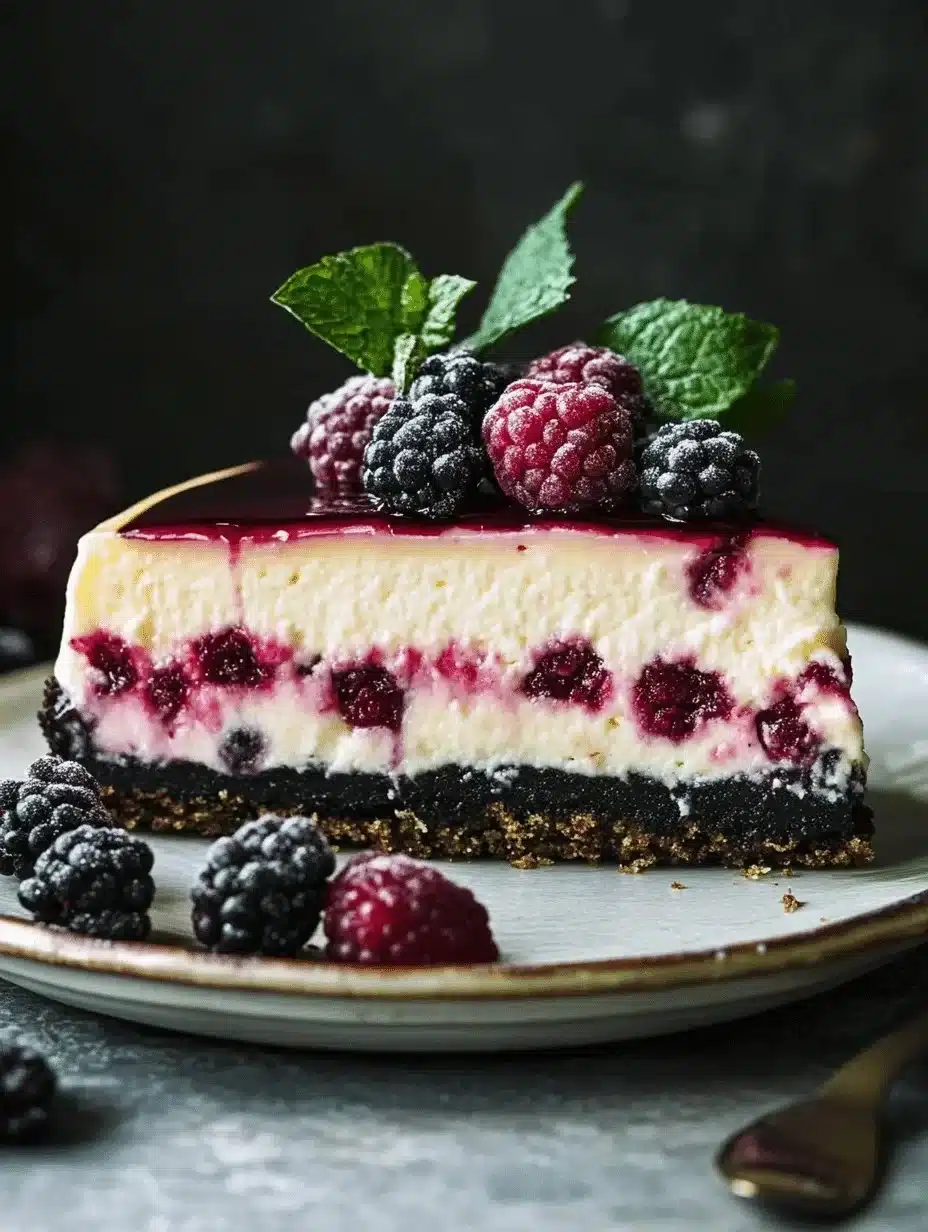
Creamy Dream Cheesecake — Perfect, Silky Cheesecake
Silky, tangy, and impossibly smooth, Creamy Dream Cheesecake melts on the tongue. This oven-baked cheesecake uses a buttery graham crust and a rich cream cheese filling to create a dense, luxurious slice that holds its shape. I perfected this version after testing it eight times, adjusting bake time, temperature, and a gentle water bath to stop cracks and ensure a custard-like center. The technique is simple but precise: chill thoroughly, bake low and slow, and cool gradually. Read on for ingredient notes, step-by-step instructions, and pro tips so your first try succeeds. If you like layered desserts, you might also enjoy our carrot cake cheesecake dessert as a companion treat.
Why This Recipe Works
- Low, steady baking at 160°C (325°F) keeps the filling creamy and prevents overcooking the edges.
- A hot water bath (bain-marie) buffers the pan from direct heat and reduces cracking.
- Full-fat cream cheese and a touch of heavy cream create a smooth mouthfeel and stable structure.
- Sour cream folded in at the end adds tang and keeps the top glossy.
- Slow cooling (oven off, door ajar) equalizes temperature and prevents sudden shrinkage.
Ingredients Breakdown
Graham cracker crust
- 150 g (1 1/2 cups) graham cracker crumbs — provides crunchy base and flavor. Swap for digestive biscuits 1:1 for a similar result.
- 85 g (6 tbsp) unsalted butter, melted — binds crumbs; do not use salted butter unless you reduce added salt.
- 25 g (2 tbsp) granulated sugar — balances the butter; omit for less sweetness.
Filling
- 900 g (2 lb) full-fat cream cheese, room temperature — the foundation; do not use low-fat cream cheese or the texture will be loose.
- 200 g (1 cup) granulated sugar — sweeps through filling for sweetness and structure.
- 3 large eggs, room temperature — add slowly to avoid aeration; eggs set the custard.
- 240 g (1 cup) sour cream, room temperature — adds tang and a silky finish. You can substitute Greek yogurt but expect a slightly tangier taste.
- 120 ml (1/2 cup) heavy cream — improves mouthfeel and smoothness.
- 2 tsp pure vanilla extract (10 ml) and 1 tsp lemon zest (optional) — flavor brighteners.
- 1/2 tsp fine sea salt (2.5 ml) — balances sweetness.
- 1 tbsp all-purpose flour (8 g) — stabilizes the batter and reduces cracking.
Notes on substitutions and brands
- If using Morton’s kosher salt instead of Diamond Crystal, halve the volume because Morton’s is denser.
- If you choose a gluten-free crust, use a 1:1 GF blend (not necessary in filling).
- Avoid room-temperature shortcuts like microwaving cream cheese; it should be softened at room temp for 30–60 minutes and still cool to the touch.
Essential Equipment
- 9-inch (23 cm) springform pan — the batter volume requires a 9-inch pan to prevent overflow.
- Kitchen scale — use grams for best consistency.
- Electric mixer (stand or handheld) — stand mixer with paddle attachment is ideal.
- Large roasting pan for a water bath (bain-marie) — a rimmed pan that holds the springform pan and water without touching the batter.
- Instant-read thermometer — to check doneness without overbaking.
- Aluminum foil — to wrap the springform pan and keep water out.
- Offset spatula and rubber spatula — for smoothing and gentle folding.
If you don’t have a springform pan, use a deep 9-inch cake pan lined with parchment and remove the cheesecake by inverting it after chilling. For a homemade crust press, a flat-bottomed glass works fine.
Step-by-Step Instructions
Prep time 30 minutes, Cook time 1 hour 10 minutes, Inactive time 8 hours chilling; Total time about 9 hours 40 minutes. Serves 12; serving size 1 slice.
Step 1: Preheat and prepare the pan
Preheat the oven to 160°C (325°F). Wrap the outside of a 9-inch (23 cm) springform pan tightly with two layers of heavy-duty aluminum foil to prevent water seepage. Press a parchment round into the pan base and set aside. (Active time: 5 minutes.)
Step 2: Make and bake the crust
Combine 150 g (1 1/2 cups) graham cracker crumbs, 85 g (6 tbsp) melted unsalted butter, and 25 g (2 tbsp) sugar. Press evenly into the bottom and 1 cm up the sides of the springform pan. Bake for 10 minutes until set and fragrant. Let cool while you make the filling. (Bake time: 10 minutes; cooling 10 minutes.)
Step 3: Soften and beat the cream cheese
Place 900 g (2 lb) room-temperature cream cheese in the mixer. Beat on medium speed for 1–2 minutes until smooth and lump-free. Scrape the bowl frequently. Do not overbeat — overmixing incorporates air and leads to cracks. (Active time: 3 minutes.)
Step 4: Add sugar and stabilizers
Add 200 g (1 cup) granulated sugar and 1 tbsp (8 g) all-purpose flour. Beat on low until combined, about 30–45 seconds. Scrape down sides. The mixture should be silky and not whipped. (Active time: 1 minute.)
Step 5: Incorporate eggs one at a time
With the mixer on low, add 3 large eggs one at a time, mixing just until blended after each addition (about 15 seconds each). Then add 240 g (1 cup) sour cream, 120 ml (1/2 cup) heavy cream, 2 tsp (10 ml) vanilla extract, 1 tsp lemon zest, and 1/2 tsp salt. Mix until smooth, no more than 45 seconds. (Active time: 5 minutes.) Sensory cue: batter should be glossy and pourable, not foamy.
Step 6: Pour, smooth, and prepare the water bath
Pour the filling over the crust, smoothing the top with an offset spatula. Place the springform inside a large roasting pan and pour hot tap water into the roasting pan until it reaches halfway up the springform sides. Carefully transfer to the oven. (Setup time: 5 minutes.)
Step 7: Bake low and slow
Bake at 160°C (325°F) for 55–70 minutes. The center should still have a slight wobble — about 65–70% set. An instant-read thermometer inserted near the center should read 65–68°C (150–155°F). The edges will be puffed and lightly golden. (Bake time: 55–70 minutes.) If it jiggles like loose jelly, it is correct; avoid baking until fully firm.
Step 8: Cool gradually, chill thoroughly
Turn the oven off and crack the oven door open with a wooden spoon; leave the cheesecake inside to cool slowly for 1 hour. After that, remove from the water bath, unwrap foil, and finish cooling on a rack for 1 hour. Then refrigerate, still in the pan, for at least 8 hours or overnight. (Inactive time: 8 hours chilling.) To serve, run a thin knife around the edge and release the springform. (Active finish time: 10 minutes.)
Expert Tips & Pro Techniques
- Common mistake: overbeating. Overmixing whips air into the batter and causes cracks. Mix just until smooth.
- Use room-temperature ingredients. Cold ingredients force more mixing. Let eggs and dairy sit at room temp for 30–60 minutes.
- Water bath tips: place the wrapped springform into the roasting pan, then pour the hot water in to reduce the chance of splashing water into the pan.
- Make-ahead: bake the cake a day ahead and chill overnight. This improves texture and makes assembly stress-free.
- Professional technique for home cooks: after the first hour of cooling in the oven, loosen the cake slightly to release steam by opening the oven a crack for 10 minutes; this mimics pro gradual cooling.
- Knife clean cuts: dip the knife in hot water and wipe between slices for neat edges.
- If you want a browned top, slide under the broiler for 30–45 seconds after chilling — watch constantly.
Also, if you’d like savory inspiration to serve alongside, consider pairing with lighter mains such as eggplant parmesan for a full-course Italian-style meal.
Storage & Reheating
- Refrigerator: Store whole or sliced cheesecake in an airtight container or wrapped tightly in plastic wrap for 4–5 days. For best texture, keep it chilled until 10–15 minutes before serving.
- Freezer: Cheesecake freezes well up to 2 months. Wrap whole cake in plastic wrap and then foil, or freeze slices individually on a tray and transfer to a freezer bag. Thaw in the refrigerator overnight.
- Reheating: For a just-off-the-chill feel, let slices sit at room temperature for 20–30 minutes. If you want warmed slices, heat in a 160°C (325°F) oven for 8–10 minutes. Avoid microwaving — it makes the crust soggy and the filling rubbery.
Variations & Substitutions
- No-Bake Version: Replace the filling with 700 g (24 oz) cream cheese, 200 g (1 cup) sweetened condensed milk, 240 g (1 cup) sour cream, 120 ml (1/2 cup) heavy cream, and 2 tsp vanilla. Chill 6–8 hours. (Baking time removed; chilling required.) For a tested no-bake method, see a light blueberry option like No Bake Blueberry Yum Yum Dessert Recipe as inspiration.
- Lighter Version: Use 600 g (1.3 lb) cream cheese and 300 g (1 1/2 cups) Greek yogurt; reduce heavy cream to 60 ml (1/4 cup). Texture will be lighter and slightly tangier; chilling time unchanged.
- Gluten-Free Crust: Use 150 g (1 1/2 cups) gluten-free graham-style crumbs. Add ½ tsp xanthan gum to filling only if your crumb contains no binders. Baking time same.
- Mini Cheesecakes: Divide crust and filling into a 12-cup muffin tin lined with paper liners; bake at 160°C (325°F) for 22–26 minutes. Cool and chill as above.
- Citrus or Chocolate Swirl: Fold 60 g (1/4 cup) melted dark chocolate or 60 g (1/4 cup) lemon curd into 1/3 of the batter and create a swirl before baking. Baking time unchanged.
Serving Suggestions & Pairings
- Fresh berries and glossy berry compote — brightens the rich cheesecake. Try with a drizzle of warm berry sauce.
- Espresso or a robust coffee — cuts through the richness and cleanses the palate.
- Light dessert wine like Moscato d’Asti or late-harvest Riesling — the sweetness pairs nicely with the tang.
- For crowd-pleasing menus, serve this after a savory main like cheesesteak tortellini with creamy provolone to keep the meal both hearty and balanced.
Also consider reading techniques for large holiday bakes in our Christmas lasagna dessert write-up if you’re planning baking for a party.
Nutrition Information
Per serving (1 slice; 12 servings total)
- Calories: 430 kcal
- Total Fat: 30 g
- Saturated Fat: 18 g
- Cholesterol: 140 mg
- Sodium: 260 mg
- Total Carbohydrates: 31 g
- Dietary Fiber: 0.5 g
- Sugars: 22 g
- Protein: 7 g
Nutrition values are estimates. Actual values may vary based on specific ingredients and preparation methods.
Frequently Asked Questions
Q: Why did my cheesecake crack on top?
A: Most cracks come from overbeating or too-high heat. Overbeating adds air, which expands and collapses. Bake at 160°C (325°F) and cool slowly in the oven to avoid thermal shock.
Q: Can I make this without eggs?
A: You can use an egg substitute like silken tofu (300 g) blended with 1 tbsp cornstarch, but texture will be softer and less custardy. Alternatively, try a reliable no-bake version that uses sweetened condensed milk.
Q: Can I double this recipe for a larger crowd?
A: Doubling for two 9-inch pans is fine. Bake each pan separately if possible. If baking both together, maintain spacing and check doneness; baking time may increase by 10–15 minutes.
Q: Can I prepare this the night before an event?
A: Yes — bake, cool, and chill overnight. Cheesecake actually tastes better after a day of chilling when flavors settle.
Q: How long does this keep in the fridge?
A: Properly wrapped, it keeps 4–5 days refrigerated. For longer storage, freeze slices for up to 2 months.
Q: My crust is soggy. How do I prevent that?
A: Blind-bake the crust for 10 minutes until set and slightly golden, and cool before adding filling. Also avoid long contact with excess moisture; wrap the pan well in the water bath to keep water out.
Q: Can I swap the crust for cookies like Oreos?
A: Yes. Use finely crushed cookies (about 150 g) mixed with 85 g melted butter and press into the pan. Baking time remains the same.
Conclusion
This Creamy Dream Cheesecake is designed to be reliable and indulgent — bake it for holidays, birthdays, or anytime you want a show-stopping dessert. For a lighter, no-bake fruit-forward sweet, try the blueberry take on quick chilled desserts like No Bake Blueberry Yum Yum Dessert Recipe, or explore a fruity variation with summer peaches for inspiration from Peach Delight. Enjoy, and remember: low heat, slow cooling, and patience deliver the creamiest slices.
Print
Creamy Dream Cheesecake
- Total Time: 590 minutes
- Yield: 12 servings 1x
- Diet: Vegetarian
Description
A silky, tangy, and impossibly smooth cheesecake that melts on the tongue, featuring a buttery graham crust and rich cream cheese filling.
Ingredients
- 150 g (1 1/2 cups) graham cracker crumbs
- 85 g (6 tbsp) unsalted butter, melted
- 25 g (2 tbsp) granulated sugar
- 900 g (2 lb) full-fat cream cheese, room temperature
- 200 g (1 cup) granulated sugar
- 3 large eggs, room temperature
- 240 g (1 cup) sour cream, room temperature
- 120 ml (1/2 cup) heavy cream
- 2 tsp pure vanilla extract (10 ml)
- 1 tsp lemon zest (optional)
- 1/2 tsp fine sea salt (2.5 ml)
- 1 tbsp all-purpose flour (8 g)
Instructions
- Preheat the oven to 160°C (325°F). Wrap the outside of a 9-inch (23 cm) springform pan with aluminum foil and press a parchment round into the pan base.
- Combine graham cracker crumbs, melted unsalted butter, and sugar. Press into the bottom and sides of the springform pan. Bake for 10 minutes and let cool.
- Beat the cream cheese in a mixer until smooth. Scrape down sides and be careful not to overbeat.
- Add granulated sugar and flour, then beat on low until combined.
- Incorporate the eggs one at a time, mixing just until blended. Then add sour cream, heavy cream, vanilla extract, lemon zest, and salt. Mix until smooth.
- Pour the filling over the crust and prepare a water bath in a roasting pan. Bake for 55–70 minutes.
- Cool the cheesecake gradually with the oven off for 1 hour, then finish cooling on a rack for 1 hour before refrigerating for at least 8 hours.
- Run a knife around the edge and release the springform before serving.
Notes
For best results, use room-temperature ingredients and avoid overmixing to prevent cracks.
- Prep Time: 30 minutes
- Cook Time: 70 minutes
- Category: Dessert
- Method: Baking
- Cuisine: American
Nutrition
- Serving Size: 1 slice
- Calories: 430
- Sugar: 22g
- Sodium: 260mg
- Fat: 30g
- Saturated Fat: 18g
- Unsaturated Fat: 12g
- Trans Fat: 0g
- Carbohydrates: 31g
- Fiber: 0.5g
- Protein: 7g
- Cholesterol: 140mg