Introduction
If you love the warm, nostalgic flavors of hot cocoa and the tender, pillowy comfort of cinnamon rolls, this Traditional Hot Cocoa Cinnamon Rolls guide is for you. In this guide you’ll learn not only a reliable, repeatable recipe, but the why behind each step so you can adapt and troubleshoot with confidence.
By the end you’ll be able to make a dependable batch from scratch, understand how ingredients and techniques shape texture and flavor, scale or adapt the recipe for diet or timing, and experiment safely. This is a practical playbook—part history, part chemistry, part hands-on workshop—designed to make you a thoughtful baker, not just a recipe follower.
Background & Context
Understanding how a dish evolved helps you make better choices in the kitchen. The Classic Hot Cocoa Cinnamon Rolls history traces two comforting traditions: sweet enriched doughs (think brioche and traditional cinnamon rolls) and hot cocoa flavors (cocoa, sugar, and sometimes marshmallow-like frostings).
The phrase Authentic Hot Cocoa Cinnamon Rolls origin isn’t tied to a single country or baker; rather it emerges from cultural mashups. In colder climates, people often pair chocolate and warming spices. American-style enriched doughs were adapted with cocoa and hot-cocoa–inspired fillings to create crowd-pleasing seasonal treats. Bakeries and home cooks started riffing on cinnamon roll fundamentals—yeasted enriched dough, rolled filling, proofed, baked, and frosted—by incorporating cocoa powder, melted chocolate, or hot-cocoa mixes.
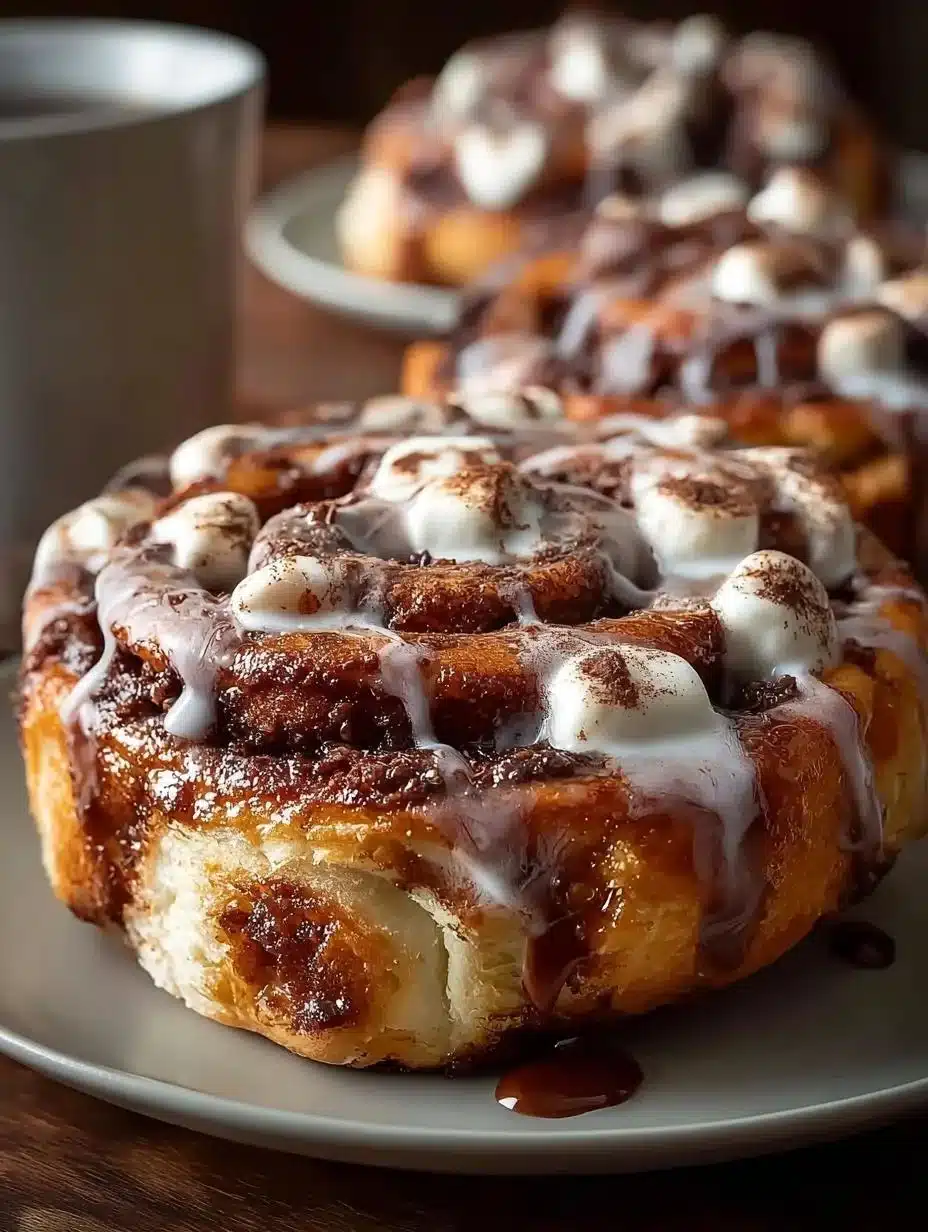
Personal note: I first saw a version of these rolls in a small coastal bakery that used a marshmallow-topped hot-cocoa glaze. The memory of the pillowy roll with a slightly bitter cocoa swirl and a sweet, billowy frosting is what inspired the practical techniques in this guide.
Cultural relevance: These rolls bridge dessert and breakfast, holiday and everyday. They’re flexible—perfect for winter brunches, gifting, or warming up a chilly morning.
Why This Approach Works
This guide emphasizes fundamentals and modular techniques. You’ll learn methods that scale, adapt for time constraints, or shift for dietary needs.
- Reliability: Understanding dough structure and fermentation prevents inconsistent texture.
- Flexibility: By breaking the recipe into building blocks (dough, filling, proofing, bake, finish), you can substitute or upgrade components without losing control.
- Efficiency: Time estimates and make-ahead strategies let you plan baking around real life.
Addressing common doubts:
- “I don’t have a stand mixer.” No problem—hand-kneading works; this guide explains techniques and timing adjustments.
- “I’m nervous about yeast.” We show simple tests and sensory cues to know when dough is ready.
- “What if I want less sugar?” Alternatives and scaling tips let you reduce sweetness without wrecking structure.
This approach prioritizes understanding: know how gluten, fat, sugar, and cocoa interact and you won’t be dependent on exact conditions.
Core Concepts Explained
Break the process into components so you can substitute, troubleshoot, and master each part.
Dough (structure)
- Role: Provides the roll’s shape, chew, and lift.
- Key ingredients: Flour (gluten), water/milk (hydration), fat (butter/egg), yeast (leavening), sugar (feed yeast and tenderize).
- Example: Enriched dough with milk and butter yields a tender, rich crumb; lean doughs will be chewier.
Cocoa integration (flavor chemistry)
- Cocoa binds with fat and sugar differently than cinnamon.
- Natural vs Dutch-processed cocoa: Natural is acidic and can react with baking soda; Dutch is neutral. For yeasted enriched doughs, acidity is less critical but affects flavor and color.
- Example: Use Dutch-processed for a darker, smoother flavor; natural for brighter cocoa notes.
Filling (texture & balance)
- Role: Concentrated flavor and moisture control.
- Typical components: Cocoa powder or melted chocolate, sugar, butter, salt, optional spices (cinnamon, cardamom).
- Balance: Too wet filling makes steaming instead of baking; too dry yields crumbly rolls.
Proofing (time & temp)
- Yeast activity is temperature-dependent. Proofing too long weakens dough; too short yields tight crumb.
- Visual cues: Dough should noticeably increase in volume (about 1.5–2x) and feel springy.
Shaping & cutting
- Tension on the rolled log helps even rise.
- Clean cuts prevent squashed rolls; a serrated or dental-floss cut is recommended.
Baking & finishing
- Even oven heat and baking time determine final moisture.
- Topping or frosting can be served hot, warm, or cooled; different textures result (drippy vs set).
Alternatives and substitutions:
- Flour: Bread flour for more chew, all-purpose for balanced texture, low-gluten pastry flour for tender rolls (reduce mixing).
- Dairy: Use plant milk and vegan butter with some loss of richness; add an extra tablespoon of fat if needed.
- Sweeteners: Brown sugar adds molasses notes; granulated sugar gives brighter sweetness.
Tools, Resources, or Foundations
Essentials:
- Mixing bowl(s)
- Scale (highly recommended for consistency)
- Dough scraper or sturdy spatula
- Rolling pin
- Baking pan (9×13 or similar)
- Oven thermometer (if your oven varies)
Nice-to-have:
- Stand mixer with dough hook (saves effort)
- Instant-read thermometer (check dough temp and baked rolls)
- Proofing box or warm spot (use oven with light on)
- Toothpicks or skewers for checking doneness
Budget-friendly alternatives:
- Hand-kneading instead of mixer
- Glass or metal baking pans instead of specialty tins
- Warm proofing: use a microwave with a cup of hot water to create a humid warm micro-environment
Commentary on usefulness:
A scale and good oven thermometer pay dividends in repeatability. They’re the easiest upgrades for consistent results.
Step-by-Step Process
Below is a step-by-step that adapts for beginner → advanced. Time estimates assume a single batch (12 rolls) and average ambient temperature (68–72°F / 20–22°C).
Total active time: ~60–90 minutes (plus proofing/baking)
Total elapsed time: 3–4 hours (including first proof); can be shortened with warm-proof or extended with overnight retard (refrigeration).
Prepare the dough (Active: 20–30 min; Rise: 60–90 min)
- Combine warm milk (100–110°F / 38–43°C), sugar, and yeast. Proof 5–10 minutes until foamy.
- Mix flour, salt, cocoa (if adding to dough), then add butter and eggs.
- Knead until smooth and elastic (windowpane test for advanced bakers).
- Place in greased bowl, cover, proof until doubled.
Make the filling (Active: 10 min)
- Mix softened butter with cocoa powder, sugar (brown or granulated), pinch of salt, and optional spices.
- For richer filling, fold in melted dark chocolate (cooled to warm).
Roll and shape (Active: 10–15 min)
- Roll dough into rectangle (~12×18 inches). Spread filling evenly, leaving a ½-inch border.
- Starting from the long side, tightly roll into a log. Seal edge with a little water.
- Cut into 12 even pieces using a sharp knife, pastry cutter, or unflavored dental floss.
Second proof (Active: 45–60 min)
- Place rolls in pan, cover gently. Proof until puffy and about 1.5x volume.
- Tip: For overnight, place covered pan in fridge and bake next morning.
Bake (Active: 20–25 min)
- Preheat oven to 350°F / 175°C.
- Bake until tops are golden and internal temp reaches ~190–200°F / 88–93°C.
- Avoid overbaking; aim for set centers and moist crumb.
Frost/finish (Active: 5–10 min)
- Classic finish: cream cheese or marshmallow-style frosting.
- For hot-cocoa theme, a marshmallow or whipped hot cocoa frosting echoes the drink.
Common mistakes + how to avoid them:
- Underproofed dough: results in dense rolls. Use the poke test—dimple springs back slowly.
- Overproofed rolls: collapse in oven. Watch volume more than time.
- Soggy center: over-wet filling or underbaked rolls. Use a slightly drier filling and ensure proper bake time.
- Uneven rolls: inaccurate cuts or loose rolling. Use measurement and tension in rolling.
Pro tips:
- Chill log briefly (10–15 min) before cutting for cleaner slices.
- Brush roll edges with melted butter for richer crust.
- Use parchment for easy removal and cleanup.
H3: Beginner-friendly timeline (single morning)
- Night before: Prepare dough and refrigerate overnight for slow proof (optional).
- Morning: Warm dough to room temp (30–60 min), roll, proof 45–60 min, bake 20 min, frost.
H3: Advanced technique—laminated-like crumb
- Incorporate thin butter layers in rolling stage by using chilled butter and folding the dough twice.
- Result is flakier layers but requires precision and chill time.
Expert Techniques & Insights
- Hydration subtlety: Slightly higher hydration (by 2–3%) yields a softer crumb. Increase liquid in small increments to avoid sticky, unworkable dough.
- Prefermentation: Use a small sponge (poolish) with some flour, water, and a pinch of yeast to deepen flavor and extend shelf life. Mix sponge 8–12 hours before combining.
- Dough temperature control: Aim for final dough temperature around 75–78°F (24–26°C). Adjust water temp based on flour temperature and room climate.
- Flavor layering: Add a small pinch of espresso powder to the cocoa filling to amplify chocolate notes without bitterness.
- Visual contrast: Use a cinnamon layer mixed with cocoa for a marbled appearance and nuanced flavor.
- Baking on tiles: Placing the pan on a preheated baking stone can improve bottom crust heat and overall oven spring.
- Glaze technique: Warm glaze slightly and pour over hot rolls to allow some absorption; for glossy set, let rolls cool 5–10 minutes first.
Lessons from experience:
- Simplicity often wins: over-complicating with too many inclusions (nuts, fruit, extra syrups) can overwhelm texture.
- Texture memory: dough remembers how it was handled. Gentle, confident touches yield consistent rolls.
Variations & Adaptations
Different contexts call for different treatments. Below are adaptable ideas.
- Marshmallow-topped: Add a marshmallow frosting or toasted marshmallow shards for a hot-cocoa–authentic finish.
- Triple chocolate: Add chocolate chips in the filling and use a melted ganache drizzle after baking.
- Vegan: Use nondairy milk, vegan butter, and an egg replacer (flax egg or commercial replacer). Add a bit more fat for richness.
- Gluten-free: Use a high-quality gluten-free flour blend designed for yeasted breads and add xanthan gum if absent. Expect denser texture.
- Low-sugar: Reduce sugar in dough by 20–30% and compensate with more flavorful fillings (dark cocoa, espresso).
- Savory-chocolate experiment: Small amount of smoked salt or chili in filling for an adventurous palate.
Skill-level adaptations:
- Beginner: Follow the straightforward recipe and use all-purpose flour and instant yeast.
- Intermediate: Try preferment and adjust hydration.
- Advanced: Explore layered butter techniques and temperature-controlled fermentation.
Cultural flexibility:
- Vary spices for cultural flavors: cardamom for Scandinavian notes, matcha for Japanese-inspired twists, or chai spices for South Asian warmth.
Analysis & Benefits Breakdown
Below is a concise table comparing three approaches for structure, flavor intensity, and ease.
| Approach | Structure | Flavor Intensity | Ease for Home Baker |
|—|—:|—:|—:|
| Enriched dough + cocoa filling (classic) | Tender, fluffy | Balanced cocoa and butter | High (beginner-friendly) |
| High-fat laminated variant | Flakier, layered | Rich, buttery cocoa | Medium-High (advanced technique) |
| Lean dough with intense chocolate filling | Chewier, more bread-like | Strong chocolate punch | Medium (watch hydration) |
Strengths:
- Versatile: works for breakfast or dessert.
- Scalable: recipe blocks let you make a few or many.
- Flavor layering: cocoa + butter + sugar creates depth.
Limitations:
- Yeast-dependent: requires attention to proofing.
- Sensitive to humidity: filling moisture and dough hydration can shift with climate.
- Time: best results usually need a few hours or overnight planning.
Considerations:
- If you need speed, use a faster proofing environment (warm oven) but monitor closely to avoid overproofing.
- For gifting or event prep, bake ahead and reheat gently; make-ahead glazing preserves texture.
Preparation, Retention & Long-Term Use
How to prepare effectively:
- Measure ingredients by weight for repeatability.
- Read the full recipe before starting; preheat and prep pans early.
- Set up mise en place: softened butter, sifted cocoa, measured flour.
Retention or reuse strategies:
- Freeze unbaked rolls: assemble and freeze on a tray, then transfer to a bag. Bake from frozen adding ~10–15 minutes to bake time.
- Freeze baked rolls: cool fully, wrap tightly, freeze up to 3 months. Reheat at 325°F / 160°C for 10–15 minutes, then refresh with glaze.
- Make-ahead proofing: refrigerate shaped rolls overnight, bake in the morning. Allow them to come to room temp for 30–60 minutes before baking.
Longevity of skills:
- Once you master the dough windowpane and proofing cues, the skill translates to many enriched pastries.
- Flavor balancing with cocoa and sugar applies broadly to chocolate pastry work.
Troubleshooting & Common Problems
Problem → Cause → Solution
Dense rolls → Underproofed dough / stiff dough
- Check yeast activity; allow more proof time. Slightly increase hydration and kneading for gluten development.
Collapsed rolls after bake → Overproofing / weak dough strength
- Shorten second proof, ensure proper kneading or reduce sugar/fat slightly.
Soggy center → Over-wet filling / underbaked
- Dry the filling slightly (less butter or pre-mix with dry cocoa). Bake a few minutes longer.
Bitter cocoa flavor → Overuse of low-quality or over-roasted cocoa
- Use a blend of cocoa and melted chocolate; add a pinch of salt to balance bitterness.
Cracked or splitting swirls → Rolling too tight or dough too dry
- Roll with consistent tension, maintain moderate hydration, and rest dough if it resists.
Sticky dough → High humidity or excessive water
- Use light dusting of flour for handling, but try to keep additions minimal. Chill briefly if too sticky.
Reassurance: Most issues are fixable with small adjustments. Keep notes on hydration, proof times, and oven behavior for future batches.
FAQ Section
Q: Can I use hot cocoa mix in the filling?
A: Yes, but be mindful of extra sugars and stabilizers. Reduce other sugar accordingly and taste the filling before assembling.
Q: How do I know when rolls are fully baked?
A: Internal temperature of 190–200°F (88–93°C) is ideal. Visual cues: golden top and set center. Use a skewer to check for gooeyness.
Q: Can I make these ahead for an event?
A: Yes. Bake the day before and reheat gently, or proof overnight in the fridge and bake the morning of the event.
Q: What cocoa is best—natural or Dutch-processed?
A: Dutch-processed offers smoother, darker flavor and color; natural brings brighter, tangy notes. Choose based on desired flavor profile.
Q: How do I get neat slices?
A: Chill the rolled log for 10–15 minutes to firm up, then slice with a sharp serrated knife or dental floss.
Q: Is cream cheese frosting necessary?
A: No. A marshmallow-style frosting or simple powdered sugar glaze keeps the hot-cocoa theme without tang.
Q: My rolls are too sweet—how to reduce?
A: Reduce sugar in dough by 20% and use less sweet frosting. Compensate flavor with higher-quality cocoa or a pinch of espresso.
Q: Can I add nuts or chocolate chips?
A: Yes, fold them into the filling sparingly. Large inclusions can affect rolling and even baking.
Related Topics & Next Steps
Expand your skills by exploring:
- Enriched doughs like brioche and babka to understand butter incorporation.
- Laminated pastries (croissants) for layered structure.
- Chocolate chemistry resources to refine cocoa use and pairing.
Suggested next projects:
- Triple chocolate cinnamon rolls (use melted ganache plus chips).
- Marshmallow frosting techniques (torch vs. broil).
- Overnight preferment for deeper flavor.
Quick Reference Summary
- Core blocks: dough, filling, shaping, proofing, bake, finish.
- Target dough temperature: ~75–78°F (24–26°C).
- Proofing cues > clock time—look for 1.5–2x volume and springy feel.
- Baking temp: 350°F / 175°C; aim for internal 190–200°F (88–93°C).
- Make-ahead: refrigerate shaped rolls overnight or freeze assembled rolls.
- Troubleshoot by adjusting proof time, hydration, and filling moisture.
Conclusion
You now have a complete Traditional Hot Cocoa Cinnamon Rolls guide that covers history, technique, troubleshooting, and creative variations. Use the core concepts to adapt with confidence—swap cocoa types, control hydration, or try advanced shaping—and you’ll understand why each change matters.
For inspiration and specific frosting ideas that pair beautifully with these rolls, check out this marshmallow frosting approach: Hot Cocoa Cinnamon Rolls Marshmallow Frosting – The Seaside.
If you’re curious about richer, chocolate-forward variations, this triple chocolate take shows how intensified fillings and glazes change texture and flavor: Triple Chocolate Cinnamon Rolls.
Share your experiments, keep a baking log, and return to this guide whenever you want to adapt, troubleshoot, or push your technique further. Happy baking.
Print
Traditional Hot Cocoa Cinnamon Rolls
- Total Time: 115 minutes
- Yield: 12 rolls 1x
- Diet: Vegetarian
Description
Warm, tender cinnamon rolls infused with rich hot cocoa flavors, perfect for breakfast or dessert.
Ingredients
- 1 cup warm milk (100–110°F / 38–43°C)
- 1/4 cup granulated sugar
- 2 1/4 tsp active dry yeast
- 3 1/2 cups all-purpose flour
- 1 tsp salt
- 1/4 cup cocoa powder (Dutch-processed recommended)
- 1/4 cup unsalted butter, softened
- 2 large eggs
- 1/2 cup softened butter (for filling)
- 1/2 cup brown sugar
- 1/2 cup cocoa powder
- A pinch of salt
- Optional spices (cinnamon, cardamom)
- For frosting: cream cheese or marshmallow frosting
Instructions
- In a bowl, combine warm milk, sugar, and yeast. Let it proof for 5–10 minutes until foamy.
- In a large mixing bowl, combine flour, salt, cocoa powder, butter, and eggs. Mix until smooth.
- Knead the dough until elastic, then place in a greased bowl, cover, and let it rise until doubled (60–90 minutes).
- For the filling, mix softened butter, cocoa powder, sugar, and salt.
- Roll the dough into a rectangle, spread the filling evenly, and tightly roll it into a log. Cut into 12 pieces.
- Place rolls in a greased pan and let them proof until puffy (about 45–60 minutes).
- Preheat the oven to 350°F / 175°C and bake for 20–25 minutes until golden brown and the internal temperature reaches 190–200°F / 88–93°C.
- Remove from oven and frost with cream cheese or marshmallow frosting before serving.
Notes
For a marshmallow frosting, fold in melted marshmallow for a hot-cocoa theme. You can refrigerate shaped rolls overnight for an easy morning bake.
- Prep Time: 90 minutes
- Cook Time: 25 minutes
- Category: Dessert
- Method: Baking
- Cuisine: American
Nutrition
- Serving Size: 1 roll
- Calories: 300
- Sugar: 16g
- Sodium: 200mg
- Fat: 10g
- Saturated Fat: 5g
- Unsaturated Fat: 3g
- Trans Fat: 0g
- Carbohydrates: 45g
- Fiber: 2g
- Protein: 4g
- Cholesterol: 30mg