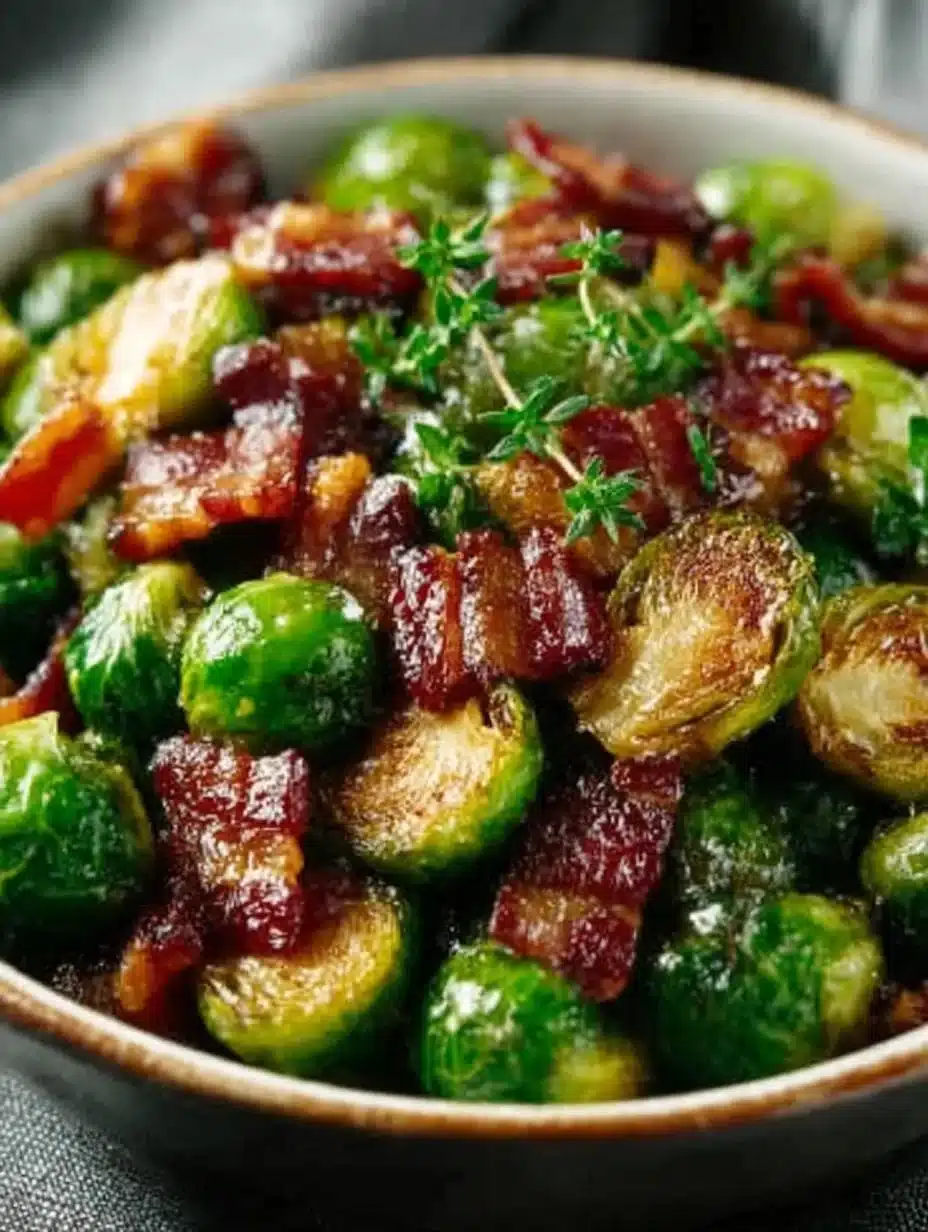
Traditional Stovetop Maple Bacon Brussels guide
There’s a moment when a humble vegetable becomes a crowd-pleasing side: the pan-sizzled, sweet-and-salty bite of maple and bacon wrapped around a caramelized Brussels sprout. If you want to learn how to make that happen reliably on a stovetop, this guide is for you.
In this long-form, practical guide you’ll gain: a grounded understanding of the technique, hands-on step-by-step instructions, troubleshooting help, and advanced variations that make this dish adaptable to any kitchen level. By the end you’ll confidently cook, adapt, and teach “Traditional Stovetop Maple Bacon Brussels” preparations for weeknights or a holiday table.
Background & Context
Brussels sprouts became a culinary staple in modern kitchens over the last 30–40 years, elevated from a vegetative afterthought to a star side dish. Two flavor primitives—bacon and maple—pair brilliantly with the sprouts’ natural bitterness and texture, creating broad appeal.
If you search phrases like "Authentic Stovetop Maple Bacon Brussels origin" or "Classic Stovetop Maple Bacon Brussels history," you’ll find that this combination is an evolution rather than a single-origin dish. It blends Northern European vegetable cookery with North American cured pork traditions and maple syrup’s long history among Indigenous peoples and colonial settlers. The result is a technique that’s both practical and culturally hybrid.
My own first success came on a crowded weeknight: quick bacon, hot pan, quartered sprouts tossed until edges charred, then a splash of maple—simple, repeatable, delicious. That honesty in flavor and ease of execution is what makes the stovetop method enduring.
Why This Approach Works
This stovetop-first method is powerful for three reasons:
- Heat control gives you texture. A hot pan sears edges quickly, creating crispy, caramelized surfaces that offset the sprouts’ interior.
- Layered flavor: rendered bacon fat functions as the cooking medium, bringing salt and umami deep into the sprouts, while maple adds sweetness and gloss.
- Speed and flexibility: the stovetop route takes 20–30 minutes and scales well to different household sizes without needing an oven.
Common doubts: “Won’t the maple burn?” Not if you add it at the right moment and balance with deglazing liquid. “Is bacon necessary?” No—bacon provides fat and flavor, but there are vegetarian alternatives. I’ll explain substitutions and timings to avoid common pitfalls.
Core Concepts Explained
Treat the final dish as the sum of five components.
Sprouts: size and prep
- Smaller, uniform sprouts cook evenly. Quarter large ones; halving or leaving very small ones whole preserves texture.
- Trim the stem and remove loose outer leaves for cleaner caramelization.
Fat and flavor carrier
- Bacon fat is ideal because it brings deep, savory notes.
- Alternatives: butter, ghee, olive oil with a splash of soy or miso paste for umami.
Heat and pan
- Cast-iron or heavy stainless steel retains heat and encourages Maillard browning.
- Nonstick works, but you’ll trade some crust for ease of cleanup.
Sugar balance and timing
- Maple syrup adds sweetness and body. Add late in the cook to prevent burning.
- Balance acidity (vinegar or lemon) and salt to keep the palate lively.
Finishing textures
- Crisp bacon pieces, toasted nuts, or seeds add crunch.
- Acidic components like a squeeze of lemon or a drizzle of vinegar cut the sweetness.
Alternatives and substitutions
- Vegetarian: use smoked paprika + butter/olive oil, or smoked tofu/tempeh crumbles for texture.
- Sweetener swap: honey or brown sugar can replace maple, though maple brings unique aromatic notes.
Tools, Resources, or Foundations
Essentials
- Heavy skillet (10–12 inch cast-iron or stainless steel)
- Sharp chef’s knife and cutting board
- Tongs or metal spatula
- Measuring spoons and a small bowl
Optional enhancements
- Microplane for zesting citrus
- Small mesh strainer for drizzling glaze
- Digital thermometer if you like precision for bacon (not necessary)
Budget-friendly or beginner alternatives
- If you don’t have cast iron, a thick-bottomed nonstick skillet works.
- Use pre-washed, trimmed sprouts to save prep time.
- Purchase good-quality pure maple syrup (not pancake syrups) for flavor; a small bottle lasts a long time.
Commentary on usefulness
- This is low-friction cooking: minimal equipment, forgiving timings, and flexible ingredients make it accessible for beginners and satisfying for experienced home cooks.
Step-by-Step Process
Time total: 20–35 minutes depending on quantities.
Serves: 2–6 as a side.
Overview:
- Prep sprouts and bacon (10 minutes)
- Render bacon and brown sprouts (10–15 minutes)
- Finish with maple and acid, rest, and serve (2–5 minutes)
H3: Step 1 — Prep (5–10 minutes)
- Trim sprouts: slice off the stems and remove any loose outer leaves.
- Quarter large sprouts; halve medium ones; leave petite sprouts whole.
- Cut bacon into 1/2–3/4 inch lardons or small dice.
- Measure: 2 tablespoons maple syrup per pound of sprouts is a good starting ratio.
Time estimate: 5–10 minutes.
Pro tip: Dry the sprouts thoroughly after washing. Moisture prevents good browning.
H3: Step 2 — Render Bacon (6–8 minutes)
- Heat skillet over medium. Add bacon pieces in a single layer.
- Cook until fat renders and bacon is browned but not fully crisp (about 6–8 minutes). Remove some pieces with a slotted spoon and set aside—reserve fat in pan.
Time estimate: 6–8 minutes.
Common mistake: Over-crisping bacon in the pan can leave too little fat for the sprouts. Aim for golden, not brittle.
H3: Step 3 — Brown the Brussels Sprouts (8–12 minutes)
- Increase heat to medium-high. Add sprouts cut-side down into the hot bacon fat.
- Don’t crowd the pan; work in batches if necessary.
- Let them sear 3–5 minutes undisturbed until the cut edges are well-browned.
- Toss or stir, then allow another 3–5 minutes for color and tenderness. If the pan becomes dry or the bottoms burn, add 1–2 tablespoons of water to deglaze and steam briefly (cover for 1–2 minutes if needed).
Time estimate: 8–12 minutes.
Pro tip: Aim for a mix of deeply caramelized edges and tender interiors. A fork should meet slight resistance.
H3: Step 4 — Finish with Maple and Acid (2–4 minutes)
- Reduce heat to low-mid. Stir reserved bacon pieces back in.
- Add maple syrup and a splash (1–2 teaspoons) of apple cider vinegar or lemon juice to balance sweetness.
- Toss quickly so the syrup coats the sprouts; cook 1–2 minutes until glaze is glossy.
Time estimate: 2–4 minutes.
Common mistake: Adding maple too early. The syrup will burn if the pan is too hot or if there’s no liquid to moderate it.
H3: Step 5 — Serve (Immediate)
- Taste and adjust salt, pepper, and acidity.
- Finish with optional toasted nuts, chopped parsley, or a sprinkle of flaky sea salt.
Total time: about 25 minutes for a standard batch.
Expert Techniques & Insights
Advanced but highly practical techniques that elevate the dish.
- Two-stage sear: Start on stovetop for caramelization, then transfer to a 425°F oven for 5 minutes to finish evenly if you’re cooking larger quantities.
- Pre-blanch trick: For exceptionally tender centers, blanch sprouts 2–3 minutes in boiling salted water, shock in ice, then finish in a hot pan for crisp edges.
- Flavor layering: Add a teaspoon of Dijon mustard to the maple for a tangy background, or a splash of soy sauce for umami depth.
- Smoke infusion: Briefly smoke the bacon on a grill or use a smoked salt to intensify smokiness without adding more fat.
- Sous-vide start: Cook sprouts sous-vide at 180°F for 25–30 minutes to tenderize uniformly, then shock, dry, and sear for perfect texture.
- Maple quality matters: Pure maple syrup gives floral, woody notes that complement bacon. Grade A amber works well; darker grades provide more robust flavor.
Lessons learned from experience
- Timing trumps fancy ingredients. Good technique with modest components often outperforms complex substitutions.
- Taste at each stage. Salt and acid adjustments at the finish transform the dish.
Variations & Adaptations
Different contexts or dietary needs call for tweaks.
- Vegetarian/Vegan: Use olive oil or vegan butter with smoked paprika, tamari, and maple. Add toasted tempeh crumbles for texture.
- Low-sugar: Reduce maple by half and increase acidity (lemon or sherry vinegar) and aromatics (garlic, shallot).
- Holiday upgrade: Fold in toasted chestnuts, pomegranate seeds, or dried cranberries for seasonal sweetness and color.
- Spicy twist: Add a pinch of red pepper flakes or a drizzle of chili crisp at the end.
- Global influence: Finish with miso-maple glaze for Umami-forward notes, or with za’atar and lemon for a Mediterranean touch.
Skill-level adaptations
- Beginner: Follow the basic recipe, use pre-trimmed sprouts, and stick to the time estimates.
- Intermediate: Experiment with pre-blanching and added aromatics (shallot, garlic).
- Advanced: Use sous-vide or smoking techniques for nuanced texture and flavor.
Analysis & Benefits Breakdown
Here’s a compact comparative view of the stovetop maple-bacon approach.
| Aspect | Strengths | Limitations | Considerations |
|—|—:|—|—|
| Speed | Quick (20–30 min) | Requires active attention | Good for weeknights |
| Texture | Crispy edges, tender centers | Can burn if mishandled | Use heavy pan and control heat |
| Flavor complexity | High: sweet, salty, smoky | Sweetness can dominate | Balance with acid |
| Scalability | Scales in batches | Crowding reduces browning | Cook multiple pans or finish in oven |
| Dietary flexibility | Easy to adapt | Bacon-centric by default | Substitute for vegetarian options |
This table helps you decide when stovetop maple-bacon Brussels sprouts are the right choice for your meal plan.
Preparation, Retention & Long-Term Use
How to manage leftovers, preps, and learning reuse.
- Make-ahead: Roast or sear sprouts and cool. Reheat gently in a skillet, adding a touch of water and finishing with fresh maple.
- Freezing: Cooked sprouts with bacon don’t freeze well; texture becomes soft. If you must, freeze without maple and re-finish after thawing.
- Maple glaze storage: Keep maple-vinegar glaze in a jar up to 1 week refrigerated. Reheat gently before using.
- Learning retention: Repeat the recipe with small variable changes (different acid, maple amount, or bacon cut) to understand cause-and-effect of each tweak.
- Teaching others: Demonstrate one technique at a time—render bacon, sear sprouts, finish glaze—to build confidence.
Practical tip: For meal prep, cook extra bacon and keep it in the fridge. It speeds assembly for multiple dishes.
Troubleshooting & Common Problems
Problem → Cause → Solution
- Sprouts are mushy → Overcooked or overcrowded pan → Cook in batches; sear on high heat and avoid steaming too long.
- Maple becomes bitter/charred → Added too early or pan too hot → Add maple at the end over medium-low heat and balance with vinegar.
- Bacon is crisp but no fat left → Bacon overcooked or drained too much → Reserve enough fat; render bacon less completely.
- Uneven browning → Variable sprout sizes or overcrowding → Cut uniformly; give sprouts space to sear.
- Flavor too sweet → Excess maple or lack of acid → Add a squeeze of lemon or a tablespoon of vinegar; reduce maple next time.
- Lack of depth → Insufficient salt or fat → Add salt at the end; consider a splash of soy or miso for umami.
Each problem is solvable with a quick adjustment and a little kitchen intuition.
FAQ
How much maple syrup should I use per pound of sprouts?
- Start with 2 tablespoons per pound. Adjust up or down by a tablespoon based on preference.
Can I use bottled pancake syrup instead of pure maple?
- You can, but flavor will be less complex. Pure maple delivers better aroma and depth.
Are frozen Brussels sprouts okay?
- Yes, but thaw and pat dry completely. Frozen sprouts release more water and can steam instead of sear.
What bacon is best?
- Thick-cut bacon provides texture; center-cut is leaner. Use smoked bacon for deeper flavor.
How do I make this vegetarian?
- Replace bacon with smoked tempeh or use olive oil with smoked paprika and a dash of tamari for umami.
Can I finish this in the oven?
- Yes. After browning on the stovetop, transfer to a 425°F oven for 5–7 minutes to finish evenly for large batches.
Should I add garlic or onions?
- Add shallots or garlic in the last 2–3 minutes to avoid burning and to keep their flavor bright.
How to reheat without losing crispness?
- Reheat briefly in a hot skillet with a teaspoon of oil, stirring to revive surface crispness.
Related Topics & Next Steps
If this guide resonated, explore these complementary skills and recipes:
- Mastering Maillard browning on the stovetop.
- Building balanced pan sauces (glaze balancing with acid).
- Vegetable meal-prep techniques (blanching, shock-and-sear).
- Flavor-matching experiments: pairing maple with citrus, mustard, or miso.
Consider practicing one variation a week—vegetarian, spicy, holiday—to internalize techniques and taste differences.
Quick Reference Summary
- Prep: Trim, quarter for size consistency.
- Fat: Render bacon; reserve fat for searing.
- Heat: Use medium-high for searing; add maple late over lower heat.
- Balance: Finish with acid to counter sweetness.
- Timing: 25–30 minutes total; sear 8–12 minutes.
- Finish: Add bacon back, toss with maple and acid, serve immediately.
Keep this summary bookmarked for quick repetition and confidence-building.
Conclusion
You’ve now got a complete, practical reference for making Traditional Stovetop Maple Bacon Brussels: why it works, how to do it step-by-step, and how to adapt it for different needs. Try the basic recipe first, then explore one variation a week—small experiments deepen understanding faster than chasing perfection.
For further inspiration or recipe variants that echo the stovetop approach, see these curated recipes: Maple Bacon Brussels Sprouts | The Modern Proper and Maple Bacon Roasted Brussels Sprouts Recipe | The Kitchn.
If you’d like, I can convert this guide into a reusable system prompt, adapt it into a step-by-step printable recipe card, or create a checklist for testing and iterating your own variations. Which would help you apply this most effectively?
Print
Traditional Stovetop Maple Bacon Brussels
- Total Time: 25 minutes
- Yield: 4 servings 1x
- Diet: Paleo
Description
Caramelized Brussels sprouts wrapped in sweet maple and savory bacon, a crowd-pleasing side dish made on the stovetop.
Ingredients
- 1 pound Brussels sprouts
- 4 ounces bacon, cut into lardons
- 2 tablespoons maple syrup
- 1–2 teaspoons apple cider vinegar or lemon juice
- Salt and pepper to taste
- Optional: chopped nuts or parsley for garnish
Instructions
- Trim sprouts by slicing off stems and removing loose leaves. Quarter large sprouts, halve medium ones, and leave very small ones whole.
- In a heavy skillet over medium heat, add bacon in a single layer and cook until fat renders and it’s browned but not fully crispy (about 6-8 minutes). Remove some bacon with a slotted spoon, reserving fat in the pan.
- Increase heat to medium-high. Add sprouts cut-side down into the hot bacon fat and sear for 3-5 minutes undisturbed. Toss or stir and let cook for another 3-5 minutes until tender.
- Reduce heat to low-mid, return reserved bacon to the pan, and add maple syrup and vinegar or lemon juice. Toss quickly and cook for 1-2 minutes until coated and glossy.
- Adjust salt and pepper, serve immediately with options for garnishing.
Notes
For optimal caramelization, dry sprouts thoroughly after washing. Use bacon fat for rich flavor, but alternatives like olive oil can be used for a vegetarian version.
- Prep Time: 10 minutes
- Cook Time: 15 minutes
- Category: Side Dish
- Method: Stovetop
- Cuisine: American
Nutrition
- Serving Size: 1 serving
- Calories: 280
- Sugar: 6g
- Sodium: 700mg
- Fat: 20g
- Saturated Fat: 6g
- Unsaturated Fat: 12g
- Trans Fat: 0g
- Carbohydrates: 27g
- Fiber: 5g
- Protein: 8g
- Cholesterol: 30mg